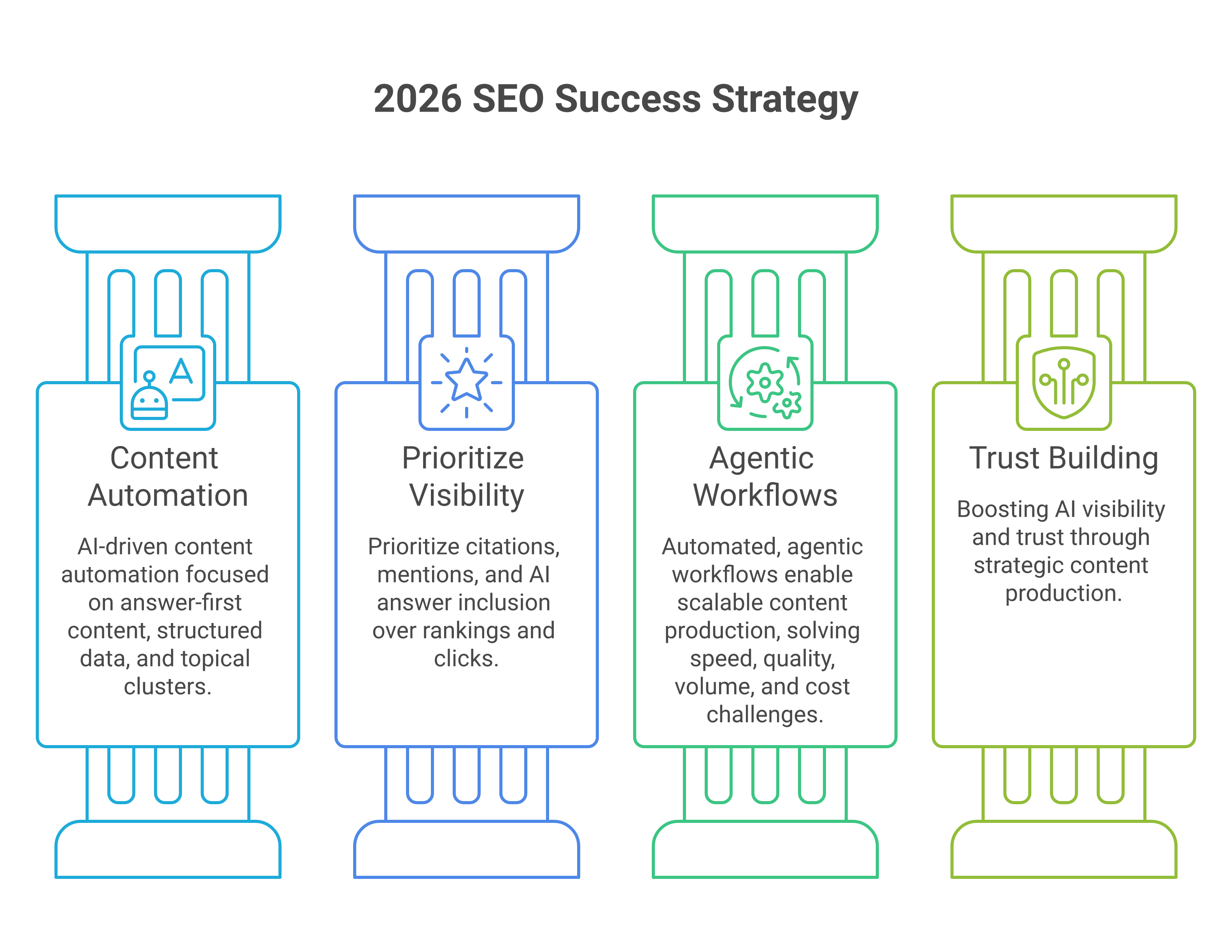

Are you still treating AI content like a risky shortcut instead of a strategic muscle? You should not be. Large language models and answer engines now answer queries without clicks, and brands that ignore this shift are quietly losing visibility and authority. The good news is this is not a surrender, it is an opportunity. With people-first processes, EEAT guardrails, and intelligent systems that make your content sourceable, you can win the citations that matter.
In the pages that follow you will learn why LLM-driven discovery changes how you measure success, which habits cost you visibility, and how to build a practical, low-lift program that earns citations from ChatGPT, Google AI, Perplexity, Claude, and search generative experiences. You will get tactical steps you can implement in 90 days, metrics to measure LLM visibility, and a stop-doing list to remove the most damaging practices. Expect clear examples, a few data points, and links to authoritative guidance that prove the path works.
Table of contents
- Why LLMs and generative engines change the game
- Three big mistakes brands make when avoiding AI
- How modern AI content solutions improve LLM rankings
- Upfront-ai’s approach and product playbook
- A 90-day pilot playbook for small marketing teams
- What to track for GEO and LLM success
- Objections and honest risks
- Stop doing this: five habits to quit now
- Key takeaways
- FAQ
- About Upfront-ai
Why LLMs and generative engines change the game
You used to optimize for clicks. Now you must optimize to be cited. Generative engines synthesize answers from multiple sources and often display those answers directly to users. That means your content needs to be discoverable in a different way. It must be structured, authoritative, and easy for an LLM to reference.
Google’s helpful content guidance and EEAT signals make one thing clear, content must be people-first and expert-backed. When an LLM or search generative experience needs to answer a question, it favors sources that are clear, current, and verifiable. Structured markup, author credentials, and rich references increase the odds an LLM will reuse your content.
Industry coverage frames this shift as an evolution of measurement, not a replacement of strategy. Tracking how often your content appears in generative answers will become as normal as monitoring rankings and backlinks. Read Search Engine Land’s coverage of LLM optimization for more context: Search Engine Land coverage of LLM optimization.
Three big mistakes brands make when avoiding AI
You are not alone if you fear AI content will cheapen your brand. But avoiding proper AI solutions creates three predictable harms.

- Confusing AI output with strategy
Many teams assume generative models remove strategy, and they let tools churn content. The result looks like volume, but it lacks domain authority. Without strategy you publish pages that do not earn citations or trust.
How harmful this is: brands that focused only on pure SEO gains often lost share of voice in generative answers, because they were not structured or authoritative enough for LLM reuse. The recovery is expensive because you must rebuild authoritativeness.
How to fix it: Make strategy the first input. Use AI for ideation, scaling, and structure, but keep subject matter experts in the loop. Build topic clusters tied to business outcomes, then automate the repetitive parts of content creation.
- Fearing quality loss and ignoring EEAT
You worry that AI will produce shallow, generic content. That fear is valid if you use the wrong controls. Poor prompts plus no editorial oversight equal content that will be ignored by LLMs and penalized by search.
How to fix it: Bake EEAT and helpful-content checks into your workflow. Require primary citations, author bios, and demonstrable experience statements for any page intended to be sourceable. Use AI to gather research, but not as the final arbiter.
- Ignoring structure and citation engineering
You publish great prose but omit schema, FAQs, and clear citations. LLMs often rely on structural signals to identify authoritative text. Without them, your content is harder to parse for reuse.
How to fix it: Implement FAQ schema, structured data, clear H1-H3 hierarchy, and inline references. Make your content machine-friendly while remaining people-friendly.
How modern AI content solutions improve LLM rankings
You need to change how you think about content production. The best AI systems do three things well: centralize company knowledge, enforce EEAT, and deliver structured outputs that LLMs can cite.
People-first automation
Start by feeding your AI systems the real, company-specific knowledge that machines cannot invent. A single source of truth about your products, case studies, people, and tone prevents hallucinations and keeps content on brand. This context-rich foundation is what makes AI-generated content citeable.
EEAT baked into the workflow
Good systems embed checks that require citations, author credentials, and evidence of experience. That aligns generation with Google’s helpful content expectations. The goal is not to replace human editors, it is to reduce drudge work and let human experts validate and amplify the right content.
Citation engineering
LLMs favor sources that are clear and authoritative. You can increase citation probability by adding primary data, structured citations, and links to original studies. Automated workflows can inject reference lists, anchor text, and links to relevant pages so your content becomes a viable source for generative responses.
Structured and semantic markup
FAQ schema, QA pages, and well-organized headings help AI systems parse and reuse your material. If your page presents succinct question-and-answer blocks with clear schema, the chance of being surfaced as an answer increases.
Freshness and corroboration
AI systems prefer corroborated facts and current information. Use automated agents to refresh research pools, update facts, and add new references. The more corroborated your claims are across high-quality sources, the more trust you build with LLMs.
For a practical primer on operational methods that improve LLM visibility, see Upfront-ai’s documented approaches: Upfront-ai operational methods for LLM rankings and visibility.
Upfront-ai’s approach and product playbook
You do not need to build this alone. Upfront-ai packages the strategy into a One Company Model, EEAT-aware agents, and technical execution so small teams can scale.
One Company Model
Centralize everything the AI needs to know about your brand: products, competitive edges, core messages, approved data, and voice. This single source prevents hallucinations, speeds approvals, and keeps content consistent across hundreds of assets.
AI agents and storytelling scale
Upfront-ai describes agents that automate ideation, title diversification, and draft generation using hundreds of storytelling techniques. These agents follow EEAT and helpful-content checklists during generation to ensure outputs are sourceable and useful. Typical client results, presented as a product proposition, include a 3.65X exposure improvement in under 45 days. Treat that as a typical client result, and validate with your own pilot.
Full technical and editorial execution
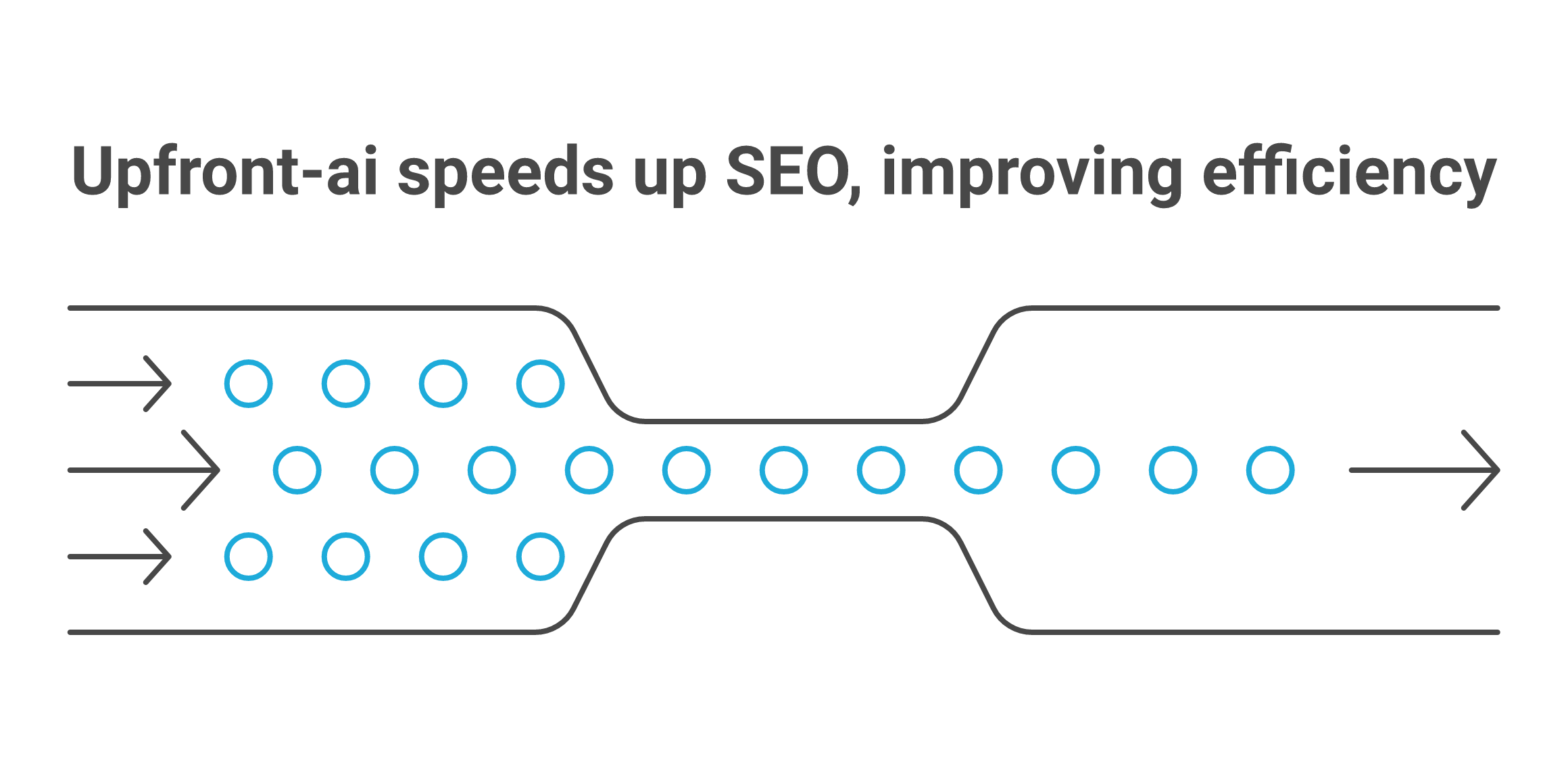
Execution matters. Upfront-ai combines keyword research, schema work, internal linking, and editorial workflows so produced pages are ready for indexing and citation. You still need human editors and subject matter experts, but the system strips away repetitive tasks, letting experts focus on verification and nuance.
A 90-day pilot playbook for small marketing teams
You can move from skepticism to measurable outcomes in three months. Here is a compact, practical plan.
Week 0–2: Setup and baseline
Assemble the One Company Model. Run a technical site audit. Choose 8 to 12 pilot topics that align with high-intent queries and generative engine opportunities. Define success metrics like citation frequency and answer share.
Day 15–45: Launch phase
Publish 6 to 10 assets, mixing pillar pages, cluster posts, and FAQ pages. Ensure each asset includes author bios, references, and schema. Track indexing speed, citation mentions, and initial answer presence.
Day 46–90: Scale and iterate
Use early citation data to refine topics. Add structured FAQ pages and one whitepaper to strengthen authority. Continue to publish regularly, focused on corroborated, people-first content.
Roles and workflow
AI agents draft, SMEs validate, marketers publish. Set a fast approval loop to keep cadence up and risk low. With a lean team you can publish high-quality, LLM-eligible content without hiring a large editorial staff.
What to track for GEO and LLM success
You must measure new signals. Classic metrics still matter, but add these AI-era KPIs.
Citation frequency
How often do LLMs or generative engines cite your domain? Track mentions across platforms such as ChatGPT, Google AI Overviews, Perplexity, and Claude, and measure changes over time. For practical metric ideas, see ALM Corp’s guide to AI search optimization: ALM Corp guide to LLM visibility strategies.
Share of generated answers
What percentage of relevant queries use your content in answers? This is your share of voice inside AI-driven responses.
Featured snippet and rich result occupancy
Are you capturing featured snippets and rich results? These still feed generative engines.
Organic traffic and conversions
Measure how increased citation presence correlates with traffic and conversions. The faster your content is indexed, the quicker you learn what works.
Time-to-index
New content that indexes fast and appears in generative answers is being noticed. Indexing speed is a technical health signal you can improve with good site architecture and technical SEO.
Search industry reporting emphasizes that brands that track visibility and citations early will gain a measurable advantage as LLM optimization matures, so build measurement now.
Objections and honest risks
You must acknowledge the risks plainly. They are manageable, but only if you prepare.
Hallucinations
LLMs can invent facts. Mitigate with a One Company Model, mandatory human verification for factual claims, and reference-first generation.
Over-automation
If you automate approvals away, quality will suffer. Keep SMEs in the loop for approval and final edits.
Stale or uncorroborated content
AI can amplify stale content. Use automated refresh schedules and corroboration checks to keep materials current.
Reputation risk
Bad content spreads. Invest in clear sourcing, author credentials, and transparent editorial policies to reduce risk.

Stop doing this: five habits to quit now
If your strategy is not delivering results, it is time to stop doing these five things. These habits are hurting your progress and need immediate attention.
- Stop doing this #1: publishing thin, SEO-only pages
Why it hurts: Thin pages chase keywords but fail to earn trust. LLMs and answer engines prefer depth and corroboration, so thin content is invisible for generative answers.
How to fix it: Produce fewer, deeper assets. Use AI to gather research and drafts, then have experts expand insights, add citations, and include direct experience. - Stop doing this #2: treating AI as a replacement for subject matter expertise
Why it hurts: When prompts replace expertise, content misrepresents nuance and risks hallucinations. That damages brand credibility.
How to fix it: Design human-in-the-loop workflows. Use AI for speed and SMEs for verification. Require author bios and first-person experience statements where applicable. - Stop doing this #3: skipping structured data and FAQ markup
Why it hurts: If your content lacks schema and clear QA blocks, an LLM will struggle to extract useful answers. That lowers your chance of being cited.
How to fix it: Implement FAQ schema, QA pages, and clear H1-H3 hierarchy. Make sure each page answers one primary question clearly and succinctly. - Stop doing this #4: ignoring citation engineering
Why it hurts: LLMs look for verifiable sources. Pages without clear references are less likely to be reused or cited.
How to fix it: Embed primary sources, inline references, and links to studies or product docs. Keep a living reference list for each pillar page. - Stop doing this #5: delaying measurement of AI visibility
Why it hurts: If you do not measure LLM citations and answer share, you cannot improve. You will be making guesses instead of informed decisions.
How to fix it: Start tracking citation frequency, generated answer share, and branded mention trends across major LLMs. Use those signals to prioritize content.
Recap and immediate actions: Quit those five habits now. Replace them with people-first content, EEAT checks, structured markup, citation practices, and measurement. Stop guessing, start measuring, and let AI handle the heavy lifting while you control strategy.
Key takeaways
- Build a single source of truth for content so AI outputs stay accurate and brand-safe.
- Require EEAT checks and author verification to make AI content citeable by LLMs.
- Use schema, FAQs, and citation engineering to increase your chances of being cited.
- Measure citation frequency and share of generated answers, not just clicks.
- Run a focused 90-day pilot to validate impact before scaling.
FAQ
Q: Will ai-generated content hurt my google rankings?
A: Not if you use it properly. Make AI outputs people-first, backed by citations, and edited for EEAT. Require human review and author credentials for all published pieces. Keep documentation of sources so you can prove claims and fix errors quickly. Monitor search performance to catch any issues early.
Q: How do i know if my content is being cited by llms?
A: Track citations and mentions across platforms like ChatGPT, Google AI Overviews, Perplexity, and Claude. Use monitoring tools and manual checks to find when your domain appears in generative answers. Measure the context and accuracy of citations, and track changes in branded search volume. Correlate citations with traffic and conversions to prove impact.
Q: Can small teams run an ai content program without large budgets?
A: Yes. A One Company Model and AI agents reduce workload by automating ideation and drafting. Small teams must still validate content and manage approvals, but automation handles volume and structure. Start with a 90-day pilot to limit risk and scale successful tactics. Focus on high-intent topics and structural work like schema.
Q: What metrics matter for llm and geo success?
A: Beyond traditional rankings and traffic, track citation frequency, share of generated answers, featured snippet presence, and time-to-index. Also monitor branded mention sentiment and the accuracy of citations. Tie these signals back to conversions and revenue to quantify value.
About Upfront-ai
Upfront-ai is a cutting-edge technology company dedicated to transforming how businesses leverage artificial intelligence for content marketing and seo. By combining advanced ai tools with expert insights, Upfront-ai empowers marketers to create smarter, more effective strategies that drive engagement and growth. Their innovative solutions help you stay ahead in a competitive landscape by optimizing content for the future of search.
You have the tools and the knowledge now. The question is: Will you adapt your SEO strategy to meet your audience’s evolving expectations? How will you balance local relevance with clear, concise answers? And what’s the first GEO or AEO tactic you’ll implement this week? The future of SEO is answer engines, make sure you are ready to be the answer.