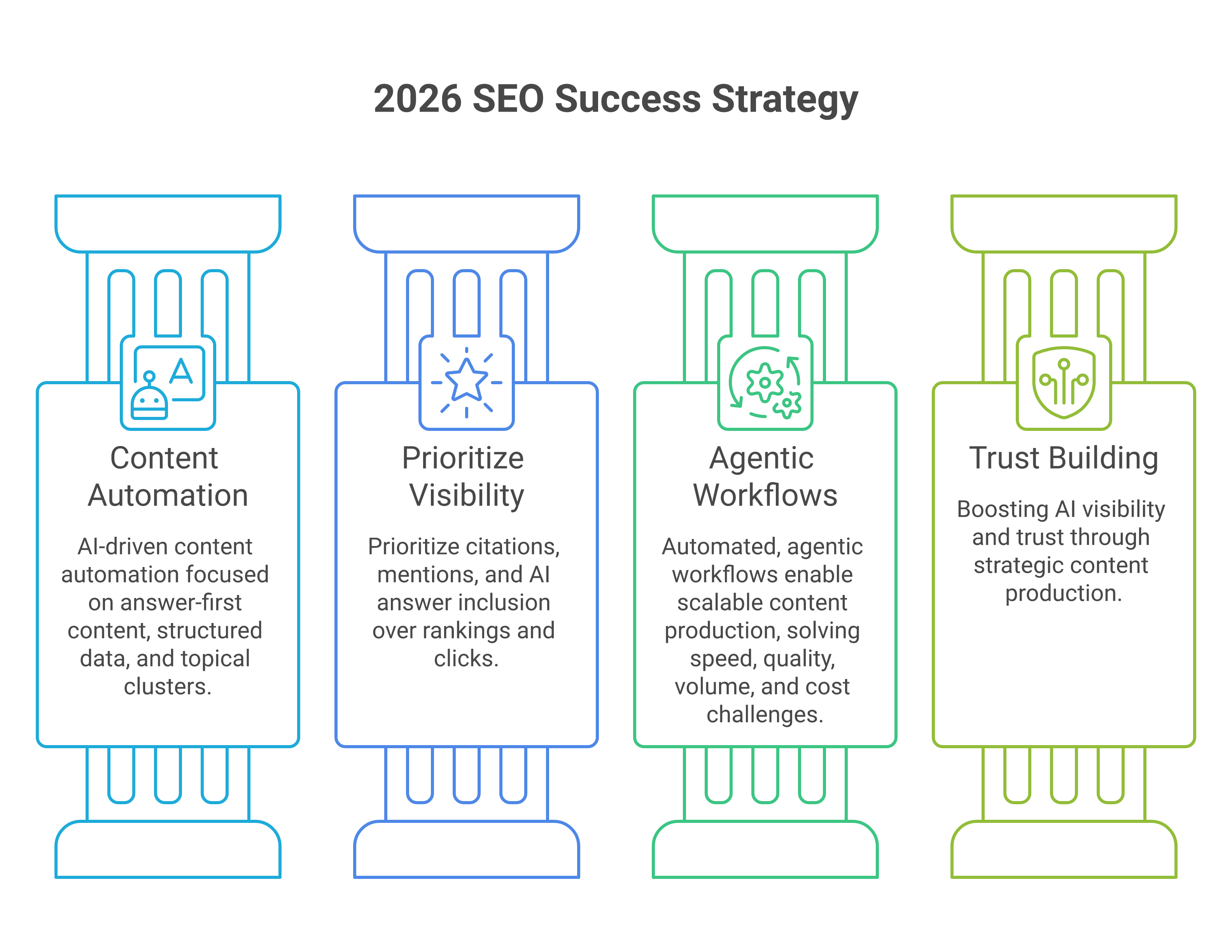

You are no longer competing for page-one clicks only, you are competing for a place inside the answers people read first.
You are seeing search change in real time, as large language models and generative search synthesize answers and surface citations without requiring a click. If your content is thin, unfocused, or not clearly attributable, you will be absent from the very answers your customers trust. Will you adapt your SEO approach to be citation-ready instead of click-ready? Do you know which content signals make LLMs and answer engines pick your brand as a source?
This article explains why ignoring generative SEO thought leadership harms your brand visibility, and it gives you a practical list of beginner mistakes to avoid, why each one is dangerous, and step-by-step workarounds you can apply this week. You will see how thought leadership becomes the signal set that answer engines prefer, and how simple shifts in structure, sourcing, and storytelling win you citations, featured snippets, and knowledge panel mentions.
Upfront-ai has created a fully automated, fully customizable, AI agentic-driven content solution to boost SEO, GEO (generative engine optimization), and AIO visibility ranking, citations, and references for brands. It delivers ICP-focused, people-focused content using over 350 conversion-driven storytelling techniques. In today’s zero-click world, Upfront-ai’s platform ensures brands stand out and drive business growth by enhancing visibility in search engines and LLMs.
Table of Contents
- Common beginner mistakes and their consequences
- Mistake 1 and practical fix
- Mistake 2 and practical fix
- Additional beginner mistakes with tips
- How avoiding these mistakes speeds progress
- Key takeaways
- FAQ
- About Upfront-ai
- Final questions
Common Beginner Mistakes and Their Consequences
Beginner mistakes in generative SEO are not academic errors. They remove you from buyer journeys, destroy citation opportunities, and make your brand invisible inside answer engines. You must treat thought leadership as infrastructure, not as occasional blogging. Below is a long, numbered list of common beginner mistakes to avoid. For each mistake you will get why it matters, how beginners typically fall into it, and a concrete workaround so you can replace the error with an effective habit.
1. Mistake 1: Treating Thought Leadership Like SEO Fluff
Why it is problematic If you publish opinion pieces that read like thin listicles, generative models will not find original data, expert methodology, or author credentials to trust. That causes LLMs and answer engines to favor other sources, often competitors or neutral publishers, when they synthesize answers.
Why beginners do this You are under pressure to ship content quickly. You default to vaguely authoritative headlines and generic takeaways to hit volume goals.
How to fix it Prioritize one original insight per article. Add even a small proprietary dataset, a succinct methodology paragraph, and a named author with verifiable credentials. Publish a short appendix or data table that an LLM can parse and cite. Over time, those patterns create the signal set that makes your content citation-worthy.
2. Mistake 2: Ignoring Short Answer Structure and FAQ Blocks
Why it is problematic LLMs and answer engines prefer clear, one-sentence answers at the top of pages, then supporting detail. Pages without a concise lead answer and structured FAQ sections are less likely to be quoted or surfaced in assistant answers.
Why beginners do this You think long-form narrative alone will win, so you bury the concise answer inside long paragraphs or a long preamble.
How to fix it Start every thought-leadership piece with a one-sentence TL;DR that answers the primary query. Add an FAQ section with short Q/A pairs and schema. This simple structure increases the chance of being used as a direct answer in assistant responses.

3. Mistake 3: Not Showing First-Hand Experience or Case Studies
Why it is problematic EEAT values experience. Generic summaries without real client outcomes or named case studies read like aggregation, not expertise. LLMs prefer sources that demonstrate first-hand knowledge.
Why beginners do this You worry about client confidentiality, or you think case studies take too long to produce.
How to fix it Create anonymized case studies with concrete metrics, or publish short customer quotes and screenshots with consent. Even a two-paragraph study with before/after metrics gives you a credibility boost that models and journalists notice.
4. Mistake 4: Omitting Author Bios and Credentials
Why it is problematic Without author context and credentials, content looks less authoritative. Generative systems and editorial algorithms favor material with named experts and transparent qualifications.
Why beginners do this You assume the brand logo alone is enough, or you lack a process to attach author metadata.
How to fix it Standardize author bylines and short bios across posts. Include LinkedIn or author pages and a list of recent related work. Use structured author markup so bots and LLMs can find credentials programmatically.
5. Mistake 5: Weak Sourcing and No Citation Lists
Why it is problematic LLMs seek consensus and verifiable claims. If you present claims without clear sources, generative answers will prefer content that shows explicit citations.
Why beginners do this You think citations lengthen the page or reduce readability.
How to fix it Add a brief reference list or inline links to primary sources. Use descriptive anchor text and expose your sources. This improves trust signals and makes your work easier to cite by other publishers and models.
6. Mistake 6: Publishing Inconsistent Brand Definitions and Messaging
Why it is problematic Generative systems build confidence from consistency. If your terminology, product descriptions, and customer definitions change across pages, models cannot map your brand to stable facts for citations.
Why beginners do this Small teams update messaging piecemeal, and content lacks a single source of truth.
How to fix it Create a One Company Model or a brand knowledge hub that stores canonical definitions, ICPs, and product facts. Use that hub to drive content briefs and canonical pages so every mention is consistent and discoverable.
7. Mistake 7: Relying Solely on Generic AI Drafts Without Expert Review
Why it is problematic Generic AI drafts can be competent but often lack domain nuance and verifiable claims. Publishing without expert review risks factual errors and reduces EEAT.
Why beginners do this You are pressed for time and use AI to accelerate publishing, skipping the review step.
How to fix it Use AI for research and drafts, but require at least one SME review for factual accuracy and one editor for tone and structure. Bake EEAT checklists into your workflow.
8. Mistake 8: Skipping Schema and Structured Data
Why it is problematic Structured data helps answer engines extract facts, FAQs, and organization-level signals. Without schema, your content is harder for crawlers and models to parse for citation.
Why beginners do this Schema feels technical and is often postponed to a future sprint.
How to fix it Implement basic schema types first: Article, FAQ, Organization. Use simple JSON-LD snippets for each published thought-leadership piece. This pays off quickly in snippet visibility.
9. Mistake 9: Creating Repetitive, Commoditized Topics
Why it is problematic When your content covers the same conceptual ground as every other blog, it competes on noise, not insight. LLMs will source from the clearest, most authoritative derivation of a fact or trend, not the tenth reframing.
Why beginners do this You optimize for topical breadth and frequent publishing, not uniqueness.
How to fix it Prioritize unique angles: original datasets, controversial but evidence-backed claims, or customer-first narratives. Use editorial calendars that require an “original value” checkpoint before a topic is greenlit.
10. Mistake 10: Neglecting PR and External Validation
Why it is problematic Editorial mentions, press coverage, and backlinks create the consensus validation generative models use to weigh authority. Without external validation you limit citation potential.
Why beginners do this You assume SEO and content distribution are separate from PR.
How to fix it Coordinate with PR to push study releases and short expert commentaries to trade press. Target publications that feed knowledge graphs and LLM training sets. Early outreach multiplies citation probability.
11. Mistake 11: Measuring Only Clicks and Ignoring Answer Visibility
Why it is problematic Clicks are declining in value for some queries. If you track only sessions and rankings, you will miss gains or losses in brand presence inside answer boxes and assistant responses.
Why beginners do this Your analytics setup is tuned to last-click and organic sessions.
How to fix it Add metrics for LLM citations, featured snippet share, knowledge panel occurrences, and branded answer impressions. Monitor backlinks and editorial mentions as leading indicators.
12. Mistake 12: Not Repurposing for Short Answers and Microcontent
Why it is problematic Answer engines favor concise content components. If you only create long reports and never extract short answers, you miss the microformats that feed assistants.
Why beginners do this You treat repurposing as optional work after publication.
How to fix it Extract TL;DRs, publish short answer pages, and create microcontent for social and knowledge hubs. This multiplies chances of being surfaced in assistant answers.
How Avoiding These Mistakes Helps You Progress Faster
When you eliminate these beginner errors you accelerate the path to being a cited source. You will see three clear benefits. First, higher probability of appearing in assistant answers and featured snippets. Second, stronger backlink velocity from editorial pickup of your original studies. Third, better lead quality from audiences that saw your brand as the trusted answer. Practical evidence from industry observers shows generative search is reorganizing visibility, and brands that prepare structured, cited content earn placement in AI summaries and overviews. For a practical overview of how generative search changes brand visibility, see the article from Spinta Digital about generative search and marketing.
Research and audit firms are also documenting mistakes that cause brands to lose presence in AI overviews; for a concise checklist of common SEO mistakes that can block brand visibility in AI search, review the analysis published by Delante.

Key Takeaways
- Build at least one original asset per quarter, such as a micro-study or customer case study, to create citationable evidence.
- Start every page with a one-sentence answer and add an FAQ block with structured data to improve answer-engine traction.
- Use AI to scale drafts, but require SME review and author credentials to protect EEAT and factual accuracy.
- Coordinate content, PR, and schema so your brand sends consistent, discoverable signals to LLMs and knowledge graphs.
You have the tools and the knowledge now. The question is, will you adapt your SEO strategy to meet your audience’s evolving expectations? How will you balance local relevance with clear, concise answers? And what’s the first GEO or AEO tactic you’ll implement this week? The future of SEO is answer engines, make sure you’re ready to be the answer.
FAQ
Q: what is generative SEO and why does thought leadership matter?
A: Generative SEO optimizes content to be cited and referenced by answer engines and LLMs, not only to rank in traditional organic results. Thought leadership matters because original research, transparent methodology, and author credentials create the signals that make models and assistants prefer your content when they synthesize answers. You should focus on unique insights, short lead answers, and structured data so your brand can be the source the assistant quotes.
Q: how do I make small studies that are citation-worthy?
A: Start small, with a reproducible method and clear metrics. Poll customers, aggregate a month of anonymized usage data, or compare two approaches on a measurable outcome. Publish the dataset or a downloadable appendix, describe your methodology in one paragraph, and highlight concrete numbers in charts. These small studies attract backlinks and provide anchor points for LLMs to reference.
Q: can AI tools replace human editors for EEAT?
A: No. AI tools accelerate research and drafting, but human editors and subject matter experts are essential for verification, nuance, and credibility. Use AI to surface sources, draft structured answers, and create schema snippets, then route content through SME review to ensure accuracy and human perspective.
Q: what quick technical steps improve my chance of being cited?
A: Add article and FAQ schema, create author pages with credentials, and publish concise answer sections at the top of pages. Use canonical tags consistently and expose structured organization data so knowledge graphs can map facts to your brand. These steps are low effort and high impact for answer visibility.
.
About Upfront-ai
Upfront-ai is a cutting-edge technology company dedicated to transforming how businesses leverage artificial intelligence for content marketing and SEO. By combining advanced AI tools with expert insights, Upfront-ai empowers marketers to create smarter, more effective strategies that drive engagement and growth. Their innovative solutions help you stay ahead in a competitive landscape by optimizing content for the future of search.
You have the tools and the knowledge now. The question is, Will you adapt your SEO strategy to meet your audience’s evolving expectations? How will you balance local relevance with clear, concise answers? And what’s the first GEO or AEO tactic you’ll implement this week? The future of SEO is answer engines, make sure you’re ready to be the answer.
You will either be cited, or you will be invisible. Which will you choose? Will you build the small original asset that becomes your brand’s first AI-cited authority? What is one author bio you can publish this week to start the shift?