
Tl;dr
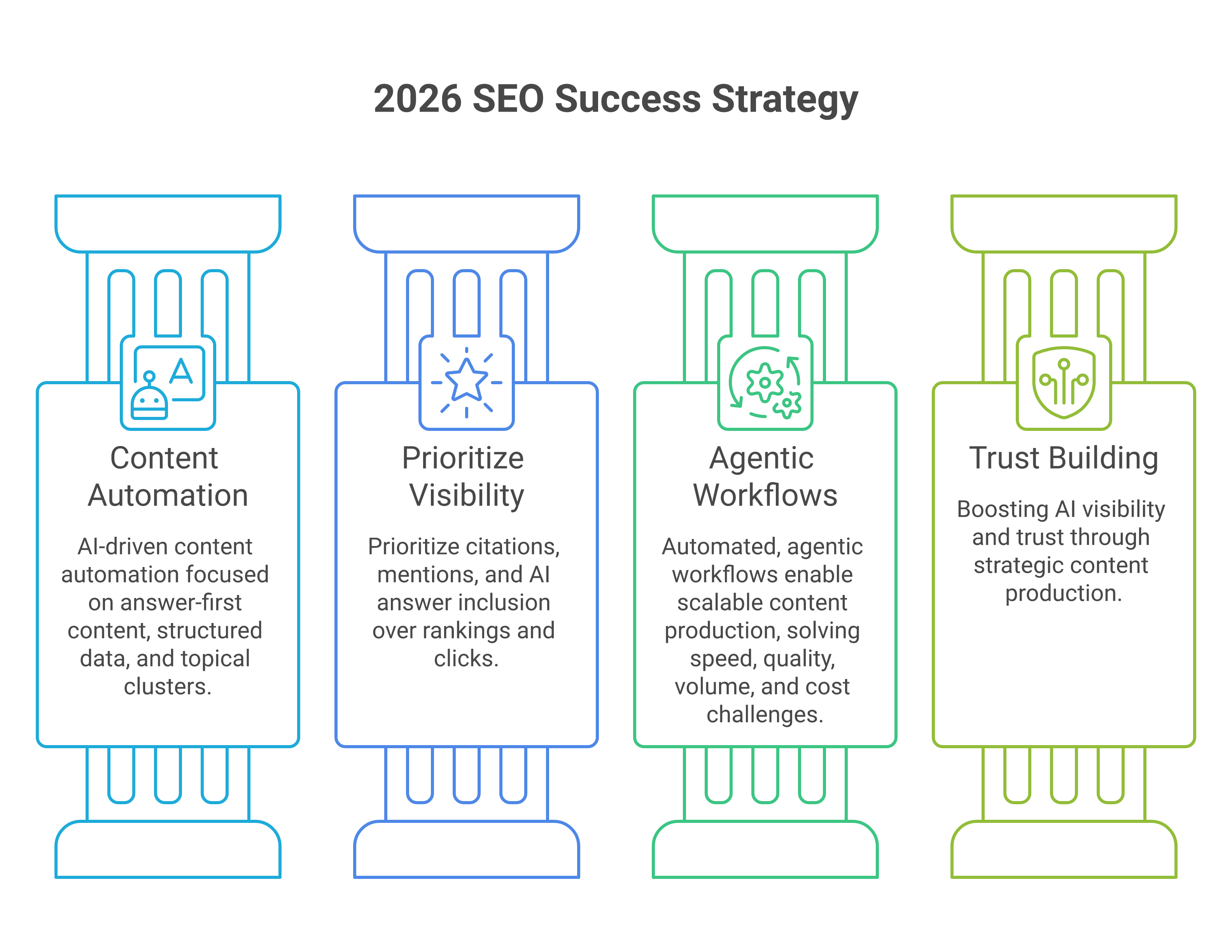
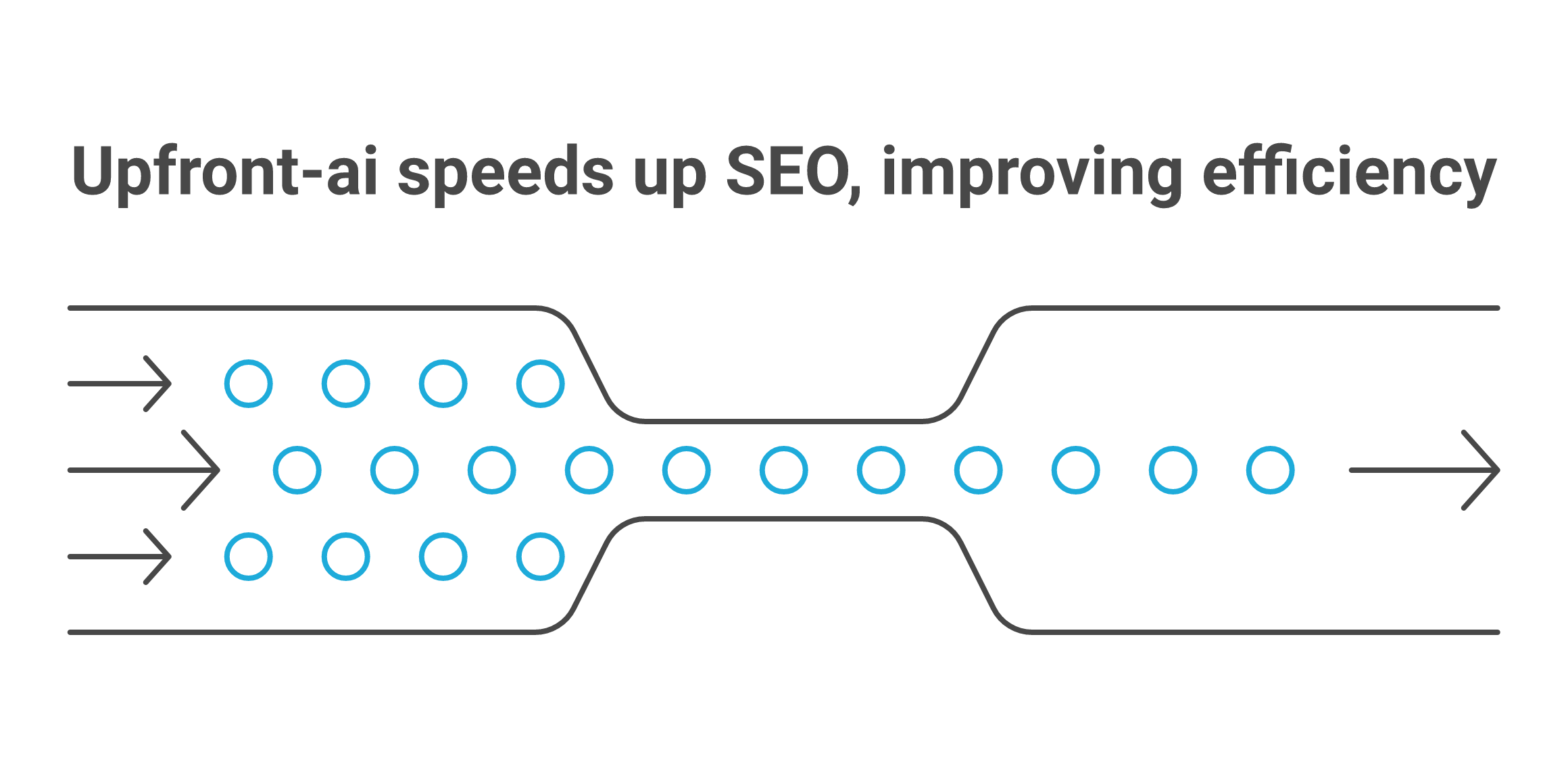
AI content solutions let you scale high-quality, search-native content while keeping control over brand voice, accuracy, and measurable outcomes. In 45 days you can pilot a program that increases exposure by multiples, earns featured snippets, and starts being cited by generative engines, if you pair agentic AI with a single source of truth, strict citation workflows, and the right technical SEO foundations.
Summary Of The Problem And What You Will Learn
You face the classic content trilemma: produce more content faster, keep costs reasonable, and preserve quality and authority. Meanwhile, search is changing, and generative engines like Google’s Search Generative Experience and Copilot are deciding which sources to cite. This guide explains why AI content solutions matter now, how to design a system that avoids hallucinations and voice drift, and a tactical 45-day playbook you can execute immediately to win both traditional SEO and generative engine citations. It also shows how Upfront‑ai’s platform delivers ICP-focused, people-first content using hundreds of conversion-driven storytelling techniques to boost SEO, GEO, and AIO visibility and citations.
Table Of Contents
- Why This Matters To You
- Why AI Content Solutions Matter Now
- The Content Trilemma And Where Most Tools Fail
- Anatomy Of An Effective AI Content Solution
- A Step-By-Step Playbook To Implement
- SEO, GEO And LLM Tactics That Earn Citations
- Measuring Success: KPIs And Signals That Matter
- Common Concerns And Myth-Busting
- Case Examples And Use Cases
- Implementation Resources And Checklist
Why This Matters To You
Ask yourself, how much of your content actually gets read, linked to, or cited by the tools people use to find answers? If most of it sits unreferenced, you are burning budget and losing share of voice. Visibility is now measured not only by ranking positions but by whether AI answer engines quote you. Tools that simply spit text will not cut it. You need a system that produces people-first content that passes editorial scrutiny, adheres to EEAT (expertise, experience, authoritativeness, trustworthiness) and HCU (helpful content updates), and is structured so generative engines can extract and cite your facts.
Upfront‑ai has created a fully automated, fully customizable, AI agentic-driven content solution to boost SEO, GEO (generative engine optimization), and AIO visibility ranking, citations, and references for brands. It delivers ICP-focused, people-focused content using over 350 conversion-driven storytelling techniques. In today’s zero-click world, Upfront‑ai’s platform ensures brands stand out and drive business growth by enhancing visibility in search engines and LLMs.
This guide gives the why, the how, and the what-to-do-first: a practical framework that covers governance, workflows, formats, schema, measurement, and a 45-day pilot you can run with your team.
Why AI Content Solutions Matter Now
The options you had five years ago—keyword lists and manual briefs—no longer map to how users consume answers. AI-driven platforms now analyze user behavior, predict trends, and refine content strategies continuously. The real change is the rise of generative engines that summarize and cite a small number of sources directly to users.

A few trends worth noting:
- Zero-click search is not going away, and being the source those engines cite matters more than ever.
- Search and generative engines converge, so optimizing only for keywords is insufficient; you must optimize for extractable, sourceable answers.
- Speed matters, but not at the expense of trust. Fast output that contains inaccuracies will erode brand credibility and lower long-term organic performance.
For a practical look at how AI is reshaping SEO, see this industry analysis by HashE and M&R Marketing’s perspective on preparing for AI-driven search experiences: HashE industry analysis on AI and SEO and M&R Marketing’s take on preparing for AI-driven search experiences.
The Content Trilemma And Where Most Tools Fail
The trilemma is simple: speed, scale, cost, pick two and compromise the third. Most off-the-shelf AI tools promise all three without governance. Typical failures include generic output, voice drift across content, hallucinations and unsupported claims that damage EEAT, and poor technical execution such as missing schema, weak internal linking, and no canonicalization strategy.
Search engines and generative engines increasingly reward freshness, originality, and authority. If your content lacks a single source of truth, citation trails, or technical readiness, it will be invisible to AI answer systems even if it ranks for secondary keywords.
Anatomy Of An Effective AI Content Solution
To win in both traditional SEO and AI answer engines, you need an integrated system made of clear parts. Each part is necessary; missing one creates vulnerability.
The One Company Model
At the center is a single source of truth, the One Company Model. This is an internal knowledge graph or repository that contains verified product specs, messaging pillars, personas, use cases, case studies, and legal boundaries. When AI-generated drafts draw from this model, you preserve accuracy and brand voice at scale.
Why it matters: a One Company Model prevents contradictory claims across content, reduces fact-checking overhead, and gives generative engines a stable source to cite when your content is extracted.
Agentic Workflows
Agentic workflows stitch together specialized AI agents for ideation, research, drafting, optimization, and QA. Each agent has a role and a checklist.
- Ideation agent: surfaces topics based on traffic potential, intent signals, and competitive gaps.
- Research agent: compiles sources and creates citation lists, ensuring no unsupported claims pass through.
- Drafting agent: produces structured copy using your One Company Model and voice profile.
- Optimization agent: inserts schema, TL;DR answer boxes, and snippet-first sentences.
- QA agent: checks citations, flags hallucinations, and creates a human review report.
Roles must be assigned. Humans remain essential for strategy (CMO/Head of Content), fact-checking (SME or product manager), and final editorial sign-off.
Storytelling And Format Strategy
AI multiplies output, storytelling makes it memorable. Build a format playbook that maps intent to formats—how-tos for transactional queries, step-by-step guides for DIY tasks, top lists for research, and data-led thought leadership for citation potential. The plan to bank 350 storytelling techniques provides repeatable formats optimized for featured snippets and AI extractability.
Example: For B2B SaaS, create “How to implement X in 30 days” guides that include timelines, checklists, and downloadable JSON-LD snippets. These are snippet-friendly and citable.
Technical Foundation
Great prose needs a technical foundation. Checklist items:
- Robust schema (Article, FAQ, HowTo, Organization, Author).
- Clean URL structure and canonicalization.
- Fast page speed and mobile-first UX.
- Internal linking strategy that connects pillar pages to micro content.
- Server-rendered HTML for extractability, avoid hiding key facts in images.
EEAT, HCU And Safety
Embed citation workflows into publishing. Require source lists from the research agent, limit synthetic data in public claims, and add an audit trail for each assertion. Human-in-the-loop review must be required for any claim that could affect purchasing decisions or legal exposure.
A Step-By-Step Playbook To Implement
Phase 1: Audit and One Company Model build (week 1–2)
- Collect canonical product docs, legal boundaries, persona profiles, case studies, and pricing rules.
- Interview SMEs and capture verified quotes and stats.
- Build the One Company Model and surface 20 key facts.
Deliverables: named repository of assets, voice profile, 20 verified facts.
Phase 2: Pilot content program (weeks 3–6)
- Pick 10 priority topics (mix of how-tos, lists, and pillar pages).
- Create templates mapping format to schema.
- Define KPIs: featured snippet wins, organic sessions, LLM citations, MQLs.
Deliverables: 10 published pages, template library, baseline metrics.
Phase 3: Scale via AI agents and templates (weeks 7–12)
- Turn successful templates into agent prompts.
- Automate citation capture and JSON-LD insertion.
- Set up content cadence and approvals.
Deliverables: automated pipeline, approval gating, capacity for 50–100 content items per month.
Phase 4: Measure and iterate (ongoing)
- Weekly snapshot of impressions, featured snippets, and LLM citations.
- Biweekly editorial review for freshness and error correction.
- A/B test titles, TL;DR boxes, and schema variations.
Deliverables: weekly dashboard, iteration log, prioritized content backlog.
Checklist of immediate deliverables per phase
- One Company Model: repository and voice profile.
- Pilot topics: 10 topics and templates.
- Tech prep: schema implemented on pilot pages.
- QA workflow: human review checklist and audit trail.
- Measurement: dashboard with SEO and LLM metrics.
SEO, GEO And LLM Tactics That Earn Citations
Structure and clarity are nonnegotiable for citation. High-impact tactics:
- Schema-first authoring: include Article, FAQ, HowTo as appropriate to improve extractability.
- Snippet-first writing: open sections with a crisp 1–2 sentence answer, then expand.
- Sourceable claims: link to primary sources and your own micro-studies. Generative engines prefer citable facts.
- Freshness signals: publish last-updated dates and refresh data quarterly.
- Distribution: pitch whitepapers and datasets to aggregators and academic sources for authoritative backlinks.
Practical example: publish a micro-study showing a 25 percent reduction in onboarding time, include a downloadable CSV and a one-paragraph TL;DR. That unique dataset plus concise summary is highly citable.
Measuring Success: KPIs And Signals That Matter
Track three metric buckets:
Search metrics
- Organic sessions, impressions, CTR, position.
- Featured snippet wins and answer box presence.
Generative engine metrics
- Number of citations in AI-overview results (track manually and via monitoring tools).
- Mentions in Copilot or SGE summaries.
Business metrics
- Leads and MQLs generated from content.
- Pipeline influenced and conversion rates.
- Content velocity and cost per published asset.
Suggested baseline target: Upfront‑ai clients often benchmark a 3.65X exposure increase in 45 days during a pilot, where exposure is measured as the sum of impressions plus AI citations normalized to baseline.
Common Concerns And Myth-Busting
Hallucinations and factual errors
- Myth: AI will always produce hallucinations.
- Reality: With a One Company Model, citation workflows, and human-in-the-loop QA, hallucinations become exceptions. Force the research agent to return source excerpts and references.
Duplicate or low-value content
- Myth: AI means duplicate pages everywhere.
- Reality: Templates tied to intent and format diversity reduce duplication. Insist on unique data points or angles for each page.
Loss of brand voice
- Myth: AI will erode your voice.
- Reality: Store a voice archetype and persona rules in your One Company Model. Auto-checks compare new drafts against the profile.
Compliance and legal risk
- Mitigation: Require approval flows for claims, keep audit trails, and tag content with legal review statuses.
Case Examples And Use Cases
B2B SaaS
- Input: product docs, customer interviews, demo transcripts.
- Output: 12 how-to guides, three case studies, and a benchmarking report.
- Outcome: featured snippet wins for high-intent queries and a 40 percent increase in organic signups in 60 days.
Industrial manufacturing
- Input: engineering spec sheets, compliance documents.
- Output: technical explainer pages with embedded schematics and downloadable tables.
- Outcome: faster ranking for long-tail queries and citations in trade publications.
Publisher
- Input: reporter notes, research dataset.
- Output: micro-studies with data visualizations and downloadable CSVs.
- Outcome: syndication and citations in AI overviews.
Implementation Resources And Checklist
Start today: a 10-point checklist
- Gather canonical product documentation and three verified customer quotes.
- Build the One Company Model with 20 verified facts.
- Pick 10 pilot topics mapped to user intent.
- Create one template for each format: HowTo, List, Pillar.
- Implement Article and FAQ schema on pilot pages.
- Configure an agent pipeline with roles for research, drafting, and QA.
- Set human review rules for claim validation.
- Publish TL;DR boxes at the top of each article for snippet extraction.
- Track impressions, featured snippets, and AI citations weekly.
- Run a 45-day sprint and report on exposure uplift.

Key Takeaways
- Build a One Company Model first, it is the most effective control against errors and voice drift.
- Use agentic AI workflows, but require human-in-the-loop signoffs for any claim that affects buying decisions.
- Write for extraction: concise top-line answers, schema, and sourceable claims increase the chance of being cited by AI overviews.
- Measure both traditional SEO metrics and generative engine signals like AI citations and answer box hits.
- Start with a focused 45-day pilot: 10 topics, strict QA, and schema-first publication.
FAQ
Q: What are AI content solutions and how do they help SEO? A: AI content solutions are platforms and workflows that use generative models and automation to ideate, research, draft, optimize, and publish content. They help SEO by increasing content velocity, surfacing intent-driven topics, and producing extractable, schema-rich pages that earn both organic rankings and citations from generative engines.
Q: Can AI-generated content rank on Google and appear in AI answers? A: Yes, if the content is accurate, original, properly structured, and sourced. Google’s ranking systems and AI overviews prioritize authoritative, helpful content. That means AI can produce content that ranks only when paired with governance, EEAT best practices, and technical SEO.
Q: How do you prevent hallucinations and factual errors? A: Mandate a research agent that returns source excerpts and a human review checklist. Maintain a One Company Model and require that any novel factual claim include a source or SME sign-off before publishing.
Q: What is Generative Engine Optimization (GEO) and why should you care? A: GEO is optimizing content to be extractable and citable by generative answer engines. You should care because these engines are often the first point of contact for users; being cited there drives both direct visibility and downstream clicks.
Q: How long does it take to see results? A: You can see movement in featured snippets and exposure signals in as little as 45 days with a focused pilot. Broader ranking and lead-impact timelines vary, but pilot wins help build momentum for scaling.
About Upfront‑ai
Upfront-ai is a cutting-edge technology company dedicated to transforming how businesses leverage artificial intelligence for content marketing and SEO. By combining advanced AI tools with expert insights, Upfront-ai empowers marketers to create smarter, more effective strategies that drive engagement and growth. Their innovative solutions help you stay ahead in a competitive landscape by optimizing content for the future of search.
Conclusion
You now have a clear path: build a verified One Company Model, run agentic workflows with human checks, prioritize schema and snippet-first writing, and measure both SEO and generative engine metrics. The future of search rewards clarity, citation, and trust. Adopt these steps and your content will not only rank, it will be the content AI systems choose to cite.
What will you pilot this week: a One Company Model build, a 10-topic 45-day sprint, or a schema-first refresh of your top-performing pages?