
The year is 2030. You wake up to a world where answers arrive before you finish the question. Prospects no longer scroll search result pages, they ask assistants, and those assistants answer with concise, cited passages drawn from the most extractable, authoritative pieces on the web. For companies of 10 to 100 people with small marketing teams, this is not a distant curiosity, it is the distinction between being the trusted reference and being invisible. Your ability to imagine that future, then build toward it today, determines whether you own the conversation or watch it happen elsewhere.
Imagine a buyer asking, “What is the best small-business CRM for a two-person sales team?” Their assistant returns a one-line answer, a 50-word summary, and two sources: one is your deep-dive buyer’s guide, the other is a short Q&A you published last month. Your brand is in the ecosystem of answers because your content was designed to be extractable: a TL;DR at the top, clear entity definitions, dated citations, and machine-readable schema.
You are still small. You still have a tight marketing team. But you are in the answer set. That matters because buyers trust answers that cite sources. They click less, but they convert more often when they click. The future you imagine is not magic, it is the result of deliberate changes you can begin implementing this week.
What You Will Learn In This Article
- Why the shift to answer engines matters for small marketing teams.
- How Generative Engine Optimization, GEO, differs from classic SEO and where they overlap.
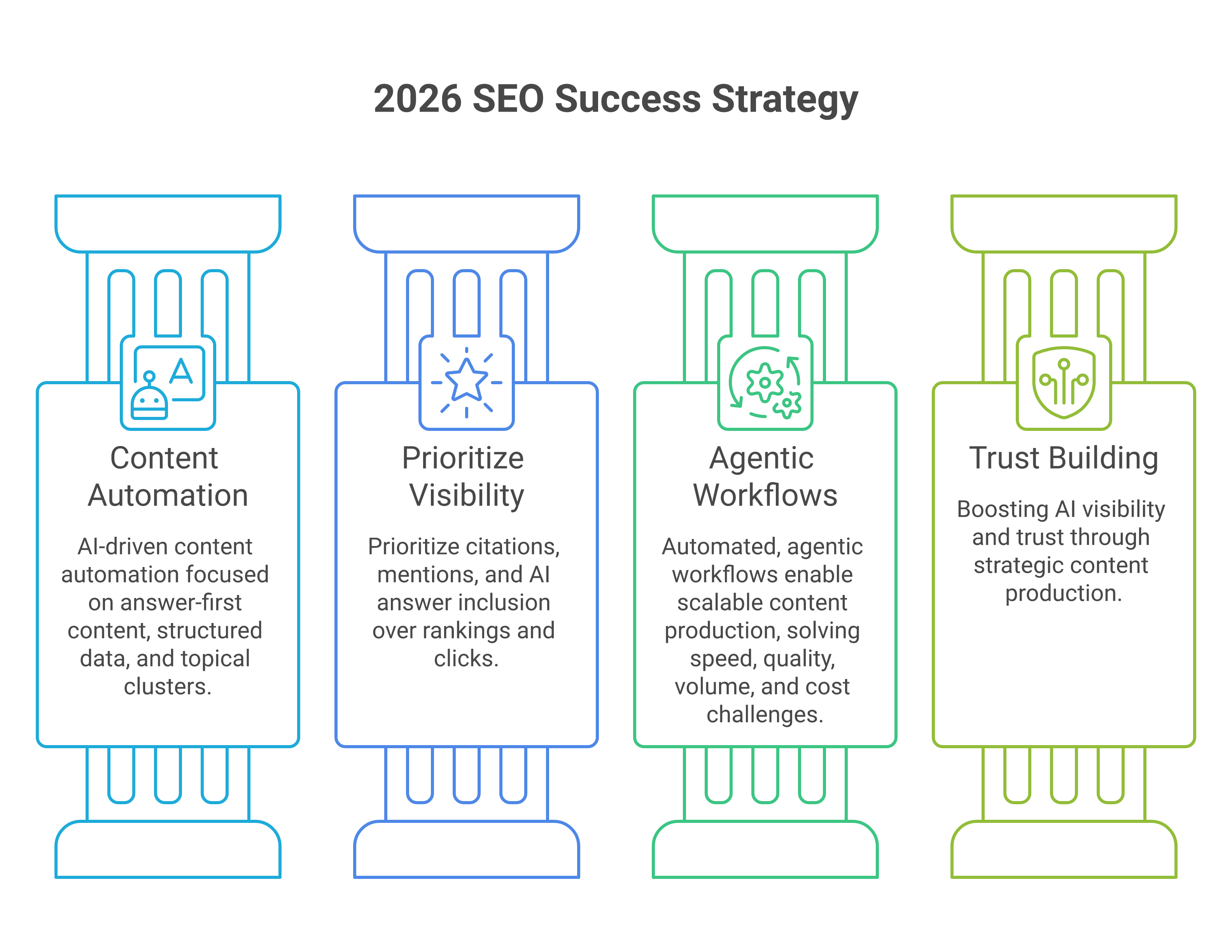
- Why automation is essential to scale GEO without losing credibility.
- Concrete steps Upfront-AI uses to deliver measurable results, including the 3.65X exposure claim.
- A practical roadmap you can start this week.
Table Of Contents
- Opening Scene: The 2030 Moment
- Rewind To 2025: The Inflection Point
- Obstacles Along The Way (2026–2028)
- Breakthroughs And Acceleration (2028–2029)
- Today’s Takeaway (Back To 2024–2025)
- What Is Generative Engine Optimization (GEO)?
- Why GEO Matters For Small B2B Teams
- How Upfront-AI Operationalizes GEO
- GEO Tactics You Can Use This Week
- Implementation Roadmap And Measurement
- Key Takeaways
- FAQ
- About Upfront-ai
Rewind To 2025: The Inflection Point
In 2025, generative engines matured to a mainstream discovery layer. Platforms began synthesizing information from multiple sources and surfaced short, authoritative answers rather than links alone. That shift created two pressures: content had to be machine-extractable, and brands had to earn citations from systems that value clear sources and concise phrasing.
Upfront-AI saw this early. Their writing on combining AI content automation with GEO techniques mapped how to align classic SEO with answer-engine signals, and you can read a focused explanation in this Upfront-AI post about using AI content automation to enhance SEO visibility with GEO: Use AI content automation to enhance SEO visibility with generative engine optimization
Obstacles Along The Way (2026–2028)
The path from web pages to being quoted was not smooth. Teams who tried to “ask AI to write” produced generic text that fast became fodder for hallucinations rather than citations. Companies that outsourced content to agencies found slow turnarounds and inconsistent brand voice. And many assumed traditional ranking signals alone would be sufficient.
Two problems repeated:
- Extractability gap, content lacked short answers, clear entities, and inline citations.
- Scale gap, small teams could not keep up the cadence LLMs rewarded.
A practical habit helped. Publishing one atomic answer and a source every business day makes it easier for generative systems to find and cite you. Upfront-AI explained how that habit, when plugged into an automated engine, changes outcomes in this practical piece: Enhance SEO visibility with Google’s AIO and generative SEO thought leadership

Breakthroughs And Acceleration (2028–2029)
Adoption accelerated when a handful of mid-market companies proved repeatable gains. A published cadence of extractable answers plus structured data led to fast citation growth. Tools and playbooks standardized best practices, such as short TL;DRs, FAQ schema, and explicit source lists. Automation platforms stitched these practices into publishing workflows.
Industry advice began to emphasize measuring AI visibility, not just keyword rank. For a broader primer on practical checks and measurement techniques for AI search visibility, see SEMrush’s guidance on AI search optimization: SEMrush guide to AI search optimization
As more companies invested in source-first writing and a consistent publish cadence, generative engines increasingly cited those companies. The result was dramatic exposure spikes; one platform benchmarked a 3.65X exposure uplift in under 45 days for prioritized content clusters.
Today’s Takeaway (Back To 2024–2025)
If you oversee a small marketing team, your strategic advantage is speed, because you can adopt systems that make you citation-ready much faster than large incumbents. Understanding the 2030 answer ecosystem helps you prioritize: invest in extractable content, authoritativeness, and automation now so you are the answer in three years, not an afterthought.
What Is Generative Engine Optimization (GEO)?
Generative engine optimization, GEO, is the practice of preparing your content and metadata so language models and answer engines can find, understand, and cite you. GEO includes many traditional SEO elements — topical authority, technical health, and backlinks — but adds formats and signals LLMs prefer:
- One-line TL;DRs and short answers ready to be quoted.
- Explicit inline citations and source lists.
- Atomic, narrowly scoped content that answers a single question.
- Structured data like Article, FAQ, HowTo, and QAPage JSON-LD.
- Clear entity definitions and author credentials.
These adjustments increase the probability that a generative engine will include your content in a synthesized answer.
Why GEO Matters For Small B2B Teams
You have fewer resources than big brands, so prioritization is essential. GEO amplifies what you already do well: focus. Instead of chasing hundreds of keywords, you can:
- Own the one-line answers buyers ask in early research.
- Create canonical Q&A assets that feed both search and assistants.
- Shorten time to lead because conversational queries get satisfied faster.
For B2B buying cycles, being the cited authority at the top of the funnel speeds trust building. That matters when a procurement manager or founder needs a quick, sourced answer.
How Upfront-AI Operationalizes GEO
Upfront-AI combines a One Company Model, AI agents, and an automated publishing engine to make GEO repeatable.
One Company Model
First, capture a single source of truth for brand voice, ICPs, and positioning. This prevents AI drift and keeps every piece consistent.
AI Agents For Content Automation
Upfront-AI runs agents that do research grounded in EEAT and HCU principles, draft human-first copy, insert inline citations, and optimize on-page elements.
Templates And Formats
The platform produces TL;DRs, QAPages, HowTos, and short answer boxes optimized for extraction. Read more about the templates and operational approach in this Upfront-AI explanation of GEO and AI-driven content: Enhance SEO visibility with generative engine optimization and AI-driven content
Technical Setup And Schema
Upfront-AI adds Article, FAQ, and HowTo schema, plus timestamps and source lists, to every prioritized page. It also optimizes meta descriptions and canonical tags for both humans and machines.
Proof In Performance
The company benchmarks results with KPIs such as LLM citations, featured snippet share, organic impressions, and backlink velocity. Typical campaigns show exposure lifts measured in the 30–45 day window, with notable case wins reaching 3.65X exposure in under 45 days on targeted clusters.
GEO Tactics You Can Use This Week
Start small, win fast. Tactical moves that align with GEO and take little time:
- Add a one-line TL;DR to the top of your five highest-value landing pages.
- Create a QAPage for the three questions your sales team hears daily, publish it, and mark it up with FAQ schema.
- Include inline citations, with author and year, for any factual claims.
- Convert long articles into atomic answer pages, one question per page.
- Publish a weekly “atomic answer” and link back to pillar pages.
- Test your top three pages on AI platforms, and record which pages are cited.
These align with best practices SEO experts recommend, and tools and playbooks are converging on these checks as standard practice.
Implementation Roadmap And Measurement
A practical rollout for a small marketing team:
- Onboarding (weeks 1–2), One Company Model audit and content priorities.
- Pilot (weeks 3–8), publish a cluster of 6–10 atomic answers and one pillar article, measure exposure and citations.
- Scale (months 3–12), automate cadence, expand clusters, and add link building and PR.
Measure in phases:
- 30–45 days, exposure, impressions, and LLM citation count.
- 2–6 months, organic traffic, featured snippets, and inbound leads.
- 6–12 months, backlinks, domain authority lift, and pipeline contribution.
Real Examples That Show The Difference
- SaaS, a two-product company published a QAPage plus TL;DRs and saw its content appear as the short answer in multiple assistant queries, reducing demo friction and improving qualified leads.
- Manufacturing, a small manufacturer published one technical HowTo per week and received a steady stream of citations from industrial knowledge hubs, increasing inbound RFQ quality.
- Healthcare, by pairing expert-reviewed answers with dated citations and author credentials, a clinic avoided compliance issues and still gained answer-engine mentions for clinically relevant queries.
The thread across these examples is discipline, focused, source-first content wins citations.

Key Takeaways
- GEO is additive to SEO, keep technical health and backlinks, but make content extractable and citable.
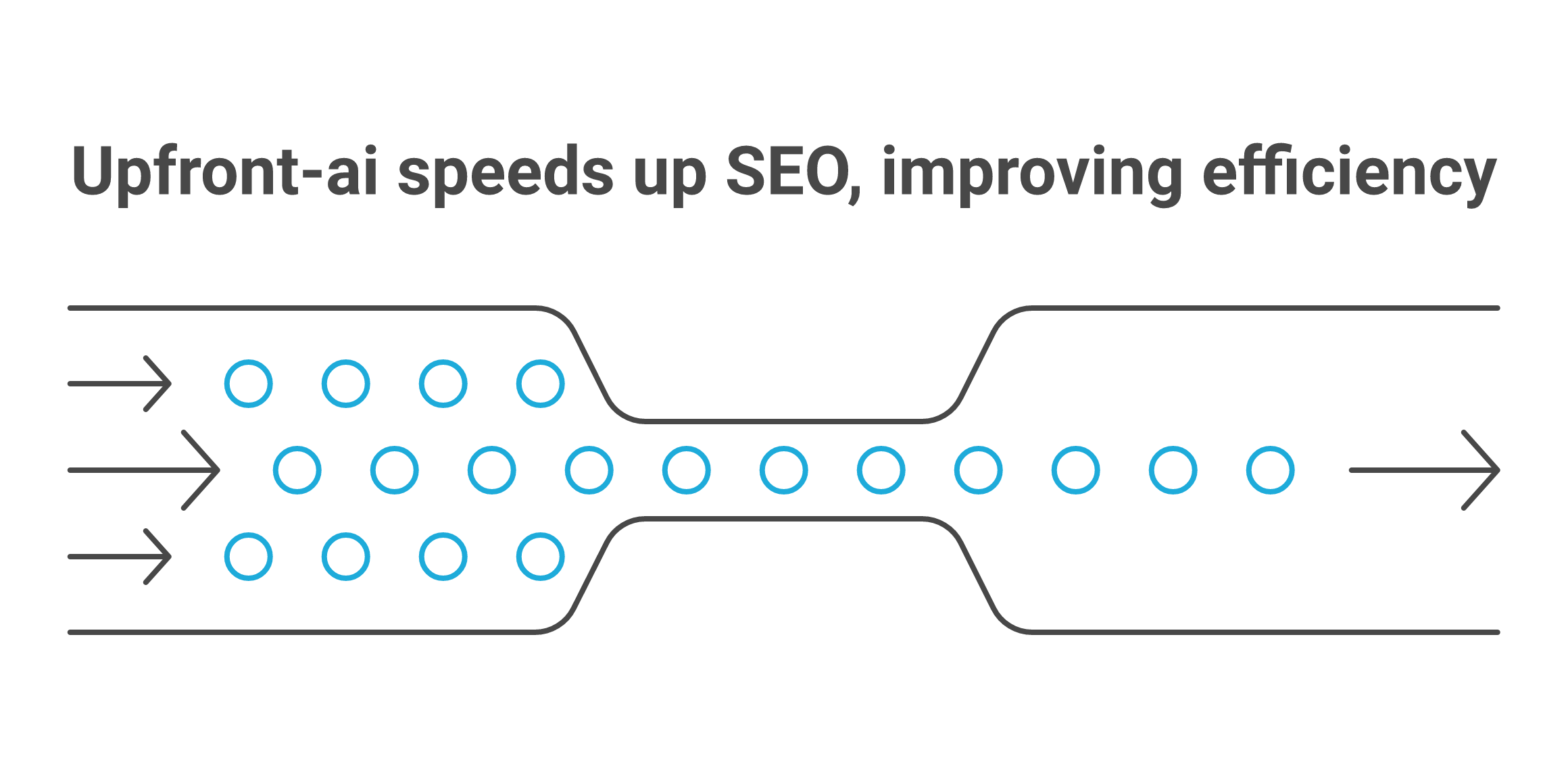
- Automation unlocks scale, small teams can publish the tempo generative engines reward without losing brand voice.
- Start with one-line answers and schema, these are high-impact, low-effort bets.
- Measure for citations early, exposure and LLM mentions are as important as rank.
FAQ
Q: What is generative engine optimization and how is it different from SEO?
A: Generative engine optimization prepares content so language models and answer engines can find and cite it. SEO focuses on ranking and technical signals, GEO adds extractability, inline citations, TL;DRs, and schema so generative systems can reuse your content in answers.
Q: How long until I see visibility gains with GEO?
A: You can expect early exposure and citation movement in the 30–45 day window on prioritized content. Broader traffic and lead metrics typically materialize over 2–6 months.
Q: What is the One Company Model and why does it matter?
A: The One Company Model is a single source of truth for brand messaging, ICPs, and voice. It prevents AI-generated drift and keeps content consistent and citation-ready.
Q: How does Upfront-AI prevent hallucinations and maintain EEAT?
A: By combining agent research with source-first writing and mandatory inline citations, plus author credentials and expert review, Upfront-AI reduces hallucination risk and improves trust signals.
Q: Can this work for regulated industries like healthcare and finance?
A: Yes. The approach emphasizes expert review, dated citations, and conservative claims to maintain compliance while still being extractable for answer engines.
Q: How should I measure success for GEO?
A: Track early metrics like exposure, LLM citations, and featured snippet share. Then measure traffic, leads, and pipeline contribution over time.
About Upfront-ai
Upfront-ai is a cutting-edge technology company dedicated to transforming how businesses leverage artificial intelligence for content marketing and SEO. By combining advanced AI tools with expert insights, Upfront-ai empowers marketers to create smarter, more effective strategies that drive engagement and growth. Their innovative solutions help you stay ahead in a competitive landscape by optimizing content for the future of search.