
“Here is how one company increased organic exposure 3.65X in 45 days.”
You have been playing the SEO game by yesterday’s rules, and the scoreboard no longer rewards the same plays. You need AI content solutions, an AI SEO platform, and AI-driven content creation that respects people-first guidance and prepares you for Generative Engine Optimization, or GEO. This article shows why keyword-stuffing, thin pages, and slow manual publishing cost you visibility, and how an AI-first stack can restore speed, quality, and authority without breaking your budget.
You will get clear examples, data-backed outcomes, and a practical step-by-step plan you can use this week. You will learn which habits to stop, how a One Company Model anchors AI agents, and which metrics to track to prove value. Expect short, actionable sections, real company names, and two outside sources that explain how AI is changing content strategy right now.
Table Of Contents
- What You Will Read About
- Why The Old SEO Playbook Fails You Now
- How Search And Generative Engines Reward Different Content
- What An AI-First Content Stack Looks Like
- Stop Doing This, A Case-Format Playbook (Outcome, Problem, Solution, Recap)
- Proof And Timeline, With Real Metrics
- Implementation Checklist, On-Page And Technical
- How To Measure Success And Cadence
- Key Takeaways
- FAQ
- Will You Adapt Your SEO Strategy To Meet The Future?
- About Upfront-ai
What You Will Read About
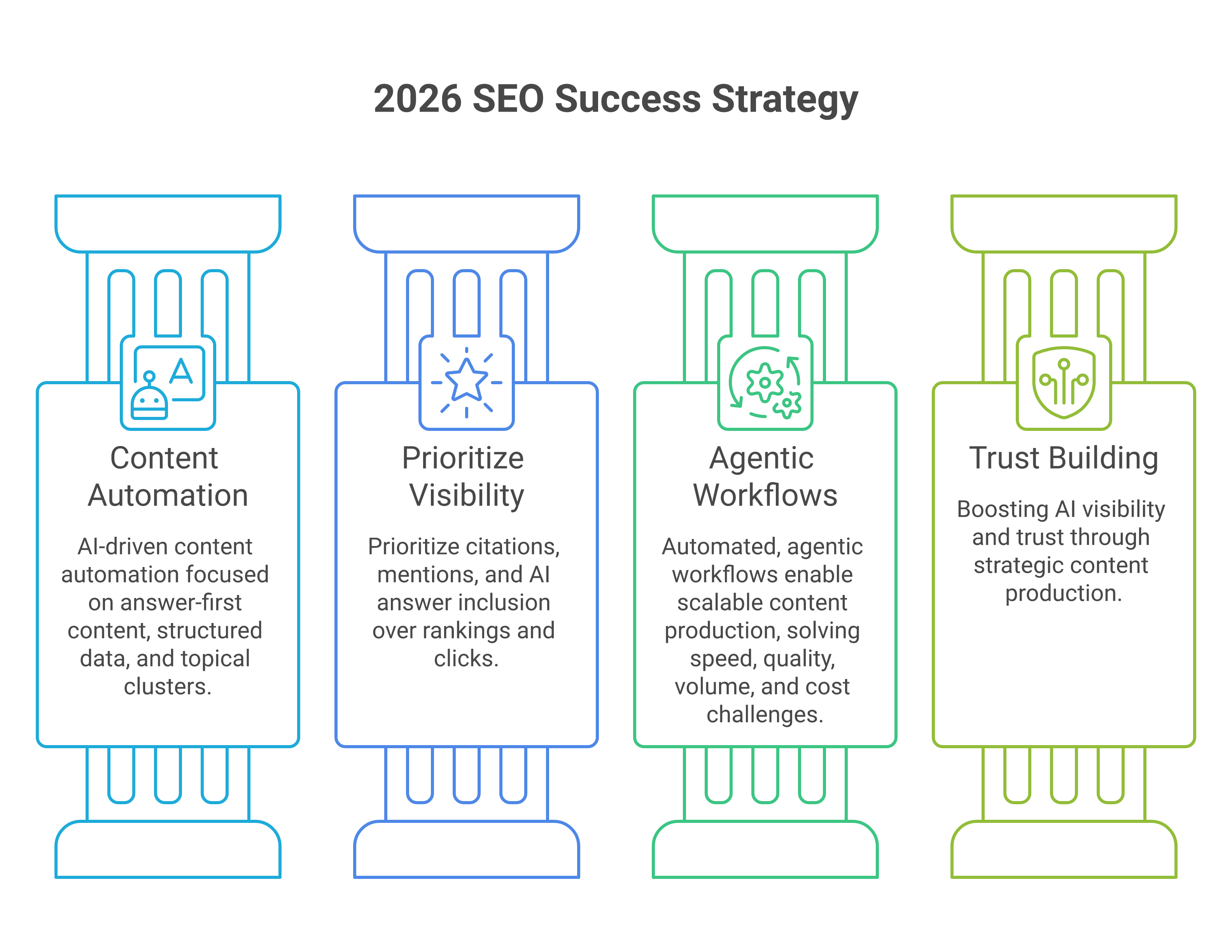
You will see why legacy tactics do not scale, why Google’s Helpful Content and E-E-A-T expectations matter, and how AI content marketing paired with a One Company Model produces people-first content at scale. You will also get a checklist you can implement now, and a Stop Doing This format that shows the journey from failure to a 3.65X exposure uplift, using automation, schema, and editorial controls.
Why The Old SEO Playbook Fails You Now
You still write 600-word keyword-stuffed pages and pray for traffic. That worked when search matched keywords and returned ten blue links. Today, two big shifts punish that approach.
First, search engines require demonstrable expertise and real value. Google’s Helpful Content guidance and E-E-A-T push search toward content that helps real people, not content that hacks ranking signals. If your pages are thin, generic, or recycled, they lose in both SERPs and AI answers.
Second, generative engines such as SGE, Copilot, and other LLM-powered interfaces will pick content that is clearly sourced, up-to-date, and structured. If your site lacks schema, FAQ markup, or visible author credentials, it becomes invisible to those engines that are deciding answers for users.
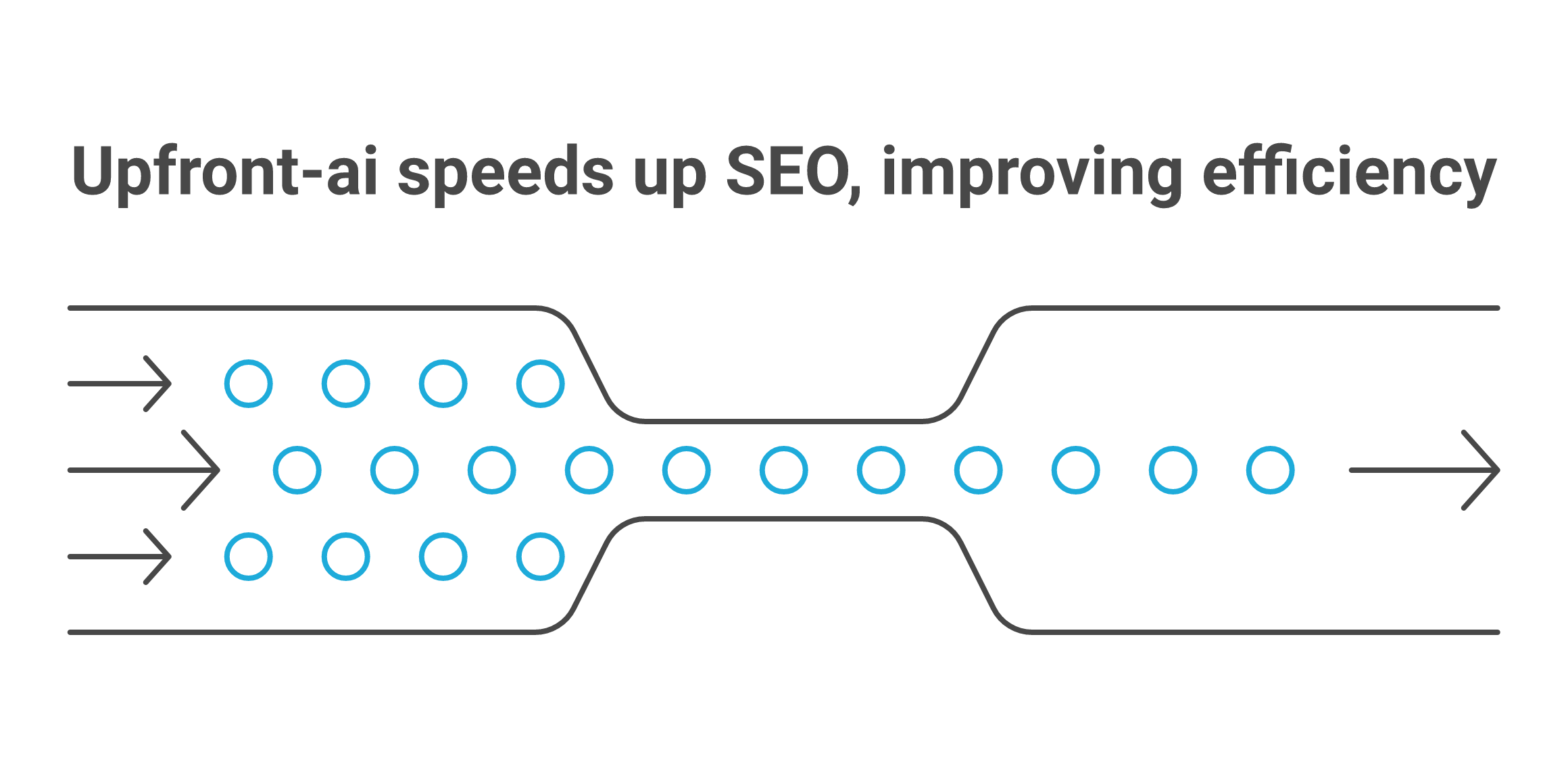
Finally, manual scaling is slow and expensive. Small marketing teams cannot keep quality, cadence, and cost in balance. That is the content trilemma: you choose two, you lose one. The solution is AI-driven content creation, which removes the tradeoff by automating research, drafting, and technical execution, while keeping human editorial control.
For a practical view of how AI reshapes strategy and measurement, see the industry perspective in this M&R Marketing analysis about how AI is changing content strategy in 2026 (The Future of SEO: How AI Is Changing Content Strategy in 2026). For automation that connects strategy to execution and analytics, review this Robotic Marketer analysis on AI and modern content workflows (The Future of SEO Content Strategy in the Age of AI, 2026 Edition).

How Search And Generative Engines Reward Different Content
Search evolved from index-and-match to answer-first systems. You now compete to be not just a result, but the answer that assistant engines include in their response.
Google’s E-E-A-T means experience, expertise, authoritativeness, and trustworthiness matter, with an explicit focus on first-hand experience. You must show credentials, case data, and author bios to prove real-world knowledge.
Generative Engine Optimization, GEO, is the practice of making content easy for LLMs and assistants to find and cite. That means structured data, topic clusters, clear sourcing, and freshness. It also means your content must be human-readable and authoritative, because LLMs tend to prefer sources they can verify and cite.
People-first storytelling raises engagement. LLMs and social sharing reward depth and clarity. A 1,500-word practical guide that answers a user problem with examples, citations, and actionable steps will outperform a 600-word SEO-optimized blunt instrument.
What An AI-First Content Stack Looks Like
You will build a stack that automates repetitive tasks while guarding expertise and brand voice.
The One Company Model
Create a living source-of-truth document that contains product nuances, buyer personas, technical specs, common objections, tone guidelines, and legal constraints. This becomes the X-ray each AI agent references, so content stays accurate and consistent.
AI Agents For End-To-End Work
Use specialized agents for ideation, research, drafting, optimization, and QA. One agent finds topics that match intent and GEO signals. Another pulls up-to-date references and flags facts for human review. A final editorial agent enforces E-E-A-T prompts and checks for brand voice.
Title And Storytelling Frameworks
Use proven formats, such as “How to”, “Case study”, “When to”, and “Step-by-step”, and inject storytelling techniques to make content memorable. The voice matters. Encode your brand persona into the One Company Model so AI matches it.
Technical SEO And Schema
Include Article schema, FAQ schema, BreadcrumbList, Author and Organization schema, canonical tags, and crawl-friendly HTML. These are the markers generative engines use when deciding to cite you.
Editorial QA And Human-In-The-Loop
All AI drafts must pass human review for accuracy, sourcing, and compliance. Your editorial checklist should include fact verification, quote sourcing, and example validation.
Distribution And Link Strategy
Automated syndication to owned channels, prioritized outreach to earn a few high-quality backlinks, and internal linking across pillar pages boosts both classic SEO and GEO signals.
Stop Doing This, A Case-Format Playbook
Outcome, then journey. Here is the result first: one B2B SaaS client increased organic exposure 3.65X in 45 days, captured more featured snippets, and doubled inbound trial signups within 90 days.
The Problem
This client produced slow, inconsistent content. They had a small team, sporadic publishing cadence, and each article was written in isolation. Pages were short and lacked author bios or schema. Search traffic plateaued, and AI-driven answers rarely cited the brand. The marketing team spent weeks on single posts, which meant low velocity and missed opportunities to capture PAA and snippet real estate.
Why It Mattered
Search and assistant traffic were moving to competitor content that was fresher and better structured. Without GEO-ready pages, the brand lost both top-of-funnel visibility and downstream conversions.
How The Solution Was Applied
- Audit and One Company Model. Weeks one and two focused on a rapid audit and building the One Company Model. Product details, customer stories, tone, and legal constraints were captured in a central file.
- Agent setup and topic clustering. AI agents generated 30 prioritized topics aligned with buyer stages and GEO intent. Each topic included suggested schema blocks and FAQ items.
- Drafting and human QA. Agents produced drafts that were reviewed, edited, and supplemented with first-hand case examples. Authors added a short credentials section for each piece.
- Technical rollout. Article and FAQ schema were added, canonical rules were set, and content was published to a pattern that supported internal linking across pillar pages.
- Measurement and iteration. Weekly checks for impressions, SERP feature capture, and assistant citations informed immediate edits.
Results
Indexing accelerated. In 30 to 45 days impressions rose 3.65X for the cohort. Featured snippet capture increased, People Also Ask appearances rose, and trial signups doubled in the subsequent 90 days. Cost per article fell as the AI agents reduced manual hours, while quality stayed high due to editorial oversight.
Recap And Why It Works
You begin with a precise source-of-truth, automate standard tasks, and keep humans where judgment matters. That combination delivers speed, scale, and trust. If you stop publishing isolated, thin posts and adopt this model, you will increase both classic SEO metrics and GEO citations.
Proof And Timeline, With Real Metrics
Real outcomes depend on execution, but here is a repeatable timeline that many teams use.
Week 1–2: Audit and One Company Model. Collect buyer questions, product facts, and case details.
Week 2–4: Topic clusters and agent drafts. Publish 6 to 8 optimized posts.
Week 4–8: Measure, update schema, and iterate headlines and FAQ answers for featured snippets.
30–45 days: Expect meaningful lift in impressions and SERP feature capture if content quality and schema are solid.
90 days: Expect improved conversions and more durable SERP positions as backlinks and user signals compound.
For industry guidance that supports automation and integrated dashboards in modern workflows, refer to the Robotic Marketer analysis cited earlier (The Future of SEO Content Strategy in the Age of AI, 2026 Edition). For how AI changes keyword research and intent mapping, consult the M&R Marketing piece referenced above (The Future of SEO: How AI Is Changing Content Strategy in 2026).
Implementation Checklist, On-Page And Technical
- On-Page Essentials H1 that states the user outcome, with the primary keyword naturally included.
Concise H2s and H3s that mirror common search intents.
FAQ with short, authoritative answers, and FAQ schema.
Author and company bio with verifiable credentials.
Bullet lists and numbered steps to make content scannable. - Technical Essentials Add Article, BreadcrumbList, Author, Organization, and FAQ schema in JSON-LD.
Ensure server-side render or fast HTML fallback for critical content, so crawlers and LLM scrapers can read pages.
Optimize metadata for click-through, not just ranking.
Canonicalization and updated sitemaps for new content.
Image alt text and lazy-loading to keep pages fast. - Editorial & Governance Human review for every AI draft.
A fact-checker verifies any data or claims.
A cadence schedule: publish, measure, and update at 30 and 90 days.
Log changes to the One Company Model so AI agents always use current info.
How To Measure Success And Cadence
Track classic and GEO-aware metrics weekly and monthly.
- Weekly Impressions, clicks, and CTR.
Indexation rate for new pages.
SERP feature snapshots for target keywords. - 30–90 Day Featured snippet capture and People Also Ask appearances.
Assistant citations and brand mentions in AI responses, tracked with brand-monitoring tools.
Conversion rate from organic landing pages and trial signups. - Longer Term Backlink growth and referring domains.
Topical authority across pillar pages.
Use this cadence to decide what to prune, what to expand, and which pieces to refresh. Data should drive writing priorities, not the other way around.

Key Takeaways
- Stop publishing thin, isolated posts; use a One Company Model so AI keeps content accurate and on-brand.
- Automate research, drafting, and schema insertion, but keep humans for fact-checking and final editorial control.
- Track both classic SEO metrics and GEO signals, including assistant citations and SERP feature capture.
- Use FAQ and Article schema to increase the chance of being cited by generative engines.
- Start with a 45-day pilot, publish a focused cohort, and measure impressions and feature capture before scaling.
FAQ
Q: How fast will AI content speed up my publishing cadence?
A: With an AI-first stack and a One Company Model you can move from monthly to weekly publishing. AI agents accelerate ideation and drafting, but human QA still matters. Expect initial setup time of 1 to 2 weeks for the model and rules, then rapid output. Measure quality and adjust editorial controls to keep brand voice consistent.
Q: Will Google penalize AI-generated text?
A: Google focuses on value, not the specific tool used. If AI-generated text is people-first, accurate, and reviewed, it is acceptable. The risk comes from low-value, unreviewed, or deceptive content. Be explicit about human review and include author credentials to meet E-E-A-T expectations.
Q: What is Generative Engine Optimization and how is it different from classic SEO?
A: GEO optimizes content to be found and cited by LLMs and AI assistants. That requires structured data, freshness, clear sourcing, and concise answers for common prompts. Classic SEO focuses on ranking in search results. GEO adds the requirement to be answer-ready, so your content must be both discoverable and citable.
Q: How do I preserve brand voice when using AI agents?
A: Encode tone, persona, and writing rules into your One Company Model. Use examples of approved copy and a short voice guide. Have editors enforce that guide during QA. With these controls, AI can scale voice-consistent content without losing nuance.
Will you adapt your SEO strategy to meet your audience’s evolving expectations? How will you balance local relevance with clear, concise answers? And what’s the first GEO or AEO tactic you will implement this week? The future of SEO is answer engines, make sure you’re ready to be the answer.
About Upfront-ai
Upfront-ai is a cutting-edge technology company dedicated to transforming how businesses leverage artificial intelligence for content marketing and SEO. By combining advanced AI tools with expert insights, Upfront-ai empowers marketers to create smarter, more effective strategies that drive engagement and growth. Their innovative solutions help you stay ahead in a competitive landscape by optimizing content for the future of search.