
“Write for the answer, not the algorithm.”
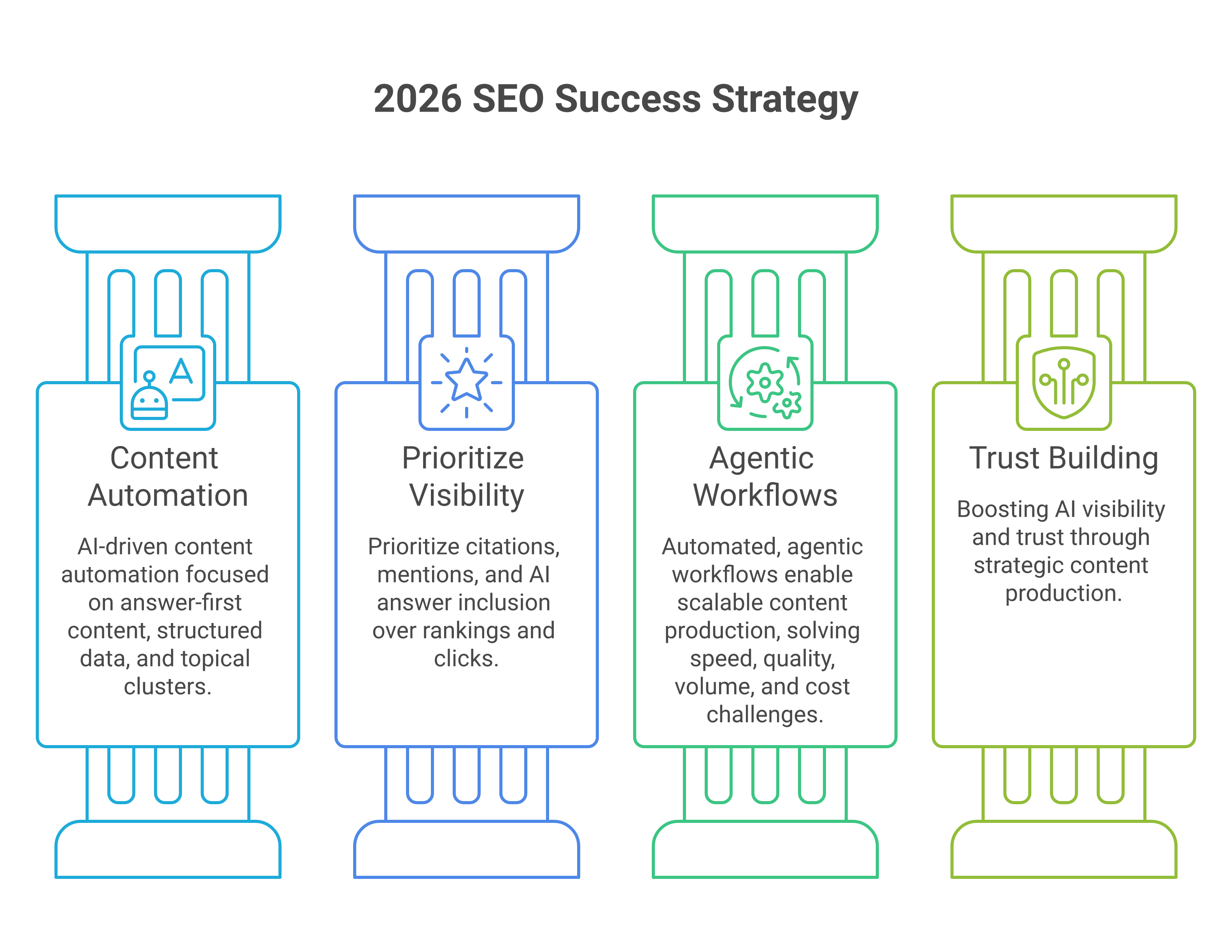
You have a choice: keep publishing the same slow, expensive posts that hope to rank, or flip your content engine to one that uses an AI-driven content strategy to scale SEO growth while preserving authority, accuracy, and brand voice. AI content for SEO is not a gimmick, and traditional SEO content is not dead. What changes is how you win attention from both search engines and generative engines.
You will read practical contrasts, concrete actions, and a playbook you can use this week. You will learn why AI-driven content strategy can accelerate topical coverage, reduce per-asset cost, and increase the chance your pages are cited by AI assistants, and why traditional SEO content still holds advantage in nuance and high-stakes expertise. You will also get examples, numbers, a mid-article comparison table, and links to resources that help you pilot fast.
Table Of Contents
- The New Battleground For Visibility: Search Plus Generative Engines
- Traditional SEO Content: What It Does Best And Where It Breaks
- AI-driven Content Strategy: What It Adds And How It Works
- Comparison Table: AI-driven Content Strategy Vs Traditional SEO Content
- Detailed Axis-by-axis Comparison
- Implementation Playbook You Can Run In 30 to 60 Days
- Risks, Guardrails, And EEAT Compliance
The New Battleground For Visibility: Search Plus Generative Engines
You have to think beyond classic ranking. Google’s helpful content guidance forces you to create helpful, people-first content. At the same time, answers from tools like ChatGPT, Perplexity, and Google AI Mode are extracting and summarizing web pages. If your content is structured, referenced, and concise, it can be surfaced without a click. That makes both AI content for SEO and generative engine optimization essential to modern strategy.
You must plan for two audiences simultaneously: human readers who click and convert, and AI systems that summarize or cite sources. That is why an AI-driven content strategy emphasizes data-driven ideation, repeated patterns for scale, and strict human-in-the-loop verification.

Traditional SEO Content: What It Does Best And Where It Breaks
Traditional SEO content earns results when you need deep research, investigative pieces, or industry thought leadership. You rely on human writers, subject-matter interviews, link building, and careful on-page optimization. Traditional posts are strong at nuanced argument, high-authority analysis, and long-format storytelling.
Where it breaks is scale and cost. A single in-depth article can take days or weeks and a significant budget. Many teams face a trilemma: you can have quality, or speed, or cost efficiency, but rarely all three. That leaves topical gaps that competitors or AI-augmented teams can exploit.
AI-driven Content Strategy: What It Adds And How It Works
An AI-driven content strategy automates the repetitive parts of content production while centering humans where they matter most. You use AI agents to ideate, draft, and optimize. You deploy a One Company Model to encode brand voice, audience signals, and conversion intent. You enforce EEAT with mandatory SME review, author bios, and primary citations. Platforms built for this approach can publish dozens of optimized pages per week, rather than one or two.
For a practical example of how to automate ideation, drafting, and optimization end to end, see Upfront-ai’s guide to automating content marketing for SEO growth and conversion. For a detailed primer on aligning SEO, GEO, and generative engines into a single pipeline, review Upfront-ai’s primer on unlocking AI-driven content strategy and generative engine optimization. For context on how AI-first workflows compare with legacy processes, Nightwatch’s analysis of traditional SEO versus AI SEO offers useful perspective.
Comparison Table: AI-driven Content Strategy Vs Traditional SEO Content
| Attribute | AI-driven content strategy | Traditional SEO content |
|---|---|---|
| Time to publish (per article) | 1 to 3 days with templates and agent drafts | 3 to 14 days typical (research and editing) |
| Cost per article | 50 to 70% lower when automated (platform dependent) | Higher due to human-only labor and agency fees |
| Scale (monthly articles) | 10 to 100+ pages with steady pipeline | 5 to 20 pages depending on team size |
| Consistency of brand voice | High if One Company Model enforced | Variable across writers and freelancers |
| LLM/AI citation likelihood | Higher when content is structured and referenced | Lower unless content is highly authoritative and cited |
| Risk of factual error | Moderate without human review; low with SME checks | Low when research-heavy, higher variability |
| Best use case | Topical breadth, freshness, GEO and AIO visibility | Deep thought leadership, investigative pieces |
AI-driven Content Strategy: Time, Cost And Cadence
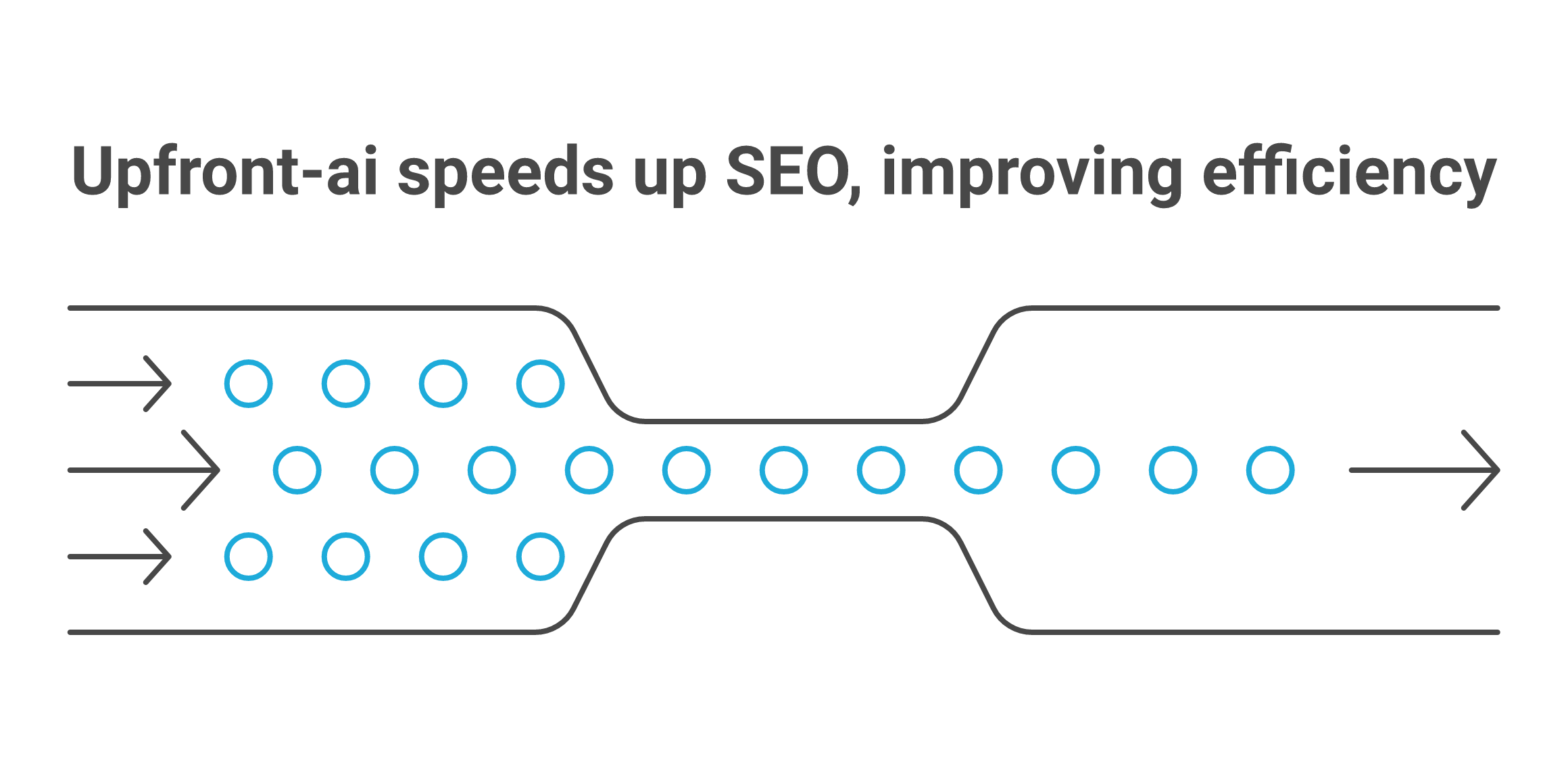
On time and cost you win materially with AI. If you are running a pilot of 10 to 15 articles, a platform that automates ideation, drafts, and schema will typically reduce production time by 50 percent or more versus a manual workflow. That is not guesswork. Teams using automated pipelines often report getting to market weeks earlier when they need to capture trending queries. You can use that velocity to own more long-tail clusters and capture SERP features. For context, a recommended pilot size is 10 to 15 focused pieces over 30 to 60 days.
Traditional SEO Content: Time, Cost And Cadence
By contrast, traditional workflows are slower because each step, keyword research, outline, interviews, drafts, fact-checks, and link outreach requires human time. You maintain high quality, but the cadence is harder to sustain without additional budget. If your objective is deep analysis or exclusive data, keep using human-first processes. If you must scale topical coverage, consider hybridizing.
AI-driven Content Strategy: SEO And Generative Engine Visibility
You will gain GEO and AIO wins when content is written for both search and machine consumption. That means clear answers, structured sections, FAQ schema, and authoritative citations. AI-driven tools can add schema automatically and create concise summaries that are perfect fodder for AI assistants. Platforms like Upfront-ai bake these optimizations into the pipeline so every page is built for dual consumption from day one.
Traditional SEO Content: SEO And Generative Engine Visibility
Traditional SEO can produce visibility, but it often targets only human search behavior. Without structured data, clear answer boxes, and rapid refresh cycles, those pages are less likely to be used as sources for generative answers. You can retrofit schema and FAQs, but that requires extra work and process changes.
AI-driven Content Strategy: Quality, EEAT And Human Oversight
You must enforce EEAT. The biggest mistake teams make is thinking automation means zero oversight. Instead, you set rules: every AI draft must include cited sources, an SME verification step for technical claims, an author byline with credentials, and a dated revision history. When you adopt that governance, AI-generated drafts become time-saving first passes that human experts refine into authoritative assets.
Traditional SEO Content: Quality, EEAT And Human Oversight
Traditional content already follows EEAT naturally when experts write and vet pieces. The trade-off is throughput. If you need to maintain EEAT across hundreds of pages, you either staff up or accept slower ramp. The hybrid approach is to use AI for draft creation and humans for verification.
AI-driven Content Strategy: Engagement And Conversion
AI can optimize for engagement signals like click-through rates and dwell time by generating multiple headline and hook variations, then A/B testing them quickly. You can iterate on meta descriptions, H1s, and opening paragraphs at scale. That feeds a faster learning loop where content performance improves week over week.
Traditional SEO Content: Engagement And Conversion
Traditional teams A/B test and optimize too, but slower. When human creatives iterate, they often produce stronger long-form funnels and higher-per-piece conversion. The lesson is to combine AI testing speed with human craft for highest conversion performance.
Implementation Playbook You Can Run In 30 To 60 Days
Start with an audit, prioritize one pillar, and run a 30 to 60 day pilot of 10 to 15 articles. Use the One Company Model to encode your voice and conversion framework. Automate schema and FAQ generation so every page ships with the structure AI assistants prefer. Enforce SME checks and a content review board for the pilot. Measure impressions, SERP feature captures, CTR, and conversions. Many teams see measurable SERP feature wins and increased impressions in 30 to 45 days when cadence and governance are enforced.
Risks, Guardrails, And EEAT Compliance
Do not let automation outpace verification. Your guardrails should include source lists, a mandatory review step for claims, author bylines, and a cadence for content refresh. Avoid template-only production that produces repetitive thin pages. Invest in occasional original research or customer case studies to maintain unique value.

Key Takeaways
- Pilot an AI-driven content strategy for one pillar with 10 to 15 articles and measure in 30 to 60 days.
- Enforce EEAT by mandating SME verification, author bylines, and primary citations for every AI draft.
- Automate schema, FAQ, and internal linking to boost your chance of being cited by AI assistants.
- Use hybrid workflows: AI for speed and human experts for trust and nuance.
FAQ
Q: Will Google penalize AI-written content?
A: Not if content is people-first, accurate, and follows Google’s helpful content guidance. The safe approach is to use AI to draft and humans to verify. Ensure you include author credentials, citations, and clear timestamps. That way your pages meet EEAT signals and serve readers before search engines.
Q: How quickly can I expect to see results from an AI-driven pilot?
A: Expect measurable visibility improvements within 30 to 45 days for targeted clusters, assuming you publish regularly and enforce quality checks. SERP feature captures and impressions often move first, while clicks and conversions follow as pages gain trust.
Q: How do I prevent AI hallucinations in content?
A: Use curated data sources, require inline citations, and put subject-matter experts in the review loop. Establish a list of trusted domains for automated citations, and run routine audits on published pages to catch drift.
Q: Can AI content build thought leadership?
A: Yes, when it is guided by deep brand context, original insights, and human storytelling. Use a One Company Model to infuse AI drafts with your voice and strategy, then layer on interviews, exclusive stats, or customer case studies to make the content unique.
Final Questions To Consider You have the tools and the knowledge now. The question is: Will you adapt your SEO strategy to meet your audience’s evolving expectations? How will you balance local relevance with clear, concise answers? And what’s the first GEO or AEO tactic you’ll implement this week? The future of SEO is answer engines, make sure you’re ready to be the answer.
About Upfront-ai
Using Upfront-ai is a cutting-edge technology company dedicated to transforming how businesses leverage artificial intelligence for content marketing and SEO. By combining advanced AI tools with expert insights, Upfront-ai empowers marketers to create smarter, more effective strategies that drive engagement and growth. Their innovative solutions help you stay ahead in a competitive landscape by optimizing content for the future of search.