
“Content is no longer a cost center, it is your answer to being found.”
You are facing a clear choice. Either you keep patching content workflows with freelancers and hope quality keeps up with demand, or you design a system that writes smarter, faster, and with brand precision. Upfront-ai provides that system, combining a One Company Model, automated AI agents, human editorial checks, and full technical SEO execution to deliver people-first content that is built to rank and to be cited by large language models and answer engines. Early adopters see measurable gains in a matter of weeks, provided technical SEO and topical depth are addressed.
This article walks you through everything you need to know about Upfront-ai’s AI-driven SEO content solution. You will get a clear definition of the system, an explanation of its core parts, realistic timelines and numbers to expect, and practical steps you can use this week. You will also get tactical advice on avoiding common pitfalls that cost time, traffic, and trust. Read on if you want speed without sacrificing authority, and if you want content that helps both people and AI assistants find and cite your brand.
Table of contents
- You need to understand three ideas firs
- You must marry narrative craft with systems thinking
- If you want sustained advantage you must design for retrieval
- What Is Upfront-ai?
- Core Components Explained
- How Upfront-ai Works, End-to-End
- Why This Matters Now: SEO, GEO and AIO Context
- Business Benefits and Measurable Outcomes
- Differentiators Versus Freelancers and Agencies
- Use Cases and Real-World Examples
- Implementation Timeline and Pricing Signals
- Key Takeaways
- FAQ
- About upfront-ai
You need to understand three ideas first.
One, modern SEO rewards content that is written for people and grounded in reliable sources. Two, generative systems such as large language models build answers from indexed text and trusted references, so your content must be structured and citable. Three, scale matters: publishing often without brand control creates noise, not authority.
Define terms quickly so you can move faster.
- AI-driven SEO content solution: a platform that uses machine learning and human workflows to research, draft, optimize, and publish content designed to rank.
- GEO (generative engine optimization): optimizing content so it is more likely to be retrieved and cited by large language models and answer engines.
- HCU and EEAT: Google’s Helpful Content Update and the emphasis on experience, expertise, authoritativeness, and trustworthiness, which favor people-first, well-sourced content.
You must marry narrative craft with systems thinking
Upfront-ai combines a One Company Model, AI agents that follow HCU and EEAT principles, and more than 350 storytelling techniques across 35 title formats and 9 topic categories. That combination is not just creative flair. It provides repeatable structures that improve dwell time and make content easier for retrieval systems to parse.
Timing matters. Upfront-ai’s guidance says teams often begin to see SEO gains within 8 to 16 weeks when technical issues are fixed and topical depth is built. External industry research supports quick appearances of AI-created content in results, with AI-written pages occupying a growing share of top search results. For data on AI content trends, see the SEMrush findings in their summary of AI SEO statistics SEMrush findings.

If you want sustained advantage you must design for retrieval
That means entity-rich copy, author and organization signals, and structured data. Use FAQ schema, clear H1/H2 hierarchies, canonical tags, and reliable citations to increase the odds that retrieval systems will surface your content. Also measure outcomes beyond traffic: look for featured snippets, AI-overview mentions, and citation events.
A shorter path to advanced wins is to ensure editorial quality at scale. Upfront-ai’s human-in-the-loop model flags uncertain claims for verification and integrates an editorial QA pipeline before publishing. That human layer reduces hallucination risk and protects EEAT. If you skip it, you may publish faster, but you risk losing rankings and trust.
What Is Upfront-ai?
You will think of Upfront-ai as an automated content studio that preserves brand voice. It is an end-to-end platform for B2B teams and small marketing departments that need consistent, measurable content velocity. The platform’s claimed advantage is the One Company Model, a single source of truth about your brand that drives consistent messaging across every content asset.
Upfront-ai helps you create long-form blog articles, SEO landing pages, FAQs, comparison pages, and thought leadership across nine topic categories using 35 title formats. For a practical how-to on transforming SEO strategy with AI-driven content, see this Upfront-ai guide on transforming your SEO strategy with AI-driven content transform your SEO strategy with AI-driven content.
Core Components Explained
The One Company Model
Treat the One Company Model as your content blueprint. It captures your positioning, buyer personas, approved messaging, competitive landscape, and tone. Once that model is authoritative, every AI-generated draft references it. That reduces brand drift, stops contradictory claims, and speeds approvals.
AI Agents with HCU and EEAT Guidance
You will get AI agents that handle ideation, keyword clustering, source discovery, and first drafting. The agents are designed to follow Google’s Helpful Content Update guidelines and EEAT principles by prioritizing people-first language and by surfacing credible sources. Critically, the system flags claims with low confidence for human review.
Storytelling at Scale
You want content that holds attention. Upfront-ai applies over 350 storytelling techniques and varied title formats to increase click-through rates and time on page. Instead of identical blog structures, you receive diverse narrative arcs tailored to intent and persona.
Full Technical SEO Stack and Schema
The platform does keyword research, on-page optimization, internal linking, and schema markup. FAQ schema, article schema, and other structured data increase the chance of being surfaced in rich results and voice assistants. The work does not end with a draft; proper HTML text, fast loading, and canonicalization are part of the deliverable.
Page Experience and Publishing Cadence
Publish often, but publish well. Upfront-ai emphasizes clean HTML text that loads quickly and content that is updated with current citations. Freshness and cadence matter for both traditional search indexes and LLM retrieval corpora.
How Upfront-ai Works, End-to-End
You will find the workflow straightforward and repeatable.
- Onboarding and company x-ray. You provide positioning, personas, existing content, and performance goals. The platform builds your One Company Model.
- Content planning. Automated calendars map topics to search intent and channel priorities.
- Research and drafting. AI agents collect sources, apply storytelling templates, and create first drafts.
- Human editorial QA. Editors verify facts, add first-hand case details, and ensure EEAT compliance.
- Publish and distribute. Pages are optimized for schema, technical SEO, and syndication.
- Measure and iterate. Analytics feed back into the calendar and the One Company Model.
Why This Matters Now: SEO, GEO and AIO Context
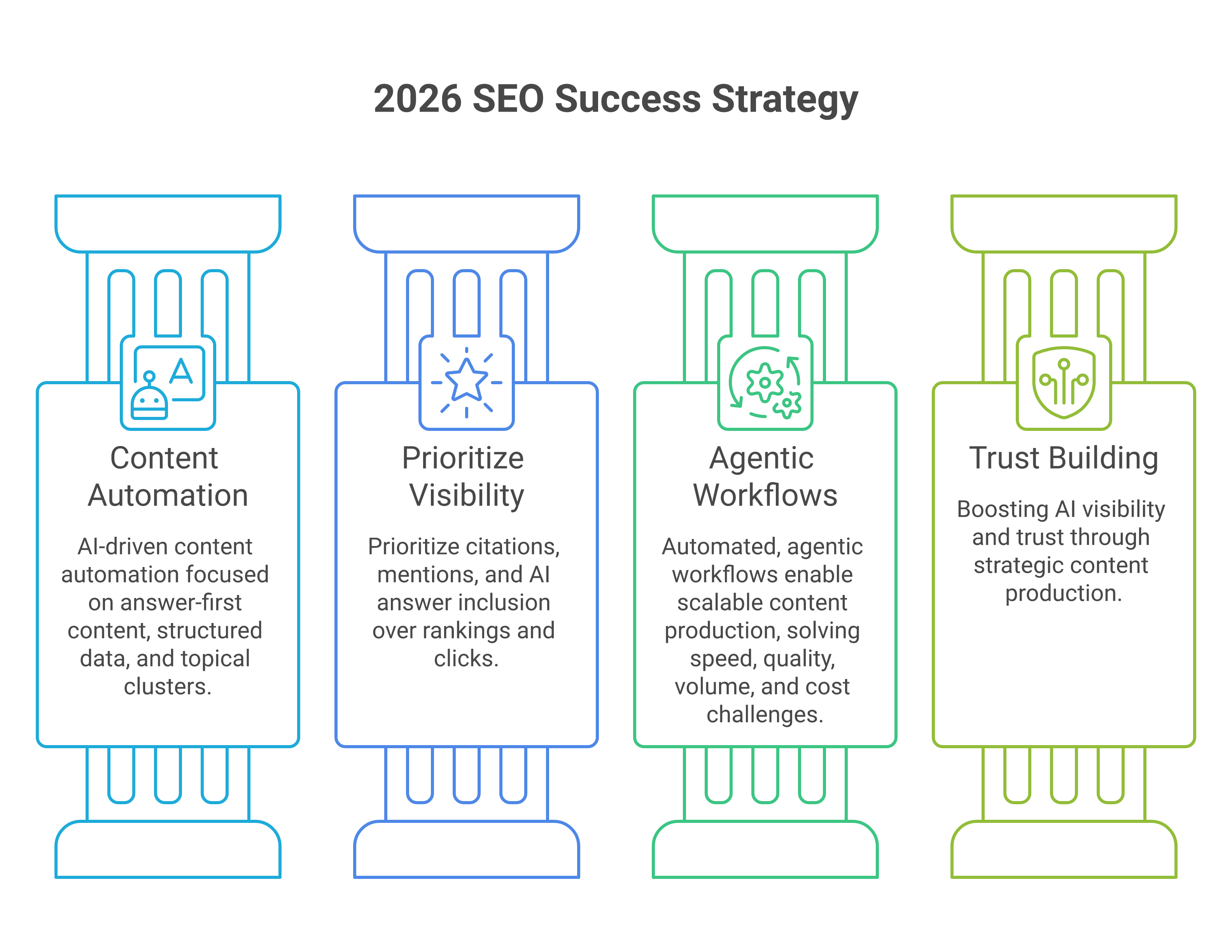
Search engines are evolving into answer engines. You must optimize for human readers and for retrieval systems simultaneously. That means you need to:
- Create people-first content that answers explicit questions, which satisfies HCU.
- Ground content with citations, author profiles, and company proof to satisfy EEAT.
- Structure content with schema and entity signals so LLMs and answer engines can find and cite it.
Research shows that being present in AI overviews matters. According to SEMrush, over 88% of searches that trigger AI overviews are informational, and repeated appearances in those summaries build brand recognition. See the SEMrush analysis for more context SEMrush analysis. You should also consider continuing education and panels; for example, this industry webinar explores the future of SEO and GEO industry webinar on the future of SEO and GEO.
Business Benefits and Measurable Outcomes
You want measurable improvement in visibility, not promises.
What you can expect, realistically:
- Speed to initial results. Upfront-ai and similar systems report that content can begin showing in search within 8 to 16 weeks when technical issues are resolved and topical depth is built. For practical deployment guidance, see Upfront-ai’s overview of simple AI content solutions simple AI content solutions for businesses and agencies.
- Featured snippet and zero-click capture. Structured, concise answers increase your chance of being used in AI summaries and featured snippets.
- Cost efficiency. Automation reduces cost per article relative to an agency or distributed freelance model, especially when you need high volume.
- Brand consistency. The One Company Model prevents off-brand content from being published.
- Scalable authority. With frequent, well-sourced publishing you can win more citations in LLM outputs and knowledge panels.
A note on performance claims: Upfront-ai cites examples such as a 3.65X exposure increase in 45 days for certain customers. Treat that as a directional benchmark. Ask for the supporting case study, methodology, and the baseline metrics before you commit budget.
Differentiators Versus Freelancers and Agencies
You should weigh three core differences.
- Single source of truth. Unlike a set of freelancers, the One Company Model gives consistency.
- HCU and EEAT built in. The platform enforces sourcing and editorial signals automatically.
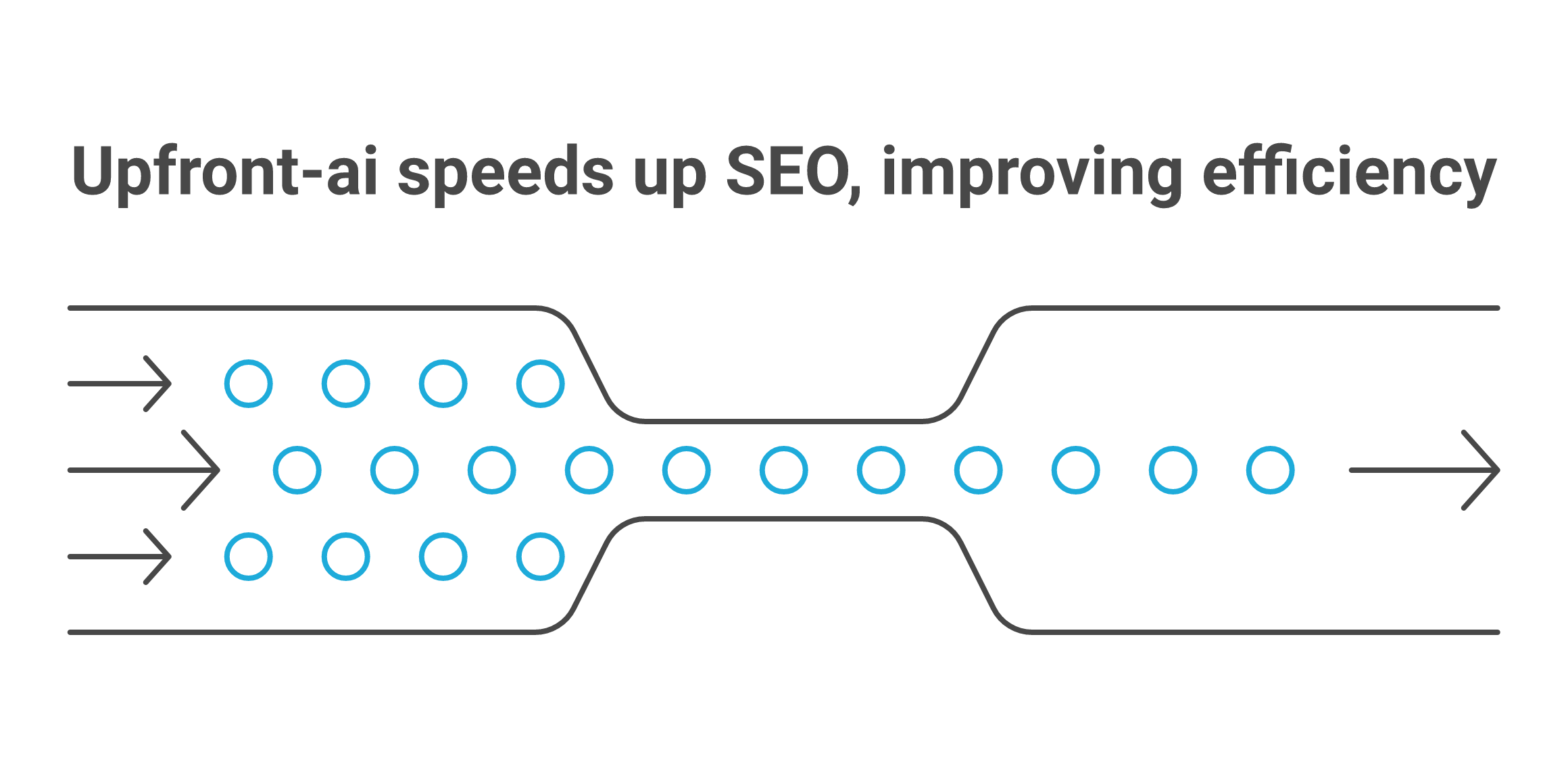
- Speed plus scale. Automation plus human QA lets you publish more without diluting quality.
Use Cases and Real-World Examples
You will find the platform valuable in several verticals.
- B2B SaaS. Use deep product cluster pages and comparison content to capture purchase intent and to be cited in assistant answers.
- Manufacturing. Publish technical, entity-rich content so LLMs and industry knowledge bases surface your IP.
- Healthcare. Use strict editorial review and medical oversight for people-first educational content.
- Recruitment. Create employer branding and candidate guides that answer queries in assistant overlays and voice results.
Real example to illustrate a path. Imagine you are marketing director at a 40-person B2B SaaS company. You onboard with Upfront-ai and prioritize three product themes. Within two months your team publishes 12 optimized articles. At week 12 you begin to see featured snippets and a steady rise in impressions. By week 16 you have new leads directly traceable to content pages. That timeline aligns with the platform’s 8 to 16 week guidance.
Implementation Timeline and Pricing Signals
A pragmatic rollout looks like this.
- 0 to 14 days: discovery and One Company Model creation.
- 14 to 30 days: content calendar and the first batch of published posts.
- 30 to 90 days: measurable uplift in impressions, featured snippets, and LLM visibility.
Pricing is usually usage-based. Expect a tiered model where volume and service levels determine cost. Ask for SLAs on editorial turn times, and request a pilot that includes a performance projection and concrete KPIs.
Key Takeaways
- Build one source of truth. Your One Company Model will prevent brand drift and reduce review cycles.
- Optimize for people and AI. Structure content for human readers and for retrieval systems with schema, citations, and author signals.
- Keep humans in the loop. Human editorial QA prevents hallucinations and protects EEAT.
- Measure the right things. Track impressions, featured snippets, AI overview appearances, and downstream leads.
- Start small and scale. Pilot one topic cluster, validate results in 8 to 16 weeks, then expand.

FAQ
Q: How soon will my content show results in search and AI overviews?
A: Results vary by category and baseline technical health. Teams that fix technical SEO issues and build topical depth often begin to see gains in 8 to 16 weeks. AI-generated content can appear in search more quickly, sometimes within two months, but you should validate quality and EEAT signals before relying on those placements. Request a pilot and a projected timeline based on your specific site health and competitive landscape.
Q: How does the platform prevent AI hallucinations and ensure factual accuracy?
A: Upfront-ai uses AI agents to surface primary sources and to flag low-confidence statements. Human editors perform fact checks, add first-hand case details, and verify citations. You should require a documented editorial workflow and request samples that show how claims are sourced and vetted.
Q: Will this replace my in-house writers or agency relationships?
A: The platform is best used to augment your team, not to remove editorial oversight. It scales drafting and research while preserving human control over strategy and voice. Agencies can still add value for PR, complex creative work, and integrations that require bespoke human judgement.
Q: How does Upfront-ai improve visibility with large language models and answer engines?
A: The platform creates entity-rich, structured content with clear headings, schema, and reliable citations. That combination increases the chance retrieval systems will index your content and use it as a cited source. You should also publish consistently and ensure your site’s technical signals are strong.
About upfront-ai
Using Upfront-ai is a cutting-edge technology company dedicated to transforming how businesses leverage artificial intelligence for content marketing and SEO. By combining advanced AI tools with expert insights, Upfront-ai empowers marketers to create smarter, more effective strategies that drive engagement and growth. Their innovative solutions help you stay ahead in a competitive landscape by optimizing content for the future of search.
You have the tools and the knowledge now. The question is: Will you adapt your SEO strategy to meet your audience’s evolving expectations? How will you balance local relevance with clear, concise answers? And what’s the first GEO or AEO tactic you’ll implement this week? The future of SEO is answer engines, make sure you’re ready to be the answer.