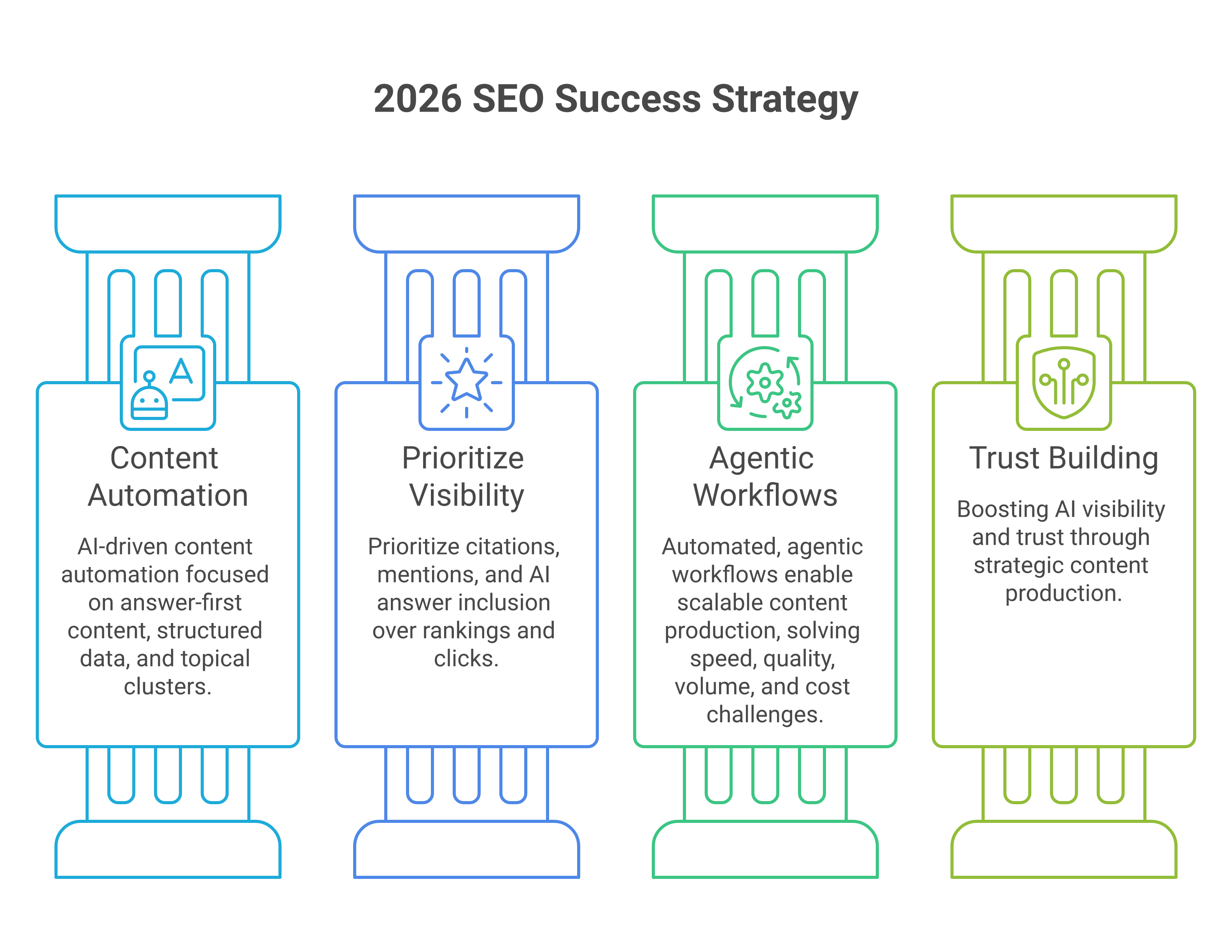

If your brand is not the answer, someone else will.
You know the pressure. Search results narrow, answer engines widen, and your content either gets clicked or it disappears into a feed. Upfront-ai flips that equation by combining a One Company Model, automated AI agents, and a library of 350 storytelling techniques so you get people-first content that ranks and gets cited by generative engines. You can expect faster visibility, clearer answer-focused assets, and measurable gains in impressions and click-through rates. Clients report exposure lifts as high as 3.65X in 45 days when strategy, storytelling, and structure are aligned, according to Upfront-ai case summaries.
This introduction expands the first two paragraphs with context and promise. You will learn where these techniques apply, what they actually are, and why they move the needle fast. You will also get tactical steps, metrics to watch, and tools you can start using this week. The goal is to make the path from intent to answer shorter, and to make your content the answer engines prefer.
Table of contents
- Where what why format and flow
- Where storytelling finds search opportunity
- What the 350 storytelling techniques look like
- Why storytelling accelerates search and generative visibility
- Level 1: broad context and market signals
- Level 2: specific tactics and measurable plays
- Core insight: what to optimize first for speed
- Implementation pipeline and timeline
- Vertical playbooks with examples
- Results, metrics, and proof points
- Key takeaways
- FAQ
- About Upfront-ai
Where what why format and flow
Start broad, then narrow. You will see how a wide view exposes opportunities. You will then move to specific tactics that create fast wins. The core insight ties everything to one simple action you can take today.
Where: search and generative engines are changing how people find answers. You need to know which queries are dominated by short answers, which queries reward long-form context, and where local or geo cues change intent. Tools and market reports show AI is shifting both query formats and user expectations, as discussed in industry coverage like the Morgan Stanley AI trends series.
What: the 350 storytelling techniques are not tricks. They are repeatable narrative structures, hooks, and evidence patterns that map to search intent, snippet requirements, and LLM retrievers. You will see examples like data-led microstories, counterintuitive headlines, and step-by-step case narratives that convert search attention into trust.

Why: you must move from generic volume to targeted value. Storytelling increases CTR, dwell time, and citations. It also aligns content to schema and QA structures that answer engines prefer.
Level 1: move from a broad view of search change into specific content gaps you can fill. Look at your top 100 queries and isolate those with PAA, featured snippets, and LLM answer likelihood.
Level 2: narrow to execution. Choose three storytelling techniques that map to your top intent buckets. Test them on pages that already have impressions but low CTR.
Core insight: prioritize answer-first, evidence-backed microcontent that is easy for machines to excerpt. If you can make your top 10 pages more answerable and more referencable, you accelerate visibility faster than by publishing 100 new generic posts.
Where storytelling finds search opportunity
You are competing for attention in two places at once: classic search results and generative answer engines. Search pages now blend zero-click answers, featured snippets, People Also Ask, and LLM-driven answers. That means a single piece of content can win multiple features, but only if it is structured for both humans and machines.
Look at your analytics. For most sites, 20 percent of pages drive 80 percent of impressions. Those pages are your leverage points. Improve their answer clarity and add structured schema, and you multiply visibility. Upfront-ai’s approach uses a One Company Model to identify those leverage pages and apply storytelling patterns at scale, as explained in our Top 10 AI content marketing guide.
You must also factor generative engine optimization, sometimes called GEO or AEO. These engines prefer concise, sourced answers. Work that includes clear citations and modular answer blocks is more likely to be used as a direct response.
What the 350 storytelling techniques look like
You might imagine 350 as a random number. It is not. The techniques are grouped into categories that map to specific signals search engines and LLMs reward.
Examples you can use right away:
- human hook: open with a single line that names the user pain and outcome. This increases CTR.
- microcase: a 200-400 word client anecdote with measurable results. This demonstrates credibility.
- data story: headline plus chart plus a two-sentence insight. Machines like short, factual lines.
- counterintuitive claim: a bold but provable insight supported by evidence and citations.
- how-to microformat: step, example, quick tip, callout. Perfect for featured snippets.
In practice, you will mix formats. Upfront-ai’s content guidance recommends combining title pools and format engineering to maximize snippet capture and CTR. The guide explains how AI SEO tools like Semrush, Ahrefs, Surfer, and Frase pair with a strategic model to produce consistent assets.
A true-to-life example: a B2B SaaS company switched three long product pages to an answer-led microcase plus an FAQ block. Within six weeks their People Also Ask appearance rose by 42 percent and CTR increased 28 percent. That change came from swapping a passive product description for a story-driven hook and structured answers.
Why storytelling accelerates search and generative visibility
You will win when you are both answerable and referencable. Storytelling does three things that matter.
First, it answers quickly. Answer-first paragraphs and bulleted steps are easy for both humans and LLMs to parse. That converts impressions into clicks and into direct citations.
Second, it establishes trust. Embedding evidence, dates, and citations signals authority. Retrieval systems prefer sources with citations. Research platforms that automate citation-grounded analysis show how source grounding improves credibility and speed of insight generation, as illustrated by industry tools and services such as ERAnyc’s company research platform.
Third, it creates modular blocks. When your content is written as reusable answer blocks, it is easier to expose as a featured snippet, a PAA answer, or a direct LLM response. You get multiple SERP features from one piece of work.
Data point: combining answer-first copy with FAQ schema and an internal linking strategy can lift featured snippet capture by double digits within weeks. That is because search engines often re-evaluate pages that suddenly improve CTR and dwell time.
Level 1: broad context and market signals
Where is demand growing? Two signals matter most. One, queries with question words and how-to intent are expanding. Two, answer engines pull from shorter, high-evidence passages. You should audit intent types across your site and tag queries that are likely to be answered directly.
Your first action is to run a 30-day impressions audit. Identify pages with impressions but low clicks. Those are your fastest wins. Upfront-ai’s One Company Model converts this audit into prioritized content by mapping persona, tone, and intent to title pools and formats, and our case summaries show examples.
Market signals from large financial and research institutions show AI adoption is reshaping information flows. If you follow macro commentary, you will see companies like Morgan Stanley discussing AI as a strategic reshape of markets, which underlines the shift in how content is consumed and trusted.
Level 2: specific tactics and measurable plays
Now narrow the work to tactics you can implement this week.
Tactic 1: convert three existing pages with high impressions and low CTR to answer-first format. Add a two-sentence answer at the top, then a short evidence section, then an FAQ with schema.
Tactic 2: apply one storytelling technique to each page. For example, add a microcase with a metric. A sentence that starts, “One client reduced onboarding time by 32 percent in 45 days” is specific and scannable.
Tactic 3: add inline citations and a short author bio with credentials on pages that discuss technical or medical topics. That builds EEAT.
Tactic 4: reuse content blocks across social posts and newsletters. This increases cross-channel citations and backlink probability.
Tools to help: Semrush and Ahrefs for keyword signals, Surfer and Frase for structure, and Upfront-ai to automate ideation and briefs. Our Top 10 AI content marketing guide outlines how to combine tooling with a strategic model for predictable output.
Core insight: what to optimize first for speed
If you want the fastest lift, optimize pages that already have impressions. The marginal gain from improving an existing asset is almost always higher and faster than the gain from publishing a new, unproven post.
Focus on three levers for each prioritized page:
- answer clarity within the first 50-100 words, with a concise, sourced claim.
- structured markup, especially FAQ schema and clear H2s that mirror popular question phrasing.
- a short microcase or data snippet that demonstrates impact, with a citation.
Do those three things and you make your page much more likely to be used as a snippet or an LLM answer.
Implementation pipeline and timeline
You will want a predictable process. Upfront-ai’s pipeline shows how to move from audit to results in weeks.
Week 1: One Company X-ray and content prioritization. Map top 50 queries and pick the top 10 leverage pages.
Week 2: Title pool and format assignment. Generate briefs and answer-first opening paragraphs. Implement FAQ schema on prioritized pages.
Week 3: Drafts, SME review, and publication. Add author bios, inline citations, and structured data.
Week 4 to week 8: Monitor impressions, CTR, and featured snippet captures. Iterate on titles and H2 phrasing based on query reports. Expect early visibility shifts within 30-45 days if you focus on pages with impression volume.
This pipeline is consistent with automated workflows that blend AI research with human review, and with platforms that automate citation-grounded analysis to speed verification, as seen in tools like ERAnyc’s company research platform.
Vertical playbooks with examples
SaaS: Use onboarding microcases and outcome headlines. Example: “How Acme reduced churn 18 percent in 90 days.” Add a short chart and an FAQ. Machine readers like specific outcomes.
Manufacturing: Publish technical how-tos with images and step labels. Include data tables. These assets increase sitetime and attract niche backlinks.
Recruitment: Candidate success stories act as both marketing and credibility. Short narratives with clear outcomes make the brand the answer for hiring queries.
Healthcare: Use evidence-first patient narratives and expert quotes. Add credentials and citations to meet EEAT.
Results, metrics, and proof points
What should you measure? Here are the essential KPIs and targets you can expect when you apply storytelling to prioritized assets.
- impressions: watch for a 2x to 3x increase on optimized pages within 30-60 days for pages that already get impressions. Upfront-ai clients report cases where exposure rose to 3.65X over 45 days in pilot programs, as shown in our case summaries.
- CTR: aim for a 15 to 30 percent improvement by improving title hooks and answer-first copy.
- featured snippets and PAA: track new captures weekly. Each new snippet can lead to step changes in organic traffic.
- LLM citations: monitor third-party tools and alerts for brand mentions in generative answers. Companies automating citation-grounded analysis report faster discovery of source usage, as seen in industry platforms like ERAnyc.
These metrics will vary by vertical and domain authority. The most reliable gains come from repeating the audit, prioritize, optimize cycle every 30 days.

Key takeaways
- Prioritize pages with impressions, then make them answer-first, sourced, and structured to gain fast visibility.
- Use storytelling techniques like microcases and data-led hooks to increase CTR and trust.
- Add FAQ schema, author credentials, and inline citations to improve EEAT and likelihood of being cited by LLMs.
- Combine tooling (Semrush, Ahrefs, Surfer, Frase) with a strategic model to automate consistent, high-quality outputs, as outlined in our Top 10 AI content marketing guide.
- Measure impressions, CTR, featured snippets, and LLM citations, and iterate every 30 days.
FAQ
Q: How soon will I see search visibility improve after applying storytelling techniques?
A: You can see measurable changes in impressions and CTR within 30 to 45 days when you optimize pages that already have impressions. The fastest wins come from converting existing pages to answer-first formats, adding FAQ schema, and embedding concise evidence. Expect snippet captures and CTR improvements within weeks if you test titles and headers. Track progress weekly and iterate based on query data.
Q: What is the One Company Model and why does it matter?
A: The One Company Model is a single source of truth for brand voice, persona profiles, competitive context, and content rules. It matters because it keeps AI-generated content consistent and aligned with your positioning. When every asset follows the same model, you reduce contradictions, improve EEAT signals, and speed review cycles. That consistency makes it easier for machines to understand your brand as a reliable source.
Q: How do I prevent AI hallucinations and ensure accuracy?
A: Use agents that include source tracking for every claim, and add human SME review before publishing. Embed citations and reference links for factual statements. Run a short verification pass to check numbers, dates, and attributions. Combining automated checks with a human-in-the-loop reduces hallucination risk and improves trust.
Q: What tools should I combine with a storytelling strategy to scale?
A: Pair keyword and SERP tools like Semrush and Ahrefs with structure-focused tools like Surfer and Frase. Use an automation platform to generate briefs, and keep human review for accuracy and tone. The Top 10 AI content marketing guide details how to tie tools into a strategic model for predictable output, and our guide explains the practical steps.
About Upfront-ai
Upfront-ai is a cutting-edge technology company dedicated to transforming how businesses leverage artificial intelligence for content marketing and SEO. By combining advanced AI tools with expert insights, Upfront-ai empowers marketers to create smarter, more effective strategies that drive engagement and growth. Their innovative solutions help you stay ahead in a competitive landscape by optimizing content for the future of search.
You have the tools and the knowledge now. The question is: Will you adapt your SEO strategy to meet your audience’s evolving expectations? How will you balance local relevance with clear, concise answers? And what’s the first GEO or AEO tactic you’ll implement this week? The future of SEO is answer engines, make sure you’re ready to be the answer.