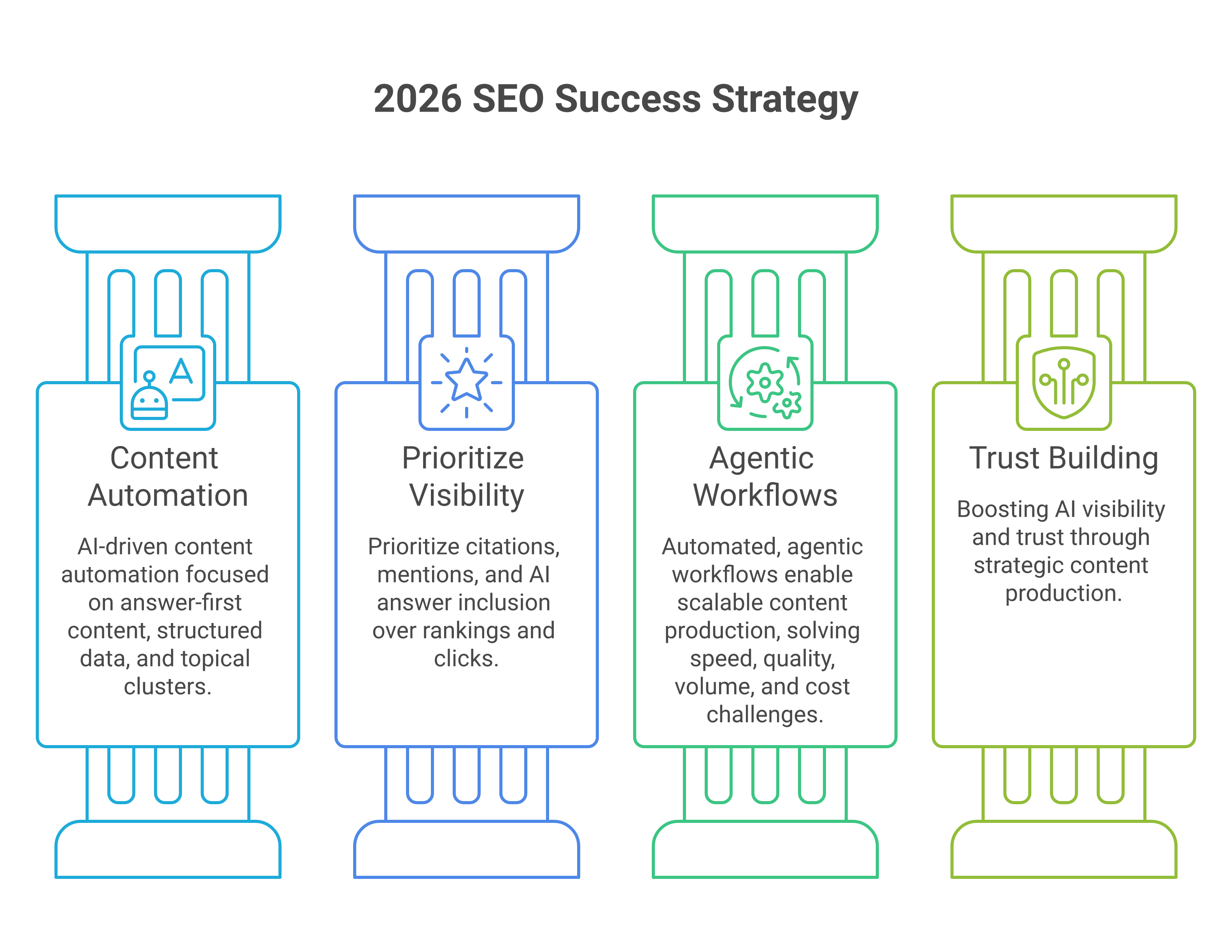

For B2B marketing leaders, technical SEO and precise on-page optimization are the twin engines of brand authority. Upfront-ai combines AI-driven content systems with hard technical work to improve crawlability, structured data, and people-first content. The result is stronger search visibility, more authoritative citations by other sites and AI assistants, and faster, measurable gains in discovery across traditional search and answer engines. Upfront-ai’s platform is fully automated, fully customizable, and agentic, delivering ICP-focused, people-focused content using over 350 conversion-driven storytelling techniques to boost SEO, GEO (generative engine optimization), and AIO visibility ranking, citations, and references for brands.
Table of contents
- Why Authority Matters Now
- Upfront-ai’s Approach To Technical SEO And On-Page Optimization
- Technical SEO Levers That Drive Authority
- On-Page Optimization That Converts And Gets Cited
- Implementation Timeline And Expectations
- Measuring Authority And KPIs
- Key Takeaways
- FAQ
- CTA / Question About Upfront-ai
Why Authority Matters Now
Search is hybrid today, combining classical algorithms with AI-powered answer engines. Brands that present clear, structured, and up-to-date content get cited more often by both search results and AI assistants. Industry voices predict rapid shifts toward answer-first surfaces, and they emphasize technical clarity and topical authority as durable wins for visibility and trust; see recent 2026 SEO predictions for context. To be found and trusted, your content must satisfy humans and machines.

Upfront-ai’s Approach To Technical SEO And On-Page Optimization
Upfront-ai aligns editorial strategy and engineering through a single source of truth for your brand. That One Company Model centralizes personas, tone, product facts, and approved data. AI agents then automate research, drafting, schema implementation, and optimization, while human editors enforce EEAT and brand fidelity. This blend keeps content people-first and machine-ready, which is exactly what modern AI-driven search expects, as outlined in analyses of how AI overviews will transform discovery. Upfront-ai’s approach also embeds conversion-led storytelling into core content so pages perform for both discovery and demand generation.
Technical SEO Levers That Drive Authority
Crawlability and index control Ensure XML sitemaps, canonical tags, robots directives, and redirect chains are correct so crawlers index the right assets. Remove duplicate content signals and consolidate authority with canonicalization, to avoid diluting ranking signals.
Core Web Vitals and mobile experience Prioritize LCP, CLS, and responsiveness. Fast, stable mobile pages reduce friction, improve ranking signals, and increase user trust. These metrics are foundational before scaling content output.
Structured data and schema Add Article, FAQ, QAPage, Organization, BreadcrumbList, and Author schema where appropriate. Structured markup increases the chance your content is used by answer engines and featured in rich results.
Server and rendering optimization Serve critical HTML quickly, minimize heavy client-side rendering, and optimize TTFB. These changes help both search crawlers and AI scrapers extract meaningful content.
Security and trust signals Use HTTPS, publish transparent contact and author information, and surface verifiable references and citations to reinforce trust.
On-Page Optimization That Converts And Gets Cited
People-first answers Write with real users in mind. Start by answering the core question clearly, then add concise evidence, examples, and next steps. That structure helps humans and feeding systems that extract short answers.
Headings and featured-snippet structure Use clear H1 to H3 hierarchies, short paragraphs, and numbered or bulleted steps to attract featured snippets and AI summarizers.
Intent-driven meta and alt text Craft title tags and meta descriptions that match user intent. Use descriptive alt text for images so visual assets can be referenced by external systems.
Internal linking and hub pages Build a hub-and-spoke architecture that funnels topical authority to pillar pages. Use descriptive anchor text to pass context and ranking signals.
On-page schema for answers Embed FAQ and QAPage schema for high-value pages to increase the chance of being used by answer engines and voice assistants.
Implementation Timeline And Expectations
0–14 days: Onboard, build the One Company Model, and run a technical audit. Apply high-priority fixes to crawlability, canonicalization, and Core Web Vitals.
15–45 days: Publish prioritized, schema-enabled content, such as how-to guides, technical explainers, and executive POVs. Begin outreach to earn citations and backlinks.
45–90 days: Measure organic gains, refine content based on performance, and scale production while maintaining human review to protect EEAT.
Measuring Authority And KPIs
Organic impressions and clicks (Search Console) Rankings and featured snippet presence (rank trackers) Backlinks and referring domains, measured for quality On-page engagement, including time on page, scroll depth, and conversions Technical health, such as crawl errors, indexing rates, and Core Web Vitals AI and LLM mentions and answer-box citations, tracked with SERP feature monitors and third-party APIs

Key Takeaways
- Audit and fix crawlability and Core Web Vitals first to unlock downstream gains.
- Use structured data, such as FAQ, Article, and Organization schema, so answer engines can cite your content.
- Produce people-first pages that answer questions clearly, then expand with evidence and examples.
- Centralize brand facts in a One Company Model to scale accurate, high-authority content.
- Measure both search metrics and answer-engine citations to capture modern visibility.
FAQ
Q: How quickly will technical fixes affect visibility?
A: Technical fixes can reduce crawl and rendering errors within days and improve indexation in weeks. Significant ranking moves depend on content quality and competition, so expect a staged improvement over 30 to 90 days. Prioritize fixes that unblock indexing and speed, because those deliver the fastest downstream improvements to discoverability.
Q: Will AI-generated content hurt EEAT?
A: It can, if left unreviewed. Upfront-ai uses AI agents for scale, but every critical claim is validated by human editors and source citations. Add author bios, primary data, and editorial review to maintain experience, expertise, authoritativeness, and trust. That process keeps content human-first and defensible.
Q: Which schema types give the best lift for answer engines?
A: FAQ, QAPage, Article, Organization, and BreadcrumbList are high-impact. FAQ and QAPage provide structured Q&A that answer engines can ingest directly, while Article and Organization help contextualize authority. Implement them on focused pages to increase the chance of appearing in AI summaries and rich results.
Q: How should I prioritize on-page vs. technical work?
A: Start with technical health to ensure your content can be crawled and indexed. Then focus on on-page signals like intent-driven headings, clear answers, and schema. Both are essential, but poor technical health prevents even great content from being discovered.
Would you like an audit that maps your technical priorities to a 45-day content sprint and a pilot that proves OEAT and GEO gains? Reach out to start a pilot that pairs a technical audit with a conversion-focused content pilot.
About Upfront-ai
Upfront-ai is a cutting-edge technology company dedicated to transforming how businesses leverage artificial intelligence for content marketing and SEO. By combining advanced AI tools with expert insights, Upfront-ai empowers marketers to create smarter, more effective strategies that drive engagement and growth. Their innovative solutions help you stay ahead in a competitive landscape by optimizing content for the future of search.