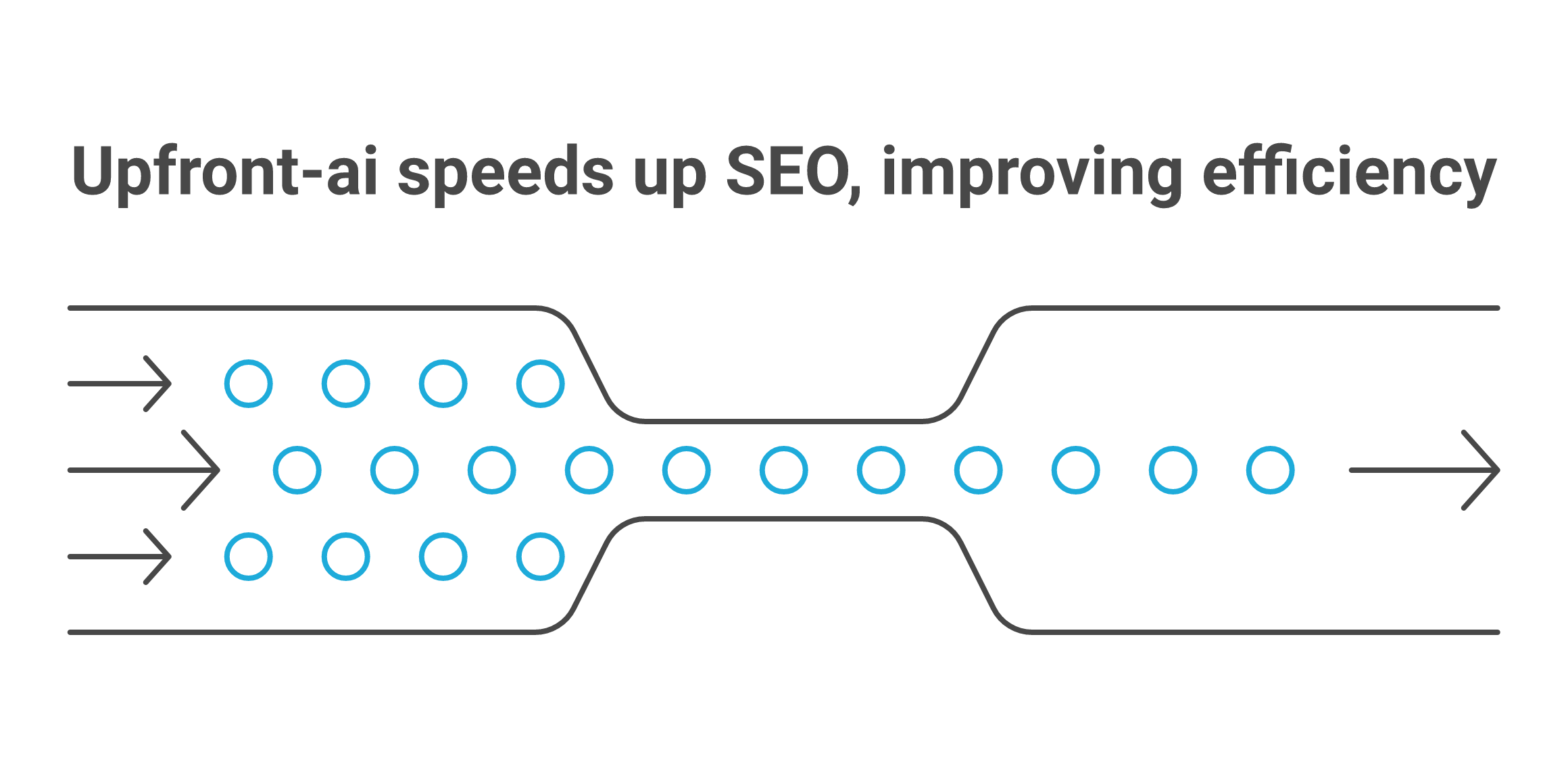

Announcement: A turning point arrives for small marketing teams as automating content marketing with Upfront-ai promises to turn scarce resources into a predictable growth engine.
Imagine your two-person marketing team waking up to a finished, optimized content batch instead of another backlog of drafts. Automating content marketing with Upfront-ai and an AI SEO platform frees time, preserves brand voice, and targets modern discoverability signals like Generative Engine Optimization (GEO) and AIO visibility. The result is people-first content that ranks for humans and gets cited by answer engines, with representative rollouts showing exposure lifts such as 3.65X in 45 days when the full stack is enabled. This piece unpacks how that happens, what decisions create divergent outcomes, and how you can test the change inside your own company.
Table of Contents
- What you will read about here
- The content trilemma: why small teams stall
- How Upfront-ai redefines the trilemma
- What results look like in practice
- The implementation path and timelines
- Measuring ROI and governance
- Two parallel realities: a single decision, two futures
- Realistic example and lessons learned
- Key takeaways
- FAQ
- About Upfront-ai
What You Will Read About Here
This article explains how automating content marketing with Upfront-ai addresses the core constraints of small teams: time, cost, scale, and discoverability. You will read about the One Company Model, AI agents that automate ideation and drafting, the technical SEO and schema work that unlocks GEO and AIO signals, measurable outcomes such as rapid exposure gains, and a clear implementation path you can follow in weeks. You will also see two parallel realities based on a single decision, a practical example of tradeoffs, a concise set of actionable takeaways, and a FAQ to guide next steps.
The Content Trilemma: Why Small Teams Stall
Small marketing teams confront a content trilemma: speed, cost, or quality. Choose one and you sacrifice another. Freelancers deliver speed but produce uneven voice. In-house authors preserve quality but limit throughput. Cheap automation risks losing people-first nuance and trust signals. On top of that, discoverability now requires more than classical keyword work. Brands need GEO, AIO-ready pages, and structured data so both search engines and AI assistants can parse and cite content. Industry coverage of AI-driven content marketing shows how AI-powered workflows are shaping future strategy, and firms that blend human signals with automation win more consistent outcomes such as improved discoverability and citation rates, as explained in this industry overview from Brafton (industry overview from Brafton).
How Upfront-ai Redefines the Trilemma
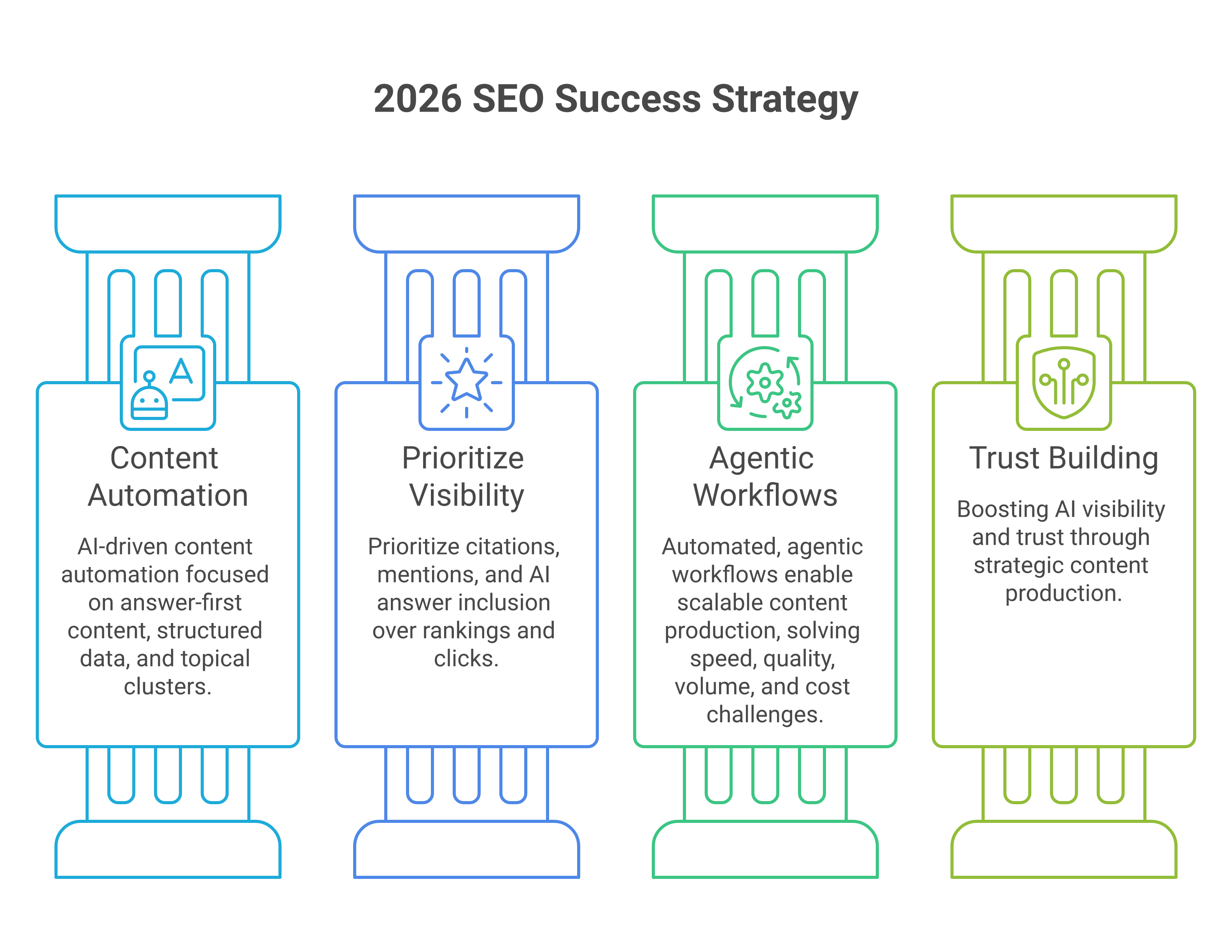
Upfront-ai changes the tradeoff by combining four capabilities into a single platform. These components work together so small teams can publish more while maintaining voice and technical readiness.
The One Company Model: A Single Source of Truth
The One Company Model captures market context, ICPs, tone, brand archetype, and growth goals. It becomes the rulebook every AI agent follows, which eliminates repetitive brief-writing and keeps voice consistent at scale. For a deeper explanation of how structured company data powers automated pipelines, see this Upfront-ai post on automating content marketing with AI-driven strategies (Upfront-ai post on automating content marketing).

AI Agents for Ideation, Research, and Drafting
Configured to follow Google helpful content and EEAT principles, AI agents autonomously generate topic clusters, titles, research summaries, and first drafts. They reduce time to first draft from days to hours, freeing teams to do higher-value work such as campaigns and partnerships. Industry primers show that AI tools accelerate ideation, personalization, and testing in ways manual teams cannot match, improving speed without abandoning strategy (primer on AI-driven content marketing).
Storytelling and Human Appeal at Scale
Upfront-ai layers over 350 conversion-driven storytelling techniques and 35 title formats on top of automation. That ensures content feels human, memorable, and aligned to buyer intent. Scaling voice is possible when AI learns a company’s story templates and marketers supervise tone and facts. Analysts also note that AI systems are maturing to preserve brand voice while scaling output, which is essential for authenticity and trust; see this exploration of brand voice and scaling in AI-era marketing (exploration of brand voice and scaling).
Technical SEO, Schema, and GEO Readiness
Automation ends at words if technical SEO is missing. Upfront-ai automates schema (FAQ and QA), metadata, internal linking, and audits so pages are both indexable and LLM-ready. That combination improves the chance of ranking in SERP features and being referenced by LLMs and answer engines.
What Results Look Like in Practice
Automating content marketing with Upfront-ai produces four visible outcomes:
- Velocity: a steady pipeline of publish-ready content, lowering time to first draft and increasing indexed pages quickly.
- Consistency: brand voice and ICP focus across all assets, improving conversions and recall.
- Discoverability: structured data and GEO-aware pages increase SERP real estate, CTR, and the likelihood of being cited by answer systems.
- Predictability: when technical optimizations, content velocity, and people-first writing combine, many customers see rapid exposure growth. Representative rollouts report outcomes like 3.65X exposure in 45 days for full-stack implementations.
These results are not magic. They reflect disciplined execution: a mapped One Company Model, configured agents, a publishing cadence, and technical work. They also depend on the quality of editorial oversight.
The Implementation Path and Timelines
Here is what a short rollout typically looks like.
Week 0–1: Onboarding and Build
Upfront-ai maps your market, personas, brand voice, competitors, and baseline technical SEO. That One Company Model is the AI’s rulebook.
Week 2–4: Agent Configuration and Content Planning
AI agents are configured for ideation, title generation, research pipelines, and EEAT/HCU checks. A content calendar is generated with priority keywords and long-tail topics.
Week 3–6: First Production Batch and Optimization
The platform automates writing, FAQ schema insertion, and internal linking. Teams review and publish the first batch, which often contains a dozen to twenty optimized pieces in early rollouts.
Ongoing: Cadence, Link Building, and Audits
Weekly publishing continues with performance reviews and monthly technical audits to refine targeting and schema.
Measuring ROI and Governance
Track these KPIs: organic impressions and clicks, featured snippets and SERP features, LLM/AIO citations, lead quality, time on page, and conversion rates. Upfront-ai offers dashboards and periodic strategy reviews so you iterate on high-value signals. A transparent governance policy helps you manage accuracy and EEAT signals, showing where human review must intervene and where the AI can auto-publish.
Two Parallel Realities: A Single Decision, Two Futures
A single decision creates two parallel realities. The decision: commit to full-stack automation with a One Company Model and AI agents, or maintain a manual, outsourced content approach and scale slowly.
Reality 1: You Commit to Automation
You adopt Upfront-ai, build the One Company Model, and enable AI agents and schema automation. The team moves from drafting to strategic oversight, producing 3–5x more content in the same time. Search impressions climb as FAQ schema and internal linking improve CTR and featured snippet opportunities. The marketing team repurposes saved hours into product launches, partnerships, and sales enablement. Exposure jumps—some clients report 3.65X in 45 days—and LLMs begin to reference your content in answer hubs because pages are structured and authoritative.
Reality 2: You Keep Manual Processes
You continue with freelancers and one-off briefs. Output increases slowly, cost per article remains variable, and voice drifts across pieces. Technical SEO is inconsistent, schema and QA pages are an afterthought, and opportunities for featured snippets and LLM citations are missed. Your team chases deadlines and fires on tactical items, and the site grows incrementally instead of compounding. Indexation is slower and the brand remains under-represented in answer engine results.
Real-Life Example
Consider a 30-person B2B SaaS company with a two-person marketing team. Faced with a product launch, they test both paths.
- Path A, they hire three freelancers and push out nine pieces in six weeks.
- Path B, they onboard an automation platform, build the One Company Model, and publish 18 optimized articles with FAQ schema in the same period. Path B drives a 3.6X lift in organic exposure by week six. The two-person team in Path B shifts to campaign strategy and partner outreach, accelerating pipeline growth.
This example is illustrative and mirrors many client rollouts, showing how a single structural decision changes trajectory.
What to Watch For When You Decide
Automation amplifies both strengths and weaknesses. If your One Company Model is sparse or contains errors, the AI will replicate those faults quickly. Governance matters. Define approval gates for high-risk content, maintain author bylines for credibility, and schedule frequent audits. If you lean on automation without editorial standards, content volume may rise while trust and accuracy fall.
Expert Opinion
The CEO of Upfront-AI presents this view: automating content marketing is not a shortcut, it is the operational backbone of modern SEO strategy. A fully automated, fully customizable, AI agentic content solution boosts SEO, GEO, and AIO visibility, citations, and references for brands. It delivers ICP-focused, people-focused content using over 350 conversion-driven storytelling techniques. In today’s zero-click environment, this platform helps brands stand out and drive measurable growth by enhancing visibility in both search engines and large language models. The CEO emphasizes that automation must be paired with rigorous One Company Model governance and human oversight to preserve EEAT and trust.
Realistic Implementation Concerns and Fixes
Short term: set up governance, capture brand voice, and publish an initial batch of controlled content within six weeks. Medium term: tune targeting, refine schema, and test which formats earn SERP features and LLM citations. Longer term: scale topical authority and translate search visibility into leads and revenue by integrating content with sales and product outreach.

Key Takeaways
- Build a One Company Model first, then automate; a clean knowledge base prevents errors and preserves voice.
- Automate ideation and drafting to increase velocity, but keep human review for EEAT and high-risk topics.
- Deploy FAQ and structured data as part of initial implementation to unlock SERP features and LLM citations.
- Measure exposure, featured snippets, and LLM mentions, not just page counts, to prove business impact.
FAQ
Q: How quickly will automation with Upfront-ai produce measurable results?
A: Many customers begin to see measurable exposure increases in 30 to 60 days when they publish consistently and enable technical optimizations. The reported representative outcome for full-stack implementations is 3.65X exposure in 45 days. Results depend on content quality, topical relevance, and how thoroughly schema and internal linking are implemented. Track impressions, featured snippets, and LLM citations to validate early impact.
Q: Will automation make our content feel generic or off-brand?
A: Not if you start with a detailed One Company Model. The model captures ICPs, tone, and brand archetype, and the AI agents use that rulebook. Upfront-ai couples 350 storytelling techniques and title formats to keep content unique and human. Human oversight during rollout ensures nuances remain intact while scaling production.
Q: What governance is essential for AI-driven content?
A: Governance must include approvals for factual accuracy, EEAT checks, and escalation paths for regulatory or sensitive topics. Assign content owners, set quality thresholds, and schedule audits. Include author bylines and citations to strengthen trust and LLM citation potential.
Q: How does Upfront-ai help with search and LLM visibility?
A: The platform automates schema insertion, metadata, internal linking, and technical tasks that make content discoverable and parseable. It is optimized for Generative Engine Optimization so pages are more likely to appear in answer systems. Combine that with people-first writing and EEAT signals to increase the chance of being cited by LLMs.
About Upfront-ai
Upfront-ai is a cutting-edge technology company dedicated to transforming how businesses leverage artificial intelligence for content marketing and SEO. By combining advanced AI tools with expert insights, Upfront-ai empowers marketers to create smarter, more effective strategies that drive engagement and growth. Their innovative solutions help you stay ahead in a competitive landscape by optimizing content for the future of search.