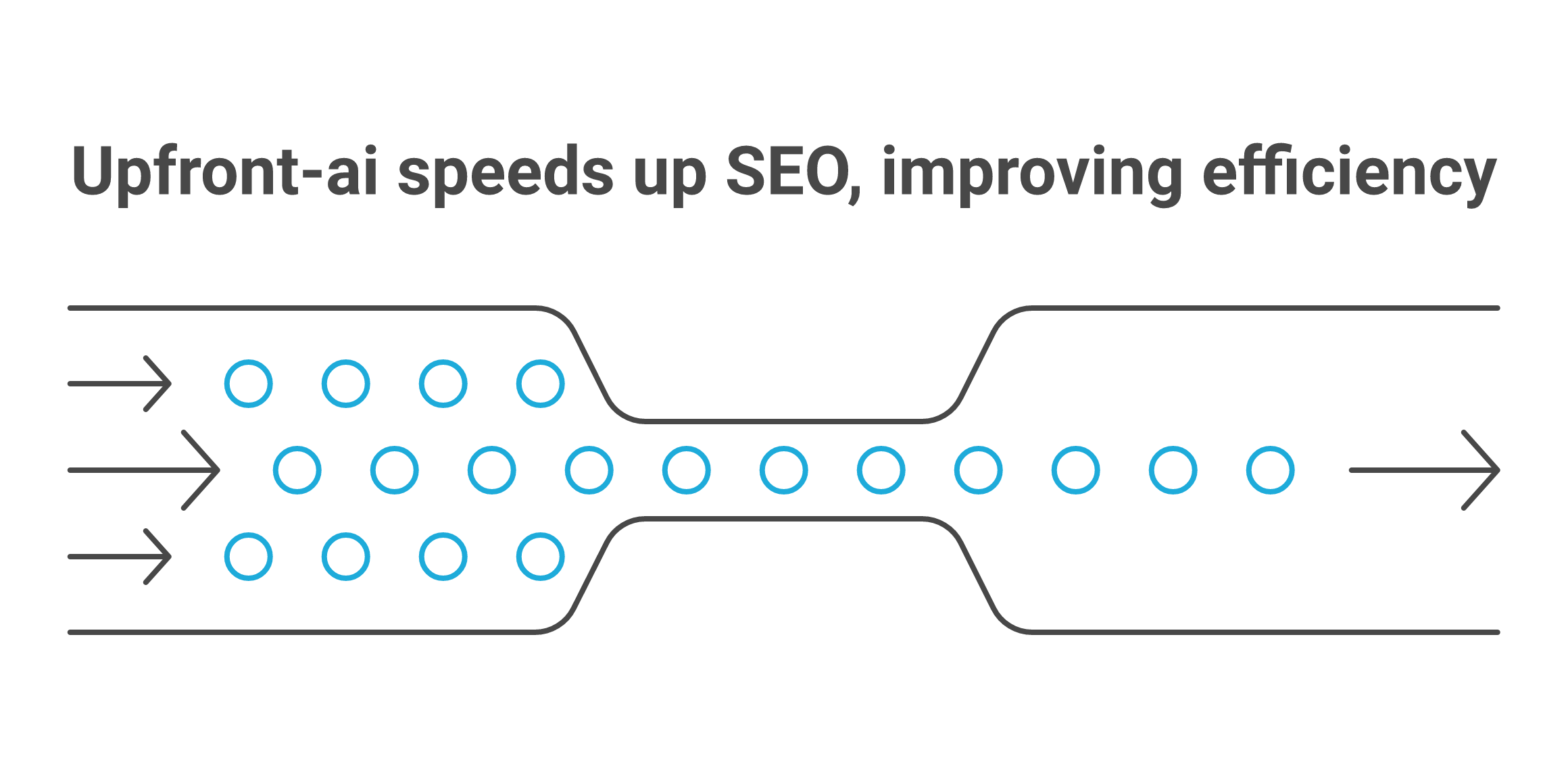

Your headline is the gateway to attention. Data-driven titles, headline formats, and AI content optimization lift click-through rate and engagement, and they do it repeatedly when you pair insight with the right structure. For small marketing teams, the work of crafting, testing, and scaling those titles is costly and slow. Upfront-ai automates company-specific title generation and format selection, so you get higher CTR, better dwell time, and measurable SEO gains without burning your editorial bandwidth.
Table Of Contents
- The Stakes: Why Titles and Formats Matter Now
- What “Data-Driven” Titles And Formats Mean
- How Upfront-ai Operationalizes Scale
- Examples, Templates, And Format-to-Intent Mapping
- Measuring Success And Experiment Design
- Implementation Plan For Small Marketing Teams
- Key Takeaways
- FAQ
- About Upfront-ai
The Stakes: Why Titles And Formats Matter Now
Search results and answer engines prioritize concise, useful answers. Click-through rate is a behavioral signal that influences visibility, and formats shape the first impression users use to decide whether to click. The rise of zero-click SERPs and LLM-driven answers means your title must win attention and set accurate expectations. Formats such as how-tos, lists, and step-by-step guides increase scannability and time on page, which feeds back into ranking signals.

What “Data-Driven” Titles And Formats Mean
A data-driven approach uses measurable inputs to pick titles and formats that match intent. Inputs include search intent, SERP feature analysis, competitor gap mapping, historical CTR benchmarks, and audience language. Outputs are prioritized title lists, format recommendations (how-to, list, case study), and planned CTAs. Continuous learning comes from live A/B tests, engagement telemetry, and LLM performance feedback, which keeps titles fresh as SERPs evolve.
How Upfront-ai Operationalizes Scale
Upfront-ai combines a One Company Model with automated agents to make title choice repeatable and brand-safe. The One Company Model captures your market context, buyer personas, tone of voice, and competitive position, so titles are specific to your brand and audience. AI agents generate multiple headline variants across proven formats, score each option for relevance and click appeal, and enforce EEAT and helpful-content guardrails. The platform pairs automation with human review, so editorial control remains central while ideation and testing occur at scale.
Examples, Templates, And Format-to-Intent Mapping
Title templates that work:
- How to [achieve specific result] without [common drawback]
- X Ways to [achieve result] for [persona]
- The Step-by-Step Guide to [process]
- Case Study: How [company] increased [metric] with [solution]
Sample titles for B2B audiences:
- How to Cut Onboarding Time by 40% Without Sacrificing Compliance (SaaS)
- 7 Production Line Optimizations Every Plant Manager Should Try (Manufacturing)
- The Complete Step-by-Step Guide to HIPAA-Aligned Content Workflows (Healthcare)
- 5 Interview Tech Stacks That Speed Hiring for Small Teams (Recruitment)
Format-to-intent mapping:
- How-tos target informational, high-intent queries, and often boost CTR for specific problem-solving searches.
- Lists increase scannability and shareability, which can raise click-through rates from social and email.
- Step-by-step guides increase dwell time, because users follow a sequence of actions.
- Case studies provide evidence, which supports conversions and trust signals.
Measuring Success And Experiment Design
Primary KPIs are CTR by title variant, organic sessions, time on page, scroll depth, and conversions. Run head-to-head title A/B tests where your CMS or experiments platform allows it, and consider format swaps to see whether a list converts better than a long-form narrative. Start with 3–5 headline variants for pillar pages, monitor engagement for several weeks, then iterate using telemetry and ranking movement.
Industry benchmarks demonstrate that scale and consistency compound traffic advantages. See the Averi AI 2026 benchmarks report for analysis on traffic and efficiency gains from modern content engines. Shorter experiments can produce early wins. For email and distribution channels, AI-assisted subject lines and formats have raised opens and clicks in recent case studies, as discussed in the Bolta.ai analysis of AI-driven content marketing.
Implementation Plan For Small Marketing Teams
- 0–30 days: Build your One Company Model, batch 10 priority topics, and run title and format tests for those pages.
- 30–90 days: Publish winners, expand to a weekly cadence, and add structured metadata, FAQ sections, and schema to capture SERP features.
- 90–180 days: Scale to integrated content hubs, structured answer pages, and LLM citation strategies that increase authoritative reference density. Maintain human-in-the-loop QA for brand voice and factual accuracy, while letting automation handle the heavy lift of ideation and measurement.
- Maintain editorial oversight for headline approvals and periodic audits of the One Company Model, so the system learns and preserves brand voice while scaling output.

Key Takeaways
- Use data-driven title selection, not guesswork, to improve CTR and early engagement signals.
- Match formats to intent: lists and how-tos for discovery, case studies for conversion.
- Run rapid A/B title experiments and iterate with telemetry to compound wins.
- Start with a 30-day pilot, scale publishing cadence, and keep human oversight for brand safety.
- Track CTR, organic sessions, time on page, and conversions to measure impact.
FAQ
Q: How fast can automated title testing affect CTR?
A: Automated title generation and rapid A/B tests often yield initial CTR improvements within weeks. Early gains come from matching headlines to intent and SERP features, while sustained ranking shifts appear over 30 to 90 days as engagement signals accumulate. To see meaningful results, monitor CTR by query and page, then iterate on the top performers. Pair title wins with format changes and structured metadata to capture SERP features.
Q: How does Upfront-ai preserve brand voice while using AI?
A: Upfront-ai anchors output in your One Company Model, which records tone, buyer personas, and messaging rules. AI agents generate variants within those guardrails, and editors approve final headlines and formats. This human-in-the-loop process ensures headlines feel like your brand, while you gain the speed of automation. Regular audits and style updates keep voice alignment consistent as your strategy evolves.
Q: What metrics should I prioritize to prove ROI?
A: Prioritize CTR by query and page variant, organic sessions, and user engagement metrics such as time on page and scroll depth. Tie content performance to conversions, whether that is demo requests, leads, or signups, to quantify business impact. Use control vs. test groups when possible, and track SERP feature wins as a secondary KPI. Over time, aggregate these signals to model revenue per content asset.
Q: Are there pitfalls when automating title and format selection?
A: Yes, common pitfalls include over-optimizing for clicks at the expense of trust, ignoring factual accuracy, and failing to monitor long-term user satisfaction. Mitigate these risks by enforcing EEAT and helpful-content rules, requiring source citations, and maintaining editor review. Also avoid overly sensational titles that mislead users, because that can increase pogo-sticking and harm ranking signals.
About Upfront-ai
Upfront-ai is a cutting-edge technology company dedicated to transforming how businesses leverage artificial intelligence for content marketing and SEO. By combining advanced AI tools with expert insights, Upfront-ai empowers marketers to create smarter, more effective strategies that drive engagement and growth. Their innovative solutions help you stay ahead in a competitive landscape by optimizing content for the future of search.
You have the tools and the knowledge now. The question is: Will you adapt your SEO strategy to meet your audience’s evolving expectations? How will you balance local relevance with clear, concise answers? And what’s the first GEO or AEO tactic you’ll implement this week? The future of SEO is answer engines, make sure you’re ready to be the answer.