
Myth: SEO is dead because people do not click anymore.
What if being the answer is more valuable than being the click? You already sense the shift: search results hand users answers before they ever reach your site. That change makes traditional traffic a weaker signal, and it raises the stakes for being the content source that AI systems and answer engines prefer. You will not win this by hoping organic clicks return.</p>
You face a simple truth, and admitting it is the
first step toward advantage. Search behavior has changed, and a growing share of queries resolve on the page or inside virtual assistants. That zero-click reality reduces direct sessions, but it does not reduce opportunity. If you are visible where answers live, you still shape perception, attract leads, and win conversions. Generative SEO tools and AI for SEO let you scale that visibility, align every piece of content to people-first signals, and earn the citations that matter.
This article explains why generative engines matter, how AI tools make Generative Engine Optimization practical for teams of any size, and which tactical moves produce wins fast. You will get myth-busting clarity, a step-by-step playbook, measurable KPIs to track, and an action checklist you can implement this week. Along the way you will see industry commentary and practical examples you can copy.
Table Of Contents
- Myth and Reality Primer
- The Zero-Click Challenge
- Why Generative Engines and GEO Matter Now
- Why AI and Generative SEO Tools Are Essential
- A Tactical Road Map You Can Run This Week
- Quick Wins for SMB and B2B Teams
- Measurement: Metrics That Matter Beyond Clicks
- Why Upfront-AI Fits This Problem
- Key Takeaways
- FAQ
- About Upfront-AI
- Final Question For You
Myth And Reality Primer
Myth 1: zero-click means SEO is dead
Reality: zero-click changes where value happens, not whether value exists. People still form opinions and act based on what they read in search, even when they do not click. AI summaries, featured snippets, and knowledge panels are new touchpoints that build brand familiarity and trigger offline or direct actions. You should treat those touchpoints as goals, not failures.
Myth 2: generative AI will replace quality content and E-E-A-T
Reality: AI can scale research and drafts, but E-E-A-T requirements are increasing. Search engines and answer engines reward first-hand experience, authoritativeness, and transparent sourcing. Generative SEO tools succeed when they bake in editorial guardrails, citation hygiene, and human review.

Myth 3: only big brands can win AI citations
Reality: small and medium businesses can win answer engine visibility by optimizing for answer format, structured data, and timely authority. The tactics are repeatable, and AI helps you produce the necessary volume and structure without blowing your budget.
The Zero-Click Challenge
The phrase zero-click search describes queries that deliver answers on the results page, in a knowledge panel, or within a conversational assistant, so the user does not click through. That trend is not hypothetical. Industry writing shows that AI overviews and SERP features are shifting how users interact with search, and success now depends on visibility and authority rather than raw clicks. For a practical take on how search generative experiences are reshaping behavior, see Cella’s guide to revamping SEO for AI and zero-click search (Cella’s guide to revamping SEO for AI and zero-click search). Madison Logic also explains that every piece of content is now a signal for AI systems, and that the win is being summarized and cited, not just ranked (Madison Logic on SEO for AI and zero-click search).
Why this matters for you: traditional metrics like sessions and pageviews underreport influence. A branded answer in an AI overview can lead to branded searches, direct visits, or conversions through other channels. If your goal is demand generation, awareness, or lead capture, you need to measure and optimize for visibility inside answer engines.
Why Generative Engines And GEO Matter Now
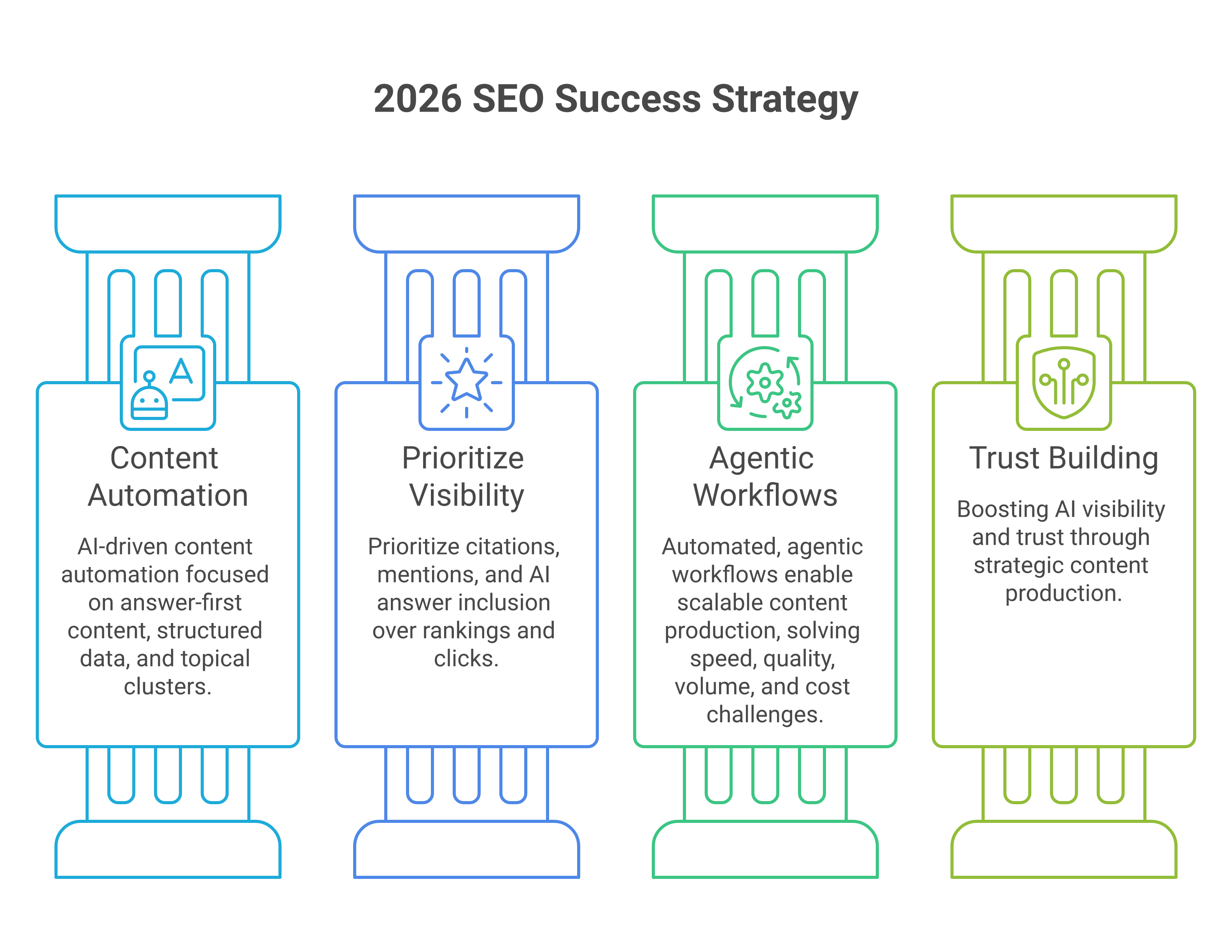
Generative Engine Optimization, or GEO, optimizes content for retrieval, synthesis, and citation by large language models and conversational assistants. LLMs differ from classic search in two critical ways. First, they prioritize concise, authoritative answers that map directly to user intent. Second, they synthesize multiple sources and prefer content that is structured, well-cited, and recent.
Think of GEO as complementary to classic SEO. Classic SEO still helps your pages rank on search engine result pages, but GEO prepares your content to be surfaced inside the body of answers. That means short, clear answers with expandable evidence, FAQ markup, and citation hygiene. When you optimize for GEO, you make it easy for an assistant to say, in effect, here is the answer and here is where it came from.
Practical implication: design pages that contain both a short canonical answer and a linked, longer-form backup with references and data. This increases the chance an assistant will cite your short answer and link back to your evidence.
Why AI And Generative SEO Tools Are Essential
You could try to do GEO manually. If your team is small, that will be slow and inconsistent. AI and generative SEO tools are essential for three reasons.
Scale and speed without compromise
You need volume to cover long-tail question formats and regional variants, and you need speed to keep content fresh. Generative tools let you produce hundreds of targeted answer pages, metadata variants, and FAQ entries at a fraction of the time and cost of manual production. When you couple templates that enforce E-E-A-T checks and citation sourcing, you preserve quality while increasing output.
Precision personalization and ICP-focused content
Build content for real buyer personas and local intent. AI tools can generate consistent variations tuned to geographic signals, role-based language, and purchase stages. For example, create a single answer skeleton for “how much does X cost” and auto-generate localized variants for ten GEOs, each with local pricing norms and regulatory citations.
Consistent brand voice via the One Company Model
When every output is driven by a single model of your brand, messaging stays consistent. That matters when assistants stitch sentences from different sources. Your AI should be anchored to a company profile so every generated answer reflects your voice, core facts, and official claims.
E-E-A-T and human oversight baked in
Search engines increasingly require people-first content. Generative tools that integrate helpful content guidelines and experience, expertise, authoritativeness, and trust checks reduce the risk of producing low-value, thin content. Use AI workflows that force citation, human verification, and clear experience statements for the author or company.
A Tactical Road Map You Can Run This Week
- Prioritize question-first keywords
Start with how people ask questions. Map top intent queries into canonical answers plus expanded evidence sections. Use question clustering and entity-first targeting. - Create modular answer pages
For each target query, create a clear 1-2 sentence answer at the top, then a longer section with data, citations, and related questions. This structure is easier for assistants to consume. - Implement FAQ schema and Q&A pages
FAQ schema and structured Q&A pages increase the chance your content will be picked for snippets and assistant answers. Make sure each FAQ entry includes citations and a last-updated timestamp. - Maintain citation hygiene
Use authoritative external sources and consistent NAP data. LLMs and answer engines favor well-sourced content. Link to recognized authority when you can, and preserve internal link structure that signals topic depth. - Optimize metadata and fast loading
Assistants retrieve content that is crawlable and fast. Ensure metadata is accurate and pages load quickly on mobile. - Schedule a freshness cadence
Set an editorial calendar that revisits answer pages every 30 to 90 days for updates, new references, and timestamp refreshes. - Instrument LLM citation tracking
Track when assistants cite your domain, and measure impressions and brand lift alongside clicks.
Quick Wins For SMB And B2B Teams
Convert cornerstone posts into Q&A hubs
Take your top-performing blog posts and convert key sections into question-answer units. Publish concise answers at the top with an expandable research section beneath.
Automate localized answer variants
If you serve multiple geographies, create templates that produce localized copies with regional terminology, regulation citations, and local examples.
Create weekly research briefs
Publish short, cited digests that show recency. These often perform well in AI overviews because they surface current data and sources.
A/B test title and meta formats
Use AI to generate multiple meta descriptions and titles, then measure which variants capture more SERP features or assistant citations.
Example outcome to aim for
Some pilots report rapid exposure lifts when combining aggressive GEO targeting with high-quality citation and freshness. For example, a 45-day pilot that pairs rapid content velocity with strict editorial review can yield multi-fold exposure increases. Use a controlled test to measure your own lift.
Measurement: Metrics That Matter Beyond Clicks
You must expand your dashboard. Track impressions in search and assistant platforms, share of SERP features claimed, the number of assistant or LLM citations, and branded query lift. Combine these with conversion signals such as form fills, demo requests, and calls attributed to organic or branded sessions.
Actionable metrics to start with
- Impressions in search consoles and assistant logs
- Featured snippet capture rate
- Number of assistant attributions and the quality of the citation context
- Branded search growth and direct inquiries
Set a baseline, run a 45-day experiment with GEO pages, and measure changes in impressions and feature share. That will tell you whether your answer-first approach is gaining traction.

Why Upfront-AI Fits This Problem
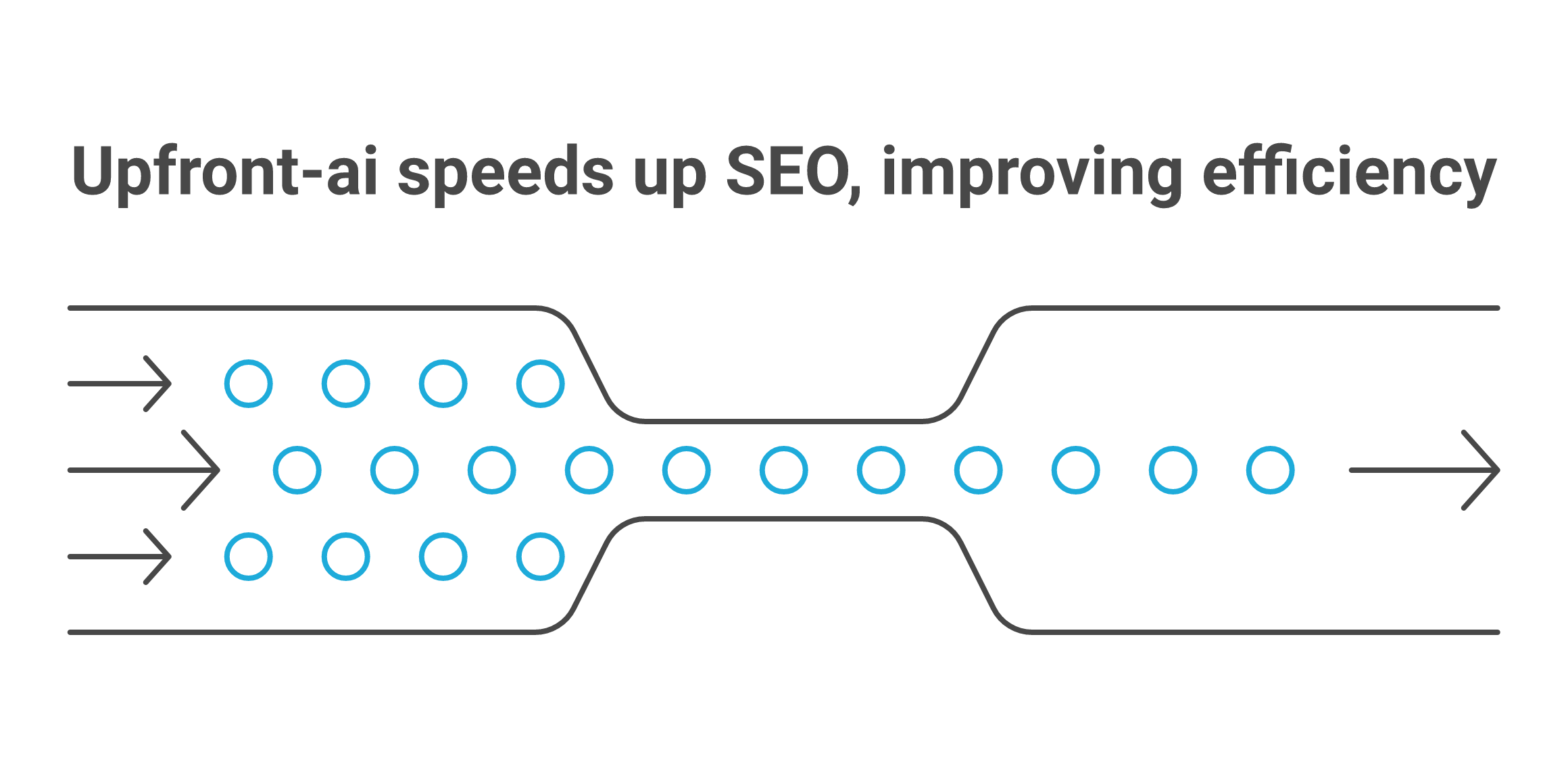
Upfront-AI is built around the problems you are trying to solve. The platform combines a One Company Model that locks your brand facts and voice into every output, agentic AI workflows that automate research-to-publication, and editorial rails that enforce helpful content and E-E-A-T. That combination lets small teams produce high-quality, assistant-ready answers at scale. If you want a partner that automates the heavy lifting while preserving brand integrity, this approach accelerates results.
Key Takeaways
- Optimize for answers, not just clicks: create short canonical answers with evidence-backed expansions.
- Use generative tools with editorial guardrails: scale output while preserving experience and trust.
- Instrument assistant visibility as a first-class metric: track impressions, snippet capture, and LLM citations.
- Build modular, localized templates: produce GEO-ready variants quickly for multiple geos.
- Run short experiments: 30 to 45 day pilots with focused GEO pages reveal whether tactics are working.
FAQ
Q: what is generative engine optimization and why should i care?
A: Generative engine optimization, or GEO, is the practice of structuring content so LLMs and conversational assistants can retrieve, synthesize, and cite it. You should care because answer engines increasingly present users with synthesized answers, and GEO increases the chance your content becomes the source of those answers. Implement GEO by adding short canonical answers, structured FAQ markup, and a linked longer-form evidence section. Track assistant citations to prove value.
Q: how can a small marketing team compete for ai citations?
A: Start with a focused set of high-intent queries and build modular answer pages. Use AI tools to scale variations and localizations while enforcing citation and E-E-A-T checks. Prioritize pages that map directly to buyer intent, and keep a cadence of updates to maintain recency. Small teams win when they are consistent, not exhaustive.
Q: do i need to remove long-form content to win in a zero-click environment?
A: No. Long-form content remains essential as evidence for short answers. The right structure pairs a concise answer with an expandable, research-backed section that assistants can use as a source. Keep long-form content for depth and backups, and create short extracts for assistant consumption.
Q: how do i measure success when clicks decline?
A: Expand your metrics beyond clicks. Measure impressions, featured snippet share, LLM attributions, and branded search lift. Combine those with downstream conversions like demo requests or form fills. Use short pilot tests to compare exposure and conversion changes after implementing GEO pages.
About Upfront-ai
Upfront-ai is a cutting-edge technology company dedicated to transforming how businesses leverage artificial intelligence for content marketing and SEO. By combining advanced AI tools with expert insights, Upfront-ai empowers marketers to create smarter, more effective strategies that drive engagement and growth. Their innovative solutions help you stay ahead in a competitive landscape by optimizing content for the future of search.
You have the tools and the knowledge now. The question is: Will you adapt your SEO strategy to meet your audience’s evolving expectations? How will you balance local relevance with clear, concise answers? And what’s the first GEO or AEO tactic you will implement this week? The future of SEO is answer engines, make sure you are ready to be the answer.