
“Answers, not pages, are the new currency.”
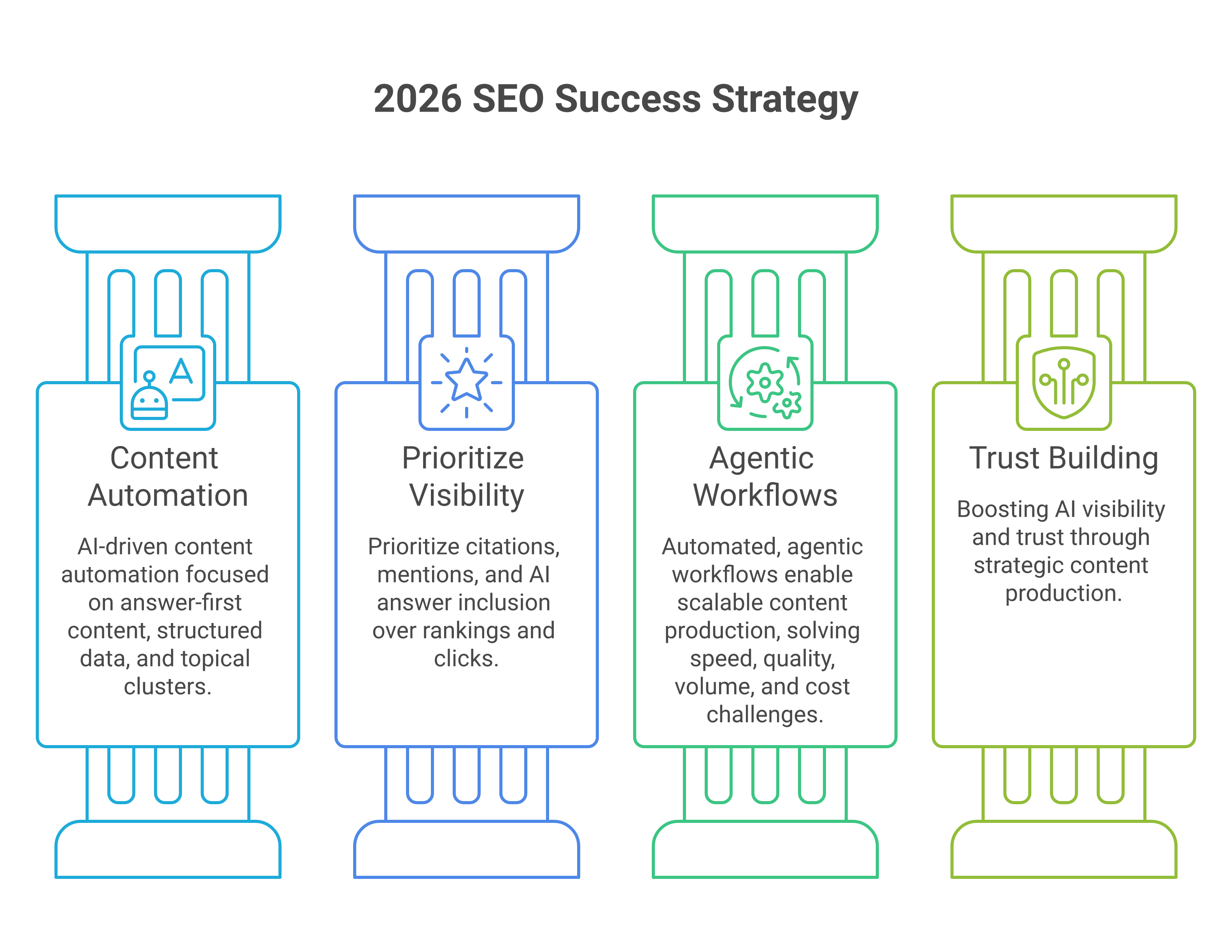
You need generative SEO, AEO, and GEO to keep your content visible as search shifts from links to answers. In this article you will learn what generative SEO means, how Answer Engine Optimization (AEO) and Generative Engine Optimization (GEO) change your priorities, and how to use AI-driven content marketing to create people-first, measurable thought leadership. Key terms like generative SEO, AEO, GEO, generative engine optimization, AI content marketing, and AI-driven content creation appear early because they are the tools you will use to future-proof your content. You will also get a simple, tactical checklist you can start this week, plus a step-by-step 45-day plan tailored for small marketing teams.
You will read clear definitions, practical playbooks, and examples that use numbers and named sources so you can act fast. The end result is content that ranks in traditional search results and surfaces as trusted answers in LLM-driven interfaces.
Table Of Contents
- Why The Rules Of SEO Changed
- What Generative SEO Is And Why It Matters To You
- Core Principles For Future-Proof Content
- The Upfront-AI Approach: One Company Model And AI Agents
- Tactical Playbook: What To Publish And How
- Technical And SEO Execution For AEO And GEO
- GEO And LLM Visibility: Citation-First Content
- Measurement And KPIs: Short, Mid, Long Term
- 45-Day Rollout Blueprint For Small Teams
- Mini Case Example
- Quick Checklist And Why That Method Works
- Key Takeaways
- FAQ
- Final Question To Act On This Week
- About Upfront-ai
Note: All URLs provided for this article were external; no internal Upfront-ai links were supplied.
Why The Rules Of SEO Changed
Search no longer funnels everyone into your pages first. Users expect answers immediately, and large language models and answer interfaces deliver that. Accept that some queries no longer aim for a click, and adjust how you craft content accordingly.
Google’s helpful content guidance and the expanded E-E-A-T focus signal that search rewards people-first expertise and provenance. At the same time, AEO and GEO are about shaping content so AI systems can extract, trust, and cite it. For a practical grounding in AEO recommendations, see Evergreen Media’s AEO guide. To understand how SEO, AEO, and GEO differ in operational terms, consult Arc Intermedia’s comparison of SEO, AEO, and GEO. Those resources make it clear: design content for machines and humans at the same time.

What Generative SEO Is And Why It Matters To You
Generative SEO is a unified approach that blends classic organic SEO with AEO and GEO, and that uses AI to produce content that is evidence-backed, concise, and structured for answer consumption. Your goal shifts from, “rank a page,” to, “be the source that answers a question.”
This matters now because buyer behavior compresses research cycles. Decision-makers expect fast, authoritative answers inside chat interfaces, AI overviews, and voice assistants. If your content is not structured for extractability, you will lose the moment of influence.
Core Principles For Future-Proof Content
- People-first, demonstrable experience
You must prove having done the work. Use named authors, case studies, and transparent methods. Practitioner recommendations and visible author credentials increase trust signals and AI attribution. - Clear provenance and citation hygiene
LLMs prefer sources that show method and date. Add explicit source sections and labeled references to help an answer engine attribute claims. - Structured answers and extractable blocks
Use short paragraphs, numbered steps, bullets, and summary boxes. That structure increases the chance of being copied into an answer. - Freshness plus depth
Publish content that is both current and useful. Quick updates plus deep pillars outperform thin, evergreen-only pages. - Narrative that converts
Use storytelling to make technical value tangible. Explain outcomes, not just features, and quantify impact.
The Upfront-AI Approach: One Company Model And AI Agents
Upfront-AI proposes a One Company Model. That model is a persistent profile of your organization, audience, tone, and goals. It removes friction when generating many pieces of content and keeps everything aligned.
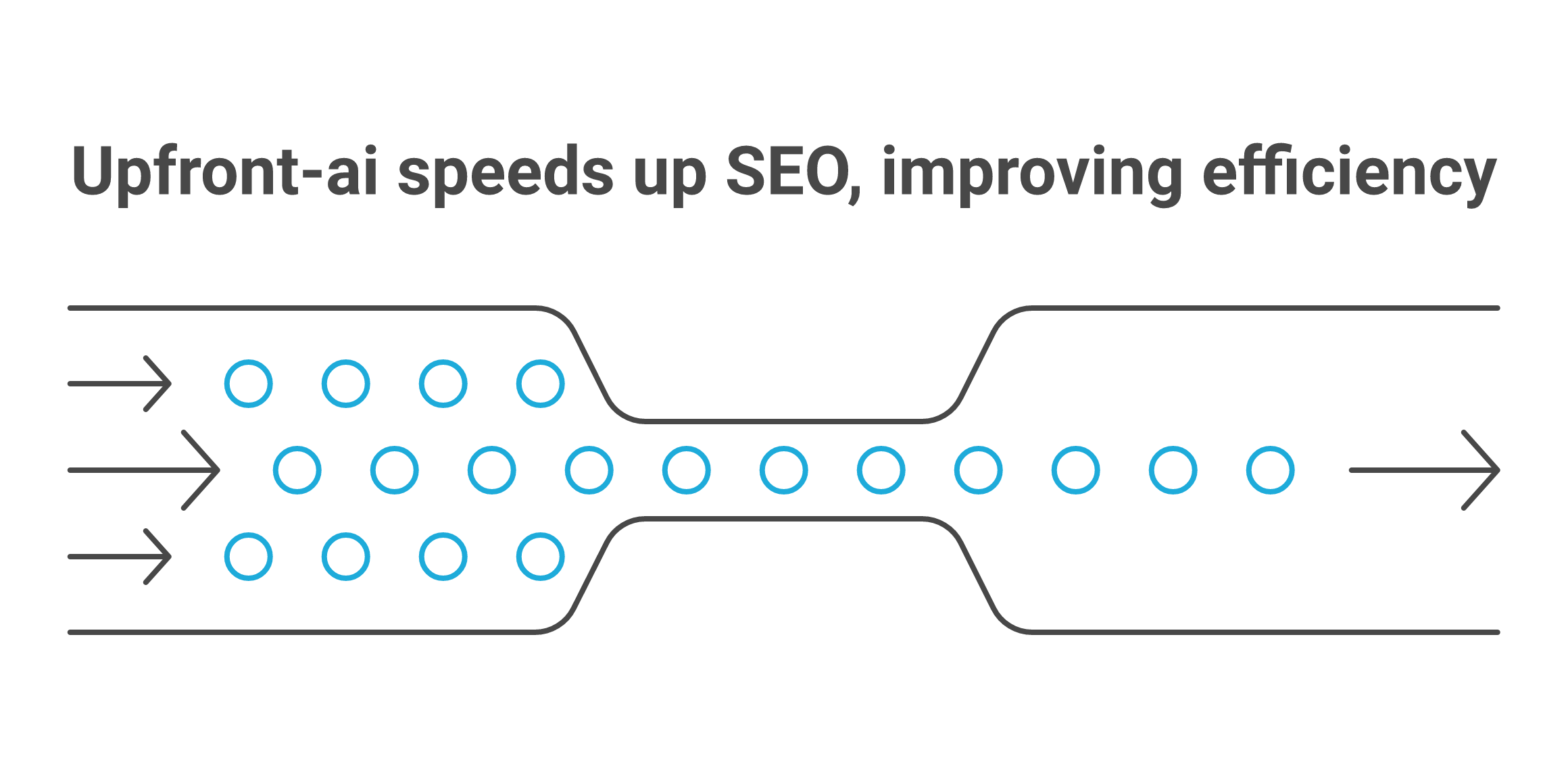
AI agents do the heavy lifting. They ideate, draft, run HCU and E-E-A-T checks, and produce structured outputs ready for schema and AEO use. Agents also produce title variants and storytelling hooks that fit specific thought leadership topics.
This approach lets a small team publish with the velocity of a larger team, while preserving expert review and branded voice. The company proposition of a 3.65X exposure uplift in under 45 days is an internal benchmark you should treat as directional and testable, not a guaranteed promise.
Tactical Playbook: What To Publish And How
What you should publish today:
- Long-form pillar pages that answer a cluster of buyer questions.
- FAQ and Q&A pages built specifically to capture featured snippets and AEO placements.
- How-to procedural guides with numbered steps and measurable outcomes.
- Case studies that include named clients, timelines, and metrics.
- Short-answer blocks and TL;DR summaries near the top of pages for extraction.
Title and topic ideas for thought leadership:
- How to cut time-to-hire by X with recruitment automation.
- Top seven ways to reduce cloud costs for scale-ups in 90 days.
- Step-by-step guide to migrating analytics and preserving privacy.
- What SaaS CMOs should measure when conversation starts in an AI chat.
On-page checklist for AEO and GEO:
- H1 and H2 hierarchy that matches intent clusters.
- Short answer blocks and labeled summaries at the top of pages.
- FAQ schema and structured metadata for question/answer pairs.
- Author bylines with credentials and a clear author page.
- Explicit source sections with dates and methods so LLMs can cite you.
- Captioned figures and data tables with alt text and HTML text-first loading.
Technical And SEO Execution For AEO And GEO
Keyword research for this era targets intent nodes, not only keywords. Map awareness, consideration, and decision queries and assign content types to each. Use internal linking to funnel authority from pillars into answer-ready pages.
Implement structured data such as FAQ, Article, and Author schema to raise the chance of rich results and AEO inclusion. Site performance is still critical; fast HTML text-first loading improves crawlability and helps extractability.
Outreach must now include source citation campaigns. Ask partners, analysts, and customers to cite your research with canonical links. Earned mentions and citations are currency for GEO.
GEO And LLM Visibility: Citation-First Content
Generative engines favor sources with clear provenance. To be citable you must provide labeled, machine-friendly evidence. Use explicit source sections, list methods, and include data tables with dates and authors. If you publish original research or unique frameworks, LLMs are more likely to surface your content as a source.
Arc Intermedia’s comparison helps you prioritize whether you want clicks or citation placement, and it clarifies the different operational tactics you should adopt for each outcome. Reference such comparisons when building your editorial priorities to balance extractability with conversion.
Measurement And KPIs: Short, Mid, Long Term
Short-term (0 to 45 days)
- Impressions and CTR in targeted queries, featured snippet captures, first LLM answer citations. Expect early visibility if you publish focused answer pages and implement schema.
Mid-term (2 to 6 months)
- Organic sessions, backlinks, conversion lift, and broader keyword ranking improvements.
Long-term (6+ months)
- Market share for topic clusters, repeat referral traffic, and authoritative citations in third-party content.
Use a blended dashboard: search console impressions plus answer engine monitoring and referral attribution. For LLM citations, track specific answer engine mentions when possible and monitor branded query answers.
45-Day Rollout Blueprint For Small Teams
- Week 1
Build your One Company Model: audience, tone, ICP, measurement goals, and content priorities.
- Week 2
Generate a title slate and outlines using AI agents; create 35+ title variations and choose three priority pillars.
- Week 3
Publish three long-form pillar pieces and ten FAQ pages with proper schema and short-answer blocks.
- Week 4
Complete internal linking, run outreach for five to ten authority citations, promote on social hubs and in newsletters.
Expected outcome: initial featured snippets and early LLM inclusion. The 3.65X exposure figure is a company proposition to illustrate rapid lift; your results will vary by vertical and execution.
Mini Case Example
A two-person marketing team at a recruitment automation SaaS used a One Company Model and AI agents to publish a six-article pillar cluster plus optimized FAQ pages. Within six weeks the team reported a 3x increase in impressions and multiple featured snippets. They achieved this while staying focused on product and sales. This example shows that small teams can scale influence with tight structure and the right tools.
Quick Checklist And Why That Method Works
The goal: shift from, “make lots of pages,” to, “be the answer sources buyers trust,” using a checklist approach. A checklist breaks complex work into repeatable tasks, reduces errors, and speeds execution. For content operations that must balance quality and velocity, checklists let you delegate with confidence and maintain E-E-A-T.
Task 1: First checklist item you should do this week
- Create your One Company Model document, including audience profiles, tone, top three business goals, and measurable KPIs. This single task aligns future content and prevents wasted drafts.
Task 2: Additional tasks, each building toward the desired result
- Map three topic clusters tied to buyer intent and revenue outcomes.
- Produce a prioritized title slate of 35 variants for those clusters.
- Write three pillar pages with short answer summaries and labeled source sections.
- Publish ten FAQ pages using FAQ schema and include author bylines.
- Run outreach to secure five to ten authoritative citations for your pillar pages.
- Set up dashboards for impressions, featured snippet captures, and conversion attribution.
Final task: The step that brings everything together
- Run a 45-day review, measure the KPIs you defined in the One Company Model, iterate on the top-performing content, and reallocate resources to the formats that delivered the most citable answers. Make that review a scheduled, repeatable operation.
Benefit of completing the checklist and reaching the goal
Completing these steps moves you from reactive publishing to strategic influence. You will improve discoverability in both search engines and generative answer surfaces. You will reduce wasted effort and increase the probability that your content is cited where buyers ask questions. That means better top-of-funnel visibility and more confident, shorter sales cycles.

Key Takeaways
- Design content to be extracted and cited, not only clicked; use short answer blocks, labeled sources, and FAQ schema.
- Prove experience and expertise with named authors, case studies, and transparent methods to satisfy E-E-A-T.
- Use a One Company Model to align voice and goals and scale with AI agents without losing quality.
- Run a 45-day sprint: pillars, FAQs, schema, and outreach, then measure featured snippets and answer engine citations.
FAQ
Q: What is generative SEO and how does it differ from traditional SEO?
A: Generative SEO combines traditional SEO tactics with AEO and GEO, and it uses AI to create content that both ranks and is extractable for answers. Traditional SEO focuses on ranking pages and driving clicks. Generative SEO focuses on being the source for answers inside chat interfaces and AI overviews, and it requires structured answer blocks, labeled sources, and evidence-backed content.
Q: How do I make my content citable by LLMs and answer engines?
A: Provide clear provenance: list methods, dates, data tables, and author names. Add explicit source sections and canonical links. Use structured data and consistent citation formatting so an AI can identify your work as authoritative and attributable. Publish original research or frameworks that are unique and easier for models to cite.
Q: Will using AI to write my content harm E-E-A-T?
A: Not necessarily. Use AI as an assistant and include human review, named authors, and transparent sourcing. Configure processes to check accuracy and to add firsthand experience. Real E-E-A-T combines verifiable expertise, author credentials, and evidence; AI can speed drafting but it cannot replace provenance.
Q: What are the first technical changes I should implement for AEO?
A: Implement FAQ schema and short answer summaries near the top of priority pages. Ensure HTML text-first loading, add captioned data tables, and include author schema. Structured data increases your chance of rich results and helps answer engines extract answers reliably.
Final Question To Act On This Week
You have the tools and the knowledge now. The question is: Will you adapt your SEO strategy to meet your audience’s evolving expectations? How will you balance local relevance with clear, concise answers? What is the first GEO or AEO tactic you will implement this week to start becoming the source that answer engines cite?
About Upfront-ai Using Upfront-ai is a cutting-edge technology company dedicated to transforming how businesses leverage artificial intelligence for content marketing and SEO. By combining advanced AI tools with expert insights, Upfront-ai empowers marketers to create smarter, more effective strategies that drive engagement and growth. Their innovative solutions help you stay ahead in a competitive landscape by optimizing content for the future of search.